Gleditsia amorphoides
(Griseb.) Taub.
Coronillo blanco
(c) Pablo Preliasco, some rights reserved (CC BY-NC), uploaded by Pablo Preliasco

(c) Nicolas Olejnik, some rights reserved (CC BY), uploaded by Nicolas Olejnik
(c) carlosaluna, some rights reserved (CC BY-NC), uploaded by carlosaluna
What to Eat
Edible parts: Fruit - gum
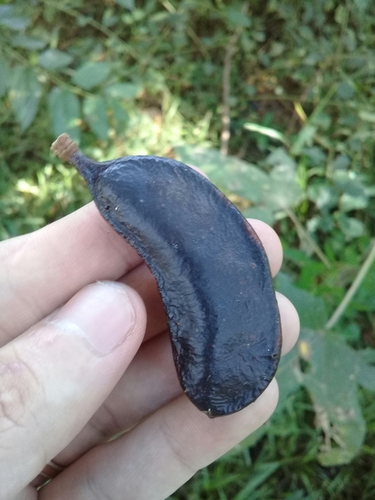
A gum (galactomannan) is obtained from the seedpods. It is obtained from the endosperm of the seeds. A thickening agent, it is used as an additive in sweets, various foods etc The flat, thick seedpod is few-seeded, around 10cm long and 3cm wide.
Where to Find It
A tropical plant. It grows in semi-deciduous forests in the Amazon in Brazil. In Argentina it grows from sea level to 1,500 m above sea level.
Argentina, Bolivia, Brazil, Paraguay, South America, Uruguay,
How to Identify
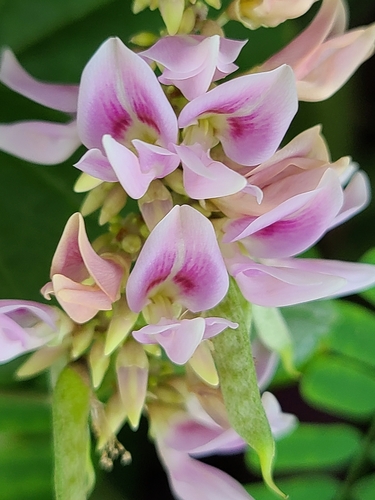
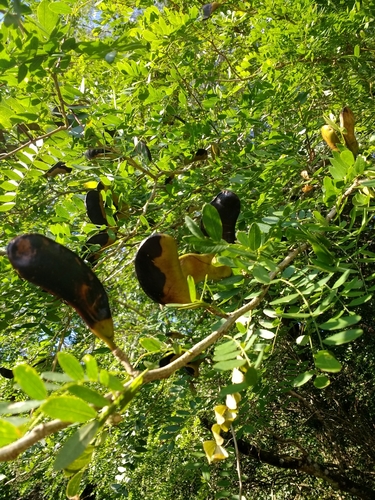
A tree. It grows 10-20 m tall. The crown is round. The trunk is upright and 30-60 cm across. The bark is rough and with long branched spines. They are 10 cm long. These are absent in older trees. The leaves are compound and have leaflets along the stalk. They can be twice divided. The mainly leaf division is 10-15 cm long with 14-18 leaflets. The secondary leaflets have 2-8 leaflets. The flowers are in groups of three clumps and are 5-6 cm long. The fruit are flattened pods. There are 6-8 very hard seeds.
How to Grow
Plants are grown from seed. The seed are removed from ripe fruit and are planted fresh. They should be scratched to break the hard seed coat and will germinate in 4-5 weeks. Seedlings can be transplanted into the field in 5-6 months.
Propagation: Seed - it has a hard seedcoat and benefits from scarification before sowing to speed up germination. This can usually be done by pouring a small amount of nearly boiling water on the seeds (being careful not to cook them!) and then soaking them for 12 - 24 hours in warm water. By this time they should have imbibed moisture and swollen - if they have not, then carefully make a nick in the seedcoat (being careful not to damage the embryo) and soak for a further 12 hours before sowing. Sow the treated seed in a partially shaded position in a nursery seedbed. A good germination rate can be expected, with the seed sprouting within 28 - 35 days. When the seedlings are 5 - 7cm tall, pot them up into individual containers and they should be ready to plant out 5 - 6 months later.
Other Uses
A gum obtained from the seedpods is used in cosmetics, in pharmaceuticals and to make cellulose. It is obtained from the endosperm of the seeds. The seeds are used for dyeing and washing. It is more likely to be the seedpods that are used for washing - the seedpods of various other species in this genus are used as sources of saponins. The seedpods are a rich source of saponins - these have potential to be used as pesticides. The wood is of medium texture, heavy, hard, with good mechanical properties but susceptible to the attacks of termites. It is used for general carpentry, door and window jambs, cart bodies, decorative laminas and lathe work. The wood is used for fuel and to make charcoal. The plant is used in living fences in Cuba, where its spiny stems act as an effective barrier. Trees have a light canopy, they come into leaf late in the season and usually drop their leaves early making them an excellent top storey tree in a woodland garden. When planted close together and severely pruned, most Gleditsia species form good windbreaks and hedges. With their usually very spiny trunks and branches, the hedge becomes an effective barrier, and with its ability to fix atmospheric nitrogen, it also enriches the soil.
Wikipedia
Source ↗Gleditsia amorphoides common name Espina de Corona Cristi, is a tree in the subfamily Caesalpinoidae family Fabaceae. It is native to South America. This deciduous tree can reach heights of 10 to 20 meters. It has a dense, rounded crown that is somewhat small. The straight bole, which has a diameter of between 30 and 60 cm, is strongly armed with many long spines that can branch out to a length of more than 10 cm. Sometimes these thorns are up to 40 cm (16 in) in length. The tree is taken from its natural habitat for its lumber and useful gum. In addition to being used locally, the gum is also harvested commercially and used in the food industry. The plant is sometimes grown as a live fence and boundary marker.
Production
Plants grow at a moderate rate in the field.
Notes
The gum is also used in other products. Also as Caesalpinaceae.
Names & Synonyms
Acucara, Caranchi, Coronda, Coronilha, Espina corona, Espinillo, Faveiro, Sucara, Yu guasu, Yvope guazu, Yvopo
References (5)
- Ber. Deutsch. Bot. Ges. 10:638. 1892
- Grandtner, M. M. & Chevrette, J., 2013, Dictionary of Trees, Volume 2: South America: Nomenclature, Taxonomy and Ecology. Academic Press p 265
- Lorenzi, H., 2002, Brazilian Trees. A Guide to the Identification and Cultivation of Brazilian Native Trees. Vol. 02 Nova Odessa, SP, Instituto Plantarum p 163
- Wiersema, J. H. & Leon, B., 2013, World Economic Plants. A Standard Reference CRC Press. 2nd Ed. p 324
- World Checklist of Useful Plant Species 2020. Royal Botanic Gardens, Kew