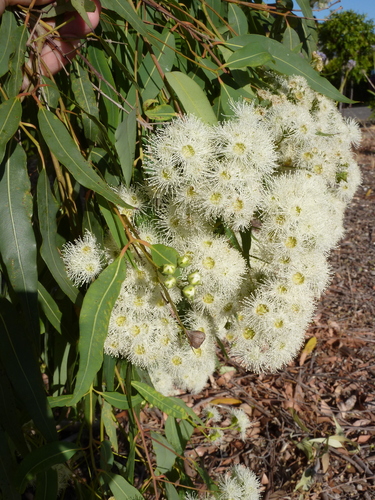
Calycorectes acutatus
(Miq.) Toledo
Araca-da-serra

Royal Botanic Gardens, Kew
What to Eat
Edible parts: Fruit
Fruit - raw. A fleshy, sweet-tasting pulp. The globose, yellow fruit can be up to 3cm in diameter, containing 1 - 2 seeds.
Where to Find It
It is a tropical plant. It grows in semi-deciduous forest in the hills in Brazil.
Brazil*, South America,
How to Identify
A tree. It grows 6-14 m tall. The crown is a pyramid shape. The trunk is upright. It is 20-35 cm across. The bark is rough with cracks along it. The leaves are simple and opposite. They are 6-12 cm long by 2-4 cm wide. The leaf stalk is 5-10 mm long. The flowers are in groups in the axils of leaves. These are 2-3 cm long. The flowers are white and have a scent. The fruit is round and shiny. It has fleshy, sweet, edible pulp. There are 1-2 seeds.
How to Grow
Plants are grown from seed. The ripe fruit are harvested and opened to remove the seeds. The fresh seeds are planted and germinate in 2-3 weeks.
Propagation: Seed - best sown as soon as it is ripe in a sunny position in a nursery seedbed. A low germination rate can usually be expected, with the seed sprouting within 14 - 20 days.
Other Uses
The wood is medium-textured, straight-grained, moderately heavy, hard, with moderate mechanical properties and moderately durable. It is only used locally, being employed in general construction for purposes such as scantlings and laths; for light furniture, platforms, fence posts etc. The wood is used for fuel and to make charcoal.
Production
Plants grow at a moderate rate.
Notes
There are 6 or more Calycorectes species.
Names & Synonyms
References (3)
- Grandtner, M. M. & Chevrette, J., 2013, Dictionary of Trees, Volume 2: South America: Nomenclature, Taxonomy and Ecology. Academic Press p 93
- Lorenzi, H., 2002, Brazilian Trees. A Guide to the Identification and Cultivation of Brazilian Native Trees. Vol. 02 Nova Odessa, SP, Instituto Plantarum p 261
- www.colecionandofrutas.org (As Eugenia acutata)