Campomanesia eugenioides
(Cambess.) D. Legrand ex Landrum
Guabirobeira, Gabirobeira, Guabiroba, Gabiroba

(c) miguel_macedo, some rights reserved (CC BY-NC)

(c) miguel_macedo, some rights reserved (CC BY-NC)

(c) miguel_macedo, some rights reserved (CC BY-NC)
What to Eat
Edible parts: Fruit
Fruit - raw. A succulent pulp. The globose, green to yellow fruits are about 10mm in diameter, containing a few glandulous seeds.
Where to Find It
It is a tropical plant. It grows in mountain forests in Brazil.
Brazil*, South America,
How to Identify
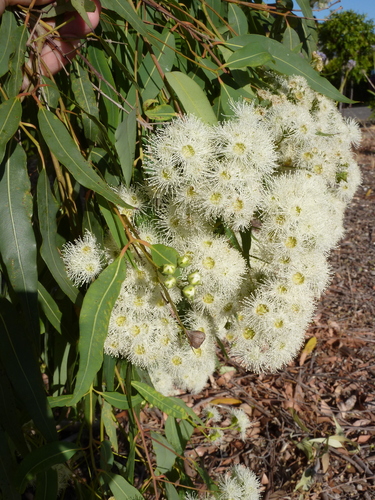
A small tree. It grows 4-7 m high. The crown is round, low and dense. It can grow as a shrub. The trunk is short. It is 20-30 cm across. The bark is thick and cracked. The leaves are simple. They are 2-5 cm long and the leaf stalks are 5-6 mm long. The flowers occur singly and in the axils of leaves or on side shoots. They are white and have several stamen. The fruit is round and succulent. It is 1 cm across. It has a few seeds.
How to Grow
Plants are grown from seed. Ripe fruit are harvested and allowed to soften in a plastic bag. The seed are removed and washed under running water. They are allowed to dry slightly in a shady places. Fresh seed should be planted and the germinate in a few weeks.
Propagation: Seed - best sown as soon as it is ripe in a partially shaded position in a nursery seedbed. A low germination rate can be expected, with the seeds sprouting within a few weeks.
Other Uses
The wood is medium-textured, straight-grained, heavy but of little durability. It can split when drying. It is sometimes used locally in internal general construction. The wood is used for fuel and to make charcoal. A natural pioneer species with a moderate rate of growth and providing an edible fruit, it can be used in reforestation schemes for restoring native woodland and also to establish woodland gardens.
Production
Plants grow at a moderate rate.
Notes
There are at least 11 Campomanesia species.
Names & Synonyms
References (5)
- Bortolotto, I. M., et al, 2018, Lista preliminar das plantas alimenticias nativas de Mato Grosso do Sul, Brasil. Iheringia, Serie Botanica, Porto Alegre, 73 (supl.):101-116
- Grandtner, M. M. & Chevrette, J., 2013, Dictionary of Trees, Volume 2: South America: Nomenclature, Taxonomy and Ecology. Academic Press p 95
- Hedrick, U.P., 1919, (Ed.), Sturtevant's edible plants of the world. p 531 (As Psidium chrysophyllum)
- Lorenzi, H., 2002, Brazilian Trees. A Guide to the Identification and Cultivation of Brazilian Native Trees. Vol. 02 Nova Odessa, SP, Instituto Plantarum p 264
- www.colecionandofrutas.org