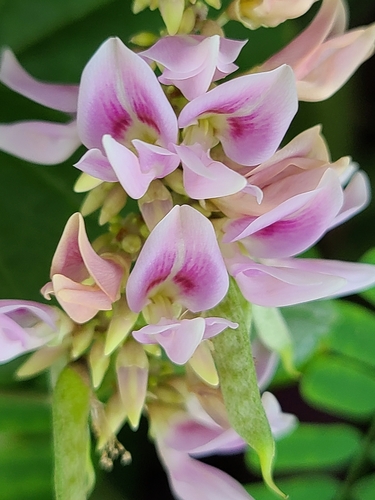
Copaifera mildbraedii
Harms
Tawolokola

Meise Botanic Garden

Christ Dibouka

Christ Dibouka
Where to Find It
A tropical plant. It grows in the rainforest. It suits humid locations.
Africa, Central Africa, Central African Republic, CAR, Congo DR, Gabon, Nigeria,
How to Identify
A tall tree reaching 35 m high, found in tropical rainforests of humid regions. It belongs to the Fabaceae family and is distributed in rainforest environments.
Other Uses
The wood contains resin. The heartwood is a red-brown; it is clearly demarcated from the 5 - 10cm wide band of whitish sapwood. The texture is medium; the grain straight or interlocked. The wood is of moderate weight, moderately hard; fairly durable, being resistant to dry wood borers and moderately resistant to fungi and termites. The wood seasons normally, with only a slight risk of checking or distortion; once dry it is moderately stable in service. It works well with ordinary tools, though resin can sometimes cause clogging; nailing and screwing are good; gluing is correct. The wood is not quite as good as that of the related Copaifera salikounda, but is widely used for purposes such as high class furniture, cabinet work, flooring, light carpentry, construction, panelling, joinery, and shingles.
Production
In Central African Republic plants have been recorded fruiting in February, April and October.
Notes
The sap is flammable. Also as Caesalpinaceae.
References (1)
- Danforth, R.M., & Boren, P.D., 1997, Congo Native fruits. Twenty-five of the best. Privately published. p 69