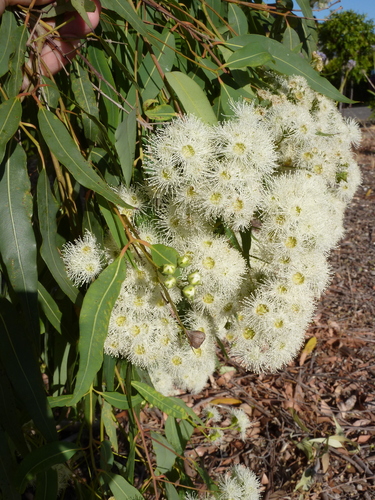
Eugenia florida
DC.
Guamirim, Pitanga

(c) Denis Zabin, some rights reserved (CC BY), uploaded by Denis Zabin

(c) Denis Zabin, some rights reserved (CC BY), uploaded by Denis Zabin
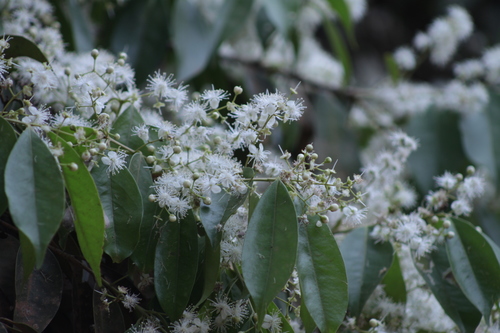
(c) Marinês Eiterer, some rights reserved (CC BY-NC), uploaded by Marinês Eiterer
What to Eat
Edible parts: Fruit
Fruit - raw. A thin, fleshy pulp with an acidic, slightly astringent flavour. A sweetish, fleshy pulp. The globose fruit can be 15mm in diameter, containing a single seed.
Where to Find It
It is a tropical plant. It grows in forests throughout Brazil.
Amazon, Brazil*, Central America, Columbia, Ecuador, Guiana, Guianas, Guyana, Honduras, Jamaica, North America, Panama, Peru, South America, Suriname, USA, Venezuela, West Indies,
How to Identify
A tree. It grows 5-10 m tall. It loses its leaves during the year. The leaves are opposite. Young leaves are red. The leaves are papery and smooth on both sides. They are 5-8 cm long. The flowers are in groups in the axils of the leaves. The fruit are round, smooth and shiny. They are 1-2 cm across. The pulp is thin and slightly acid.
How to Grow
Plants are grown from seed.
Propagation: Seed - best sown as soon as it is ripe in a partially shaded position in a nursery seedbed. A germination rate of less than 50% can be expected, with the seed sprouting within 20 - 35 days. Transplant the seedlings to individual containers when they are 5 - 6cm tall.
Other Uses
Necklaces made from the aromatic fruits are worn as a body perfume for men and women. The wood is medium-textured, straight-grained, heavy, hard to cut, moderately durable. It is only used locally for small items such as tool handles, crates, rustic furniture and small constructions. The wood is used for fuel and to make charcoal.
Other Information
The fruit are not very popular. The fruit are eaten especially by children.
Names & Synonyms
Alikoya, Amonkabekan, Arrayan, Camu camu, Ccovi quin'cho, Emi yuemo, Guamirim, Guamirim-pitanga, Guayabillo, Ipiya, Jambo, Jamelao-do-campo, Mulchi, Naimonkamo, Numi, Piitirijirida, Quima, Uva, Yarami
References (12)
- Bortolotto, I. M., et al, 2018, Lista preliminar das plantas alimenticias nativas de Mato Grosso do Sul, Brasil. Iheringia, Serie Botanica, Porto Alegre, 73 (supl.):101-116
- Brack, P., et al, 2020, Frutas nativas do Rio Grande do Sul, Brasil: riqueza e potencial alimentício. Native fruits of Rio Grande do Sul, Brazil: richness and potential as food. Rodriguésia 71: e03102018.
- Grandtner, M. M. & Chevrette, J., 2013, Dictionary of Trees, Volume 2: South America: Nomenclature, Taxonomy and Ecology. Academic Press p 238
- Kinupp, V. F., 2007, Plantas alimenticias nao-convencionais da regiao metropolitana de Porto Alegre, RS, Brazil p 85
- Lopez-Diago, D. & Garcia, N., 2021, Wild edible fruits of Colombia. Biota ColomBiana 22 (2) p 44
- Lorenzi, H., Bacher, L., Lacerda, M. & Sartori, S., 2006, Brazilian Fruits & Cultivated Exotics. Sao Paulo, Instituto Plantarum de Estuados da Flora Ltda. p 197
- Philips, O., 1992, The potential for harvesting fruits in tropical rainforests: new data from Amazonian Peru. Biodiversity and Conservation 2, 18-38
- Roa, J. A. G. & Boada, D. S. G., 2018, Fundación para el Fortalecimiento de la Fruticultura y Plantas Alimenticias no Convencionales en Colombia.
- Torre, de la, L., et al, 2008, Enciclopedia de las Plantas Útiles del Ecuador. Herbario QCA. Pontificia Universidad Católica del Ecuador. p 466
- van Andel, T., 2000, Useful plants of Guyana. Non-timber forest products of the North-West District of Guyana. Part 2. A Field Guide. Tropenbos-Guyana Programme. p 294
- Van den Eynden, V., et al, 2003, Wild Foods from South Ecuador. Economic Botany 57(4): 576-603
- www.colecionandofrutas.org