Eugenia multicostata
D. Legrand
Pau-brasil
(c) Igor Azevedo, some rights reserved (CC BY-NC), uploaded by Igor Azevedo

(c) Luís A. Funez, some rights reserved (CC BY-NC), uploaded by Luís A. Funez

(c) Henry Miller Alexandre, some rights reserved (CC BY-NC), uploaded by Henry Miller Alexandre
What to Eat
Edible parts: Fruit
Fruit - raw and made into jellies and sweets. The thin-skinned fruit has a thick, fleshy, succulent pulp with a very pleasant, acidic flavour. The fruit is around 4cm long and 3cm wide.
Where to Find It
A tropical plant. It grows naturally in the forest near the Atlantic in Brazil.
Brazil*, South America,
How to Identify
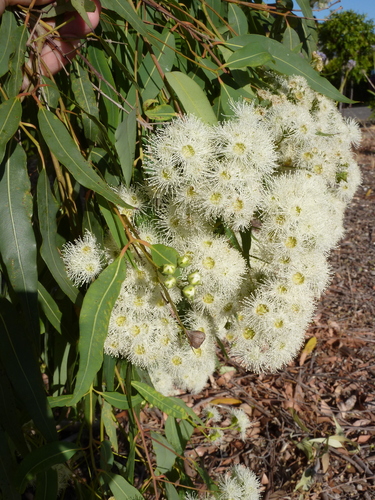
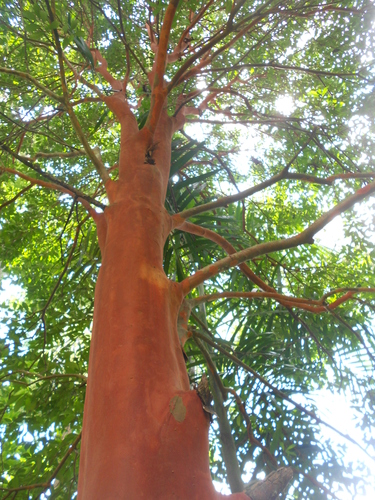
A deciduous tree. It grows 20-30 m tall. The crown is dense. The trunk is crooked. The bark is light brown or reddish. The leaves are somewhat leathery and 6-12 cm long. The flowers are in groups near the ends of branches. They are white. The fruit are oblong with ridges. The pulp is juicy and acid with a pleasant taste.
How to Grow
Plants are grown from seed. Seeds are collected from ripe fruit and the pulp removed. They need to be planted fresh. Seedlings emerge in 30-40 days.
Propagation: Seed - best sown in partial shade as soon as it is ripe. Germination rates of around 50% can be expected, with the seed sprouting within 30 - 40 days.
Other Uses
The wood is fine-textured, straight-grained, heavy, hard to cut, resistant to wood-eating organisms. It is used to make tool handles, agricultural implements, turned pieces and wagon bodies.
Production
Plants grow slowly.
Names & Synonyms
Araca-piranga, Araca-vermelho, Pau-alazao, Pau-mulato, Sapiranga
References (6)
- Brack, P., et al, 2020, Frutas nativas do Rio Grande do Sul, Brasil: riqueza e potencial alimentício. Native fruits of Rio Grande do Sul, Brazil: richness and potential as food. Rodriguésia 71: e03102018.
- INFOODSUpdatedFGU-list.xls
- Kinupp, V. F., 2007, Plantas alimenticias nao-convencionais da regiao metropolitana de Porto Alegre, RS, Brazil p 85
- Kinupp, V. F. & Bergman, I., 2008, Protein and minerals of native species, potential vegetables and fruits. Cienc.Tecnol. Aliment. Vol. 28 No. 4 Campinas Oct/Dec.
- Lorenzi, H., Bacher, L., Lacerda, M. & Sartori, S., 2006, Brazilian Fruits & Cultivated Exotics. Sao Paulo, Instituto Plantarum de Estuados da Flora Ltda. p 205
- Lorenzi, H., 2009, Brazilian Trees. A Guide to the Identification and Cultivation of Brazilian Native Trees. Instituto Plantarum de Estuados da Flora Ltda. Vol. 3 p 248