Bosea amherstiana
(Moq.) Hook. f.
Himalayan bosea

Marianne Perdomo (via Wikimedia Commons)
What to Eat
Edible parts: Shoots, Leaves, Fruit
The young shoots are fried in butter and eaten. The fruit are eaten raw, and the leaves are also edible.
Where to Find It
It grows in subtropical places. Garhwal Himalayas. In Pakistan it grows between 900-2,000 m altitude. It needs a well drained aerated soil. They do best in full sun. It can tolerate drought. It suits hardiness zones 8-11.
Asia, Australia, Himalayas, India*, Myanmar, Nepal, Pakistan, SE Asia,
How to Identify
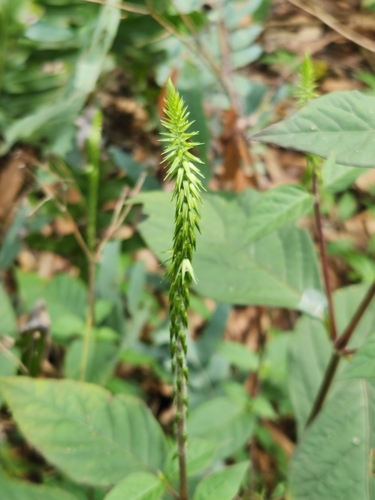
A woody evergreen shrub. It grows about 2-6 m tall. It has many cane like stems from ground level. These are erect. The leaves are small and have smooth edges. They are a dull deep green. The flowers are white. The fruit are red berries. They are edible.
How to Grow
Plants can be grown from cuttings, seeds or division of the roots. Plants can be cut back and re-sprout.
Medicinal Uses
The young shoots are used in traditional preparations.
Notes
There are 3 Bosea species. They are woody shrubs.
Names & Synonyms
Bhengoi, Kotibilga
References (10)
- A. L. P. P. de Candolle, Prodr. 13(2):323. 1849 (As Rodetia amherstiana)
- Cundall, P., (ed.), 2004, Gardening Australia: flora: the gardener's bible. ABC Books. p 245 (Genus)
- Etherington, K., & Imwold, D., (Eds), 2001, Botanica's Trees & Shrubs. The illustrated A-Z of over 8500 trees and shrubs. Random House, Australia. p 136
- Fl. Brit. India 4:716. 1885
- Flora of Pakistan.
- GUPTA
- Lord, E.E., & Willis, J.H., 1999, Shrubs and Trees for Australian gardens. Lothian. p 207
- Ryan, S., 2008, Dicksonia. Rare Plants Manual. Hyland House. p 11
- Singh, H.B., Arora R.K.,1978, Wild edible Plants of India. Indian Council of Agricultural Research, New Delhi. p 34, 70 (As Rodetia amherstiana)
- Wild edible plants of Himachal Pradesh