Crotalaria cephalotes
Steud. ex A Rich.
FabaceaeLeaves
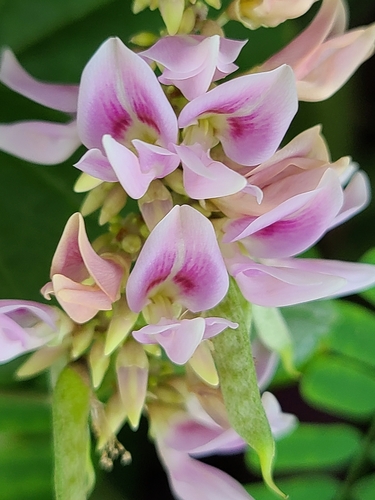
iNaturalist · cc-by-nc-sa
(c) Marco Schmidt, some rights reserved (CC BY-NC-SA), uploaded by Marco Schmidt
(c) Marco Schmidt, some rights reserved (CC BY-NC-SA), uploaded by Marco Schmidt

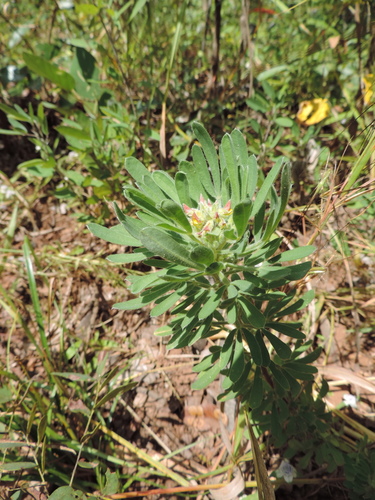
iNaturalist · cc-by
(c) i_c_riddell, some rights reserved (CC BY)
(c) i_c_riddell, some rights reserved (CC BY)

iNaturalist · cc-by
(c) i_c_riddell, some rights reserved (CC BY)
(c) i_c_riddell, some rights reserved (CC BY)
What to Eat
Edible parts: Leaves, Vegetable
The leaves are cooked and eaten as a vegetable.
Where to Find It
It is a tropical plant. It rows in rough grassland and dry rocky places. In Zimbabwe, it grows up to 1,700 m above sea level.
Africa, Angola, Burkina Faso, Central Africa, East Africa, Ethiopia, Ghana, Malawi, Mozambique, Nigeria, Senegal, West Africa, Zambia, Zimbabwe,
Countries: Angola, Burkina Faso, Burundi, Benin, Botswana, Congo (DRC), Central African Republic, Congo (Republic), Cote d'Ivoire, Cameroon, Cape Verde, Djibouti, Algeria, Egypt, Eritrea, Ethiopia, Gabon, Ghana, Gambia, Guinea, Equatorial Guinea, Guinea-Bissau, Kenya, Comoros, Liberia, Lesotho, Libya, Morocco, Madagascar, Mali, Mauritania, Mauritius, Malawi, Mozambique, Namibia, Niger, Nigeria, Rwanda, Seychelles, Sudan, Sierra Leone, Senegal, Somalia, South Sudan, Sao Tome & Principe, Eswatini, Chad, Togo, Tunisia, Tanzania, Uganda, South Africa, Zambia, Zimbabwe
How to Identify
A slightly woody herb. It grows 15-20 cm high. It has silky hairs. There are several branches curving upwards. The leaves have 3 leaflets. They are crowded near the flowers. The leaflets are narrow and sword shaped. The flowers are small and yellow. The fruit are pods 4-6 mm.
Other Information
It is occasionally harvested.
Names & Synonyms
Chisunkhuthu, Nselema, Ukuniwajuwa
References (7)
- Abukutsa-Onyango, M.O., 2004. Crotalaria brevidens Benth. [Internet] Record from Protabase. Grubben, G.J.H. & Denton, O.A. (Editors). PROTA (Plant Resources of Tropical Africa), Wageningen, Netherlands. < http://database.prota.org/search.htm>. Accessed 15 October 2009.
- Burkill, H. M., 1985, The useful plants of west tropical Africa, Vol. 3. Kew.
- Grubben, G. J. H. and Denton, O. A. (eds), 2004, Plant Resources of Tropical Africa 2. Vegetables. PROTA, Wageningen, Netherlands. p 230
- Peters, C. R., O'Brien, E. M., and Drummond, R.B., 1992, Edible Wild plants of Sub-saharan Africa. Kew. p 132
- Tent. fl. abyss. 1:156. 1847
- Williamson, J., 2005, Useful Plants of Malawi. 3rd. Edition. Mdadzi Book Trust. p 82
- World Checklist of Useful Plant Species 2020. Royal Botanic Gardens, Kew