Zanthoxylum beecheyanum
K. Koch
Okinawan sansho

(c) ingester, some rights reserved (CC BY-NC)

(c) PARKER CASSIDY AARON 2025-4A16, some rights reserved (CC BY-NC)

(c) Wai Shing, some rights reserved (CC BY-NC)
What to Eat
Edible parts: Leaves, Fruit, Bark
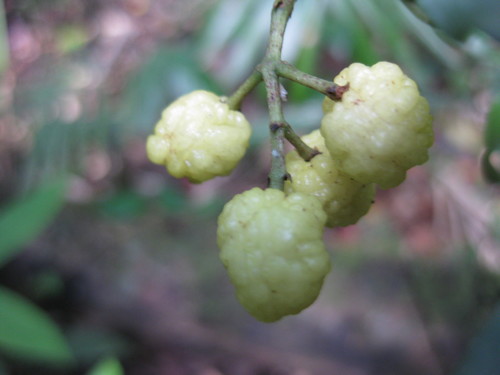
The fruit and bark both serve as a condiment and pepper substitute. The fruit is relatively small but grows in clusters, making it easy to harvest. Each fruit contains a single seed.
Where to Find It
It is a subtropical plant.
Asia, Hawaii, Japan, Pacific, USA,
How to Identify
A shrub. It loses its leaves during the year. It grows 80 cm tall. Plants are separately male and female. The fruit are small but occur in clusters. Each fruit has one seed.
How to Grow
We have very little information on this species and do not know if it will be hardy in Britain, though judging by its native range it could succeed outdoors in many parts of this country. The following notes are based on the general needs of the genus. Prefers a good deep well-drained moisture retentive soil in full sun or semi-shade. Dioecious. Male and female plants must be grown if seed is required. Flowers are formed on the old wood.
Propagation: Seed is best sown in a greenhouse as soon as it ripens in autumn. Stored seed may need up to 3 months of cold stratification, though scarification can also help. Sow stored seed in a cold frame as early in the year as possible; germination should occur in late spring, though it may take a further 12 months. Prick seedlings into individual pots when large enough to handle, grow on in a cold frame through their first winter, then plant out in early summer. Cuttings of half-ripe wood can be taken in July or August and rooted in a frame. Root cuttings 3cm long, planted horizontally in pots in a greenhouse, give a good success rate. Suckers can be removed in late winter and planted directly into their permanent positions.
Medicinal Uses
The resin found in the bark — and particularly in the root bark — is powerfully stimulant and tonic.
Other Uses
None known.
Wikipedia
Source ↗A deciduous shrub reaching 0.8 m (2ft 7in) tall. Dioecious species requiring both male and female plants for seed production; not self-fertile. Tolerates light sandy, medium loamy, and heavy clay soils with good drainage. Grows in mildly acid, neutral, or mildly alkaline pH. Adapts to semi-shade (light woodland) or full sun, preferring consistently moist soil.
Names & Synonyms
Hire sansho, Sensu, Sensuru-gii, Hire-zansho
References (1)
- Martin, F. W., et al, 1987, Perennial Edible Fruits of the Tropics. USDA Handbook 642 p 78