Lecythis ampla
Miers
Monkey pot, Jicaro, Ample monkey pot tree
(c) Nate Hartley, some rights reserved (CC BY-NC), uploaded by Nate Hartley
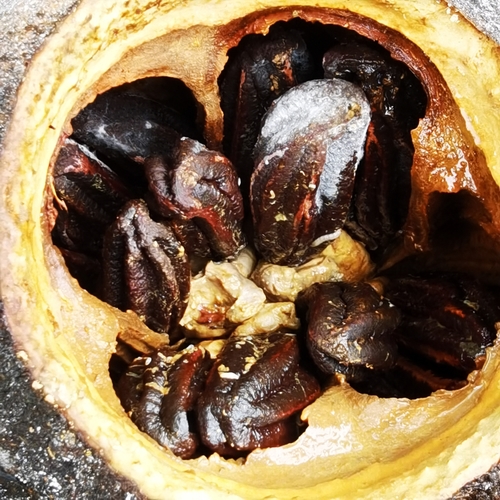
(c) Eduardo Chacón Madrigal, some rights reserved (CC BY), uploaded by Eduardo Chacón Madrigal
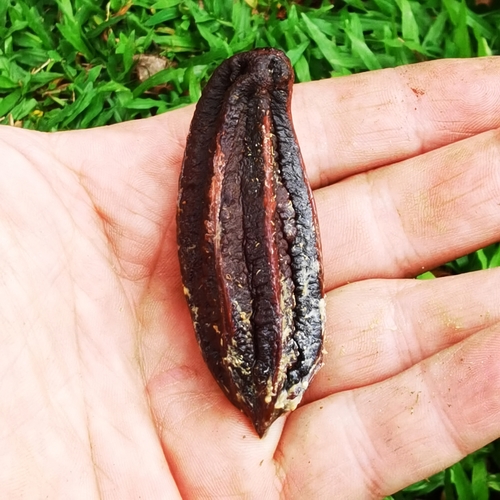
(c) Eduardo Chacón Madrigal, some rights reserved (CC BY), uploaded by Eduardo Chacón Madrigal
What to Eat
Edible parts: Nuts, Seeds
The nuts and seeds are eaten.
Known Hazards
Where to Find It
A tropical plant. In Costa Rica it grows between 5 and 500 m altitude. It grows in wet forest.
Central America, Colombia, Costa Rica, Ecuador, Nicaragua, Panama, South America,
How to Identify
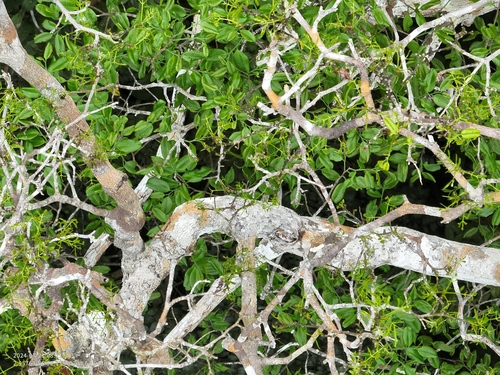
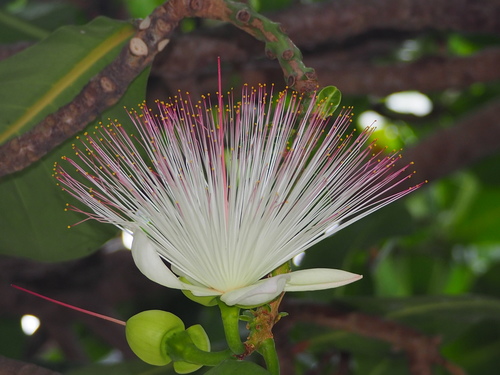
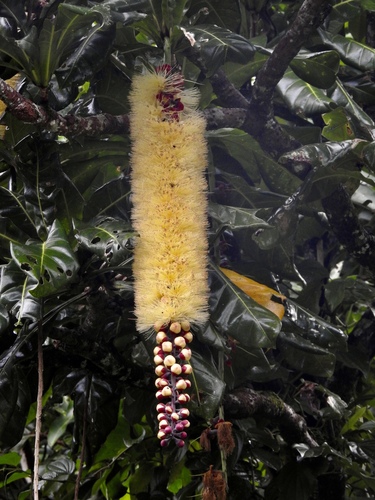
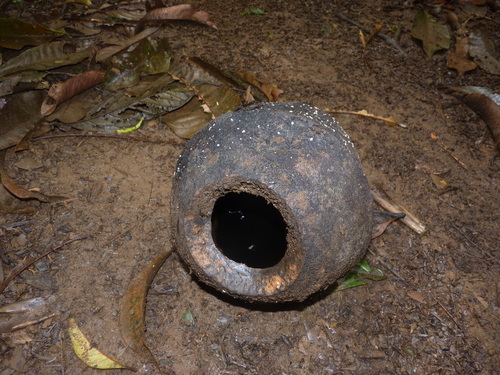
A tree. It grows 40 m high. The trunk is straight. The bark is brown and has cracks along it. The leaves are simple and alternate. They are 8 cm long. The leaves have a wavy edge and fine teeth along the edge. The flowers are 3 cm across. They have 6 blue to pink petals. The fruit is round and has a thick woody wall. It is 20 cm across. It has a lip that opens on a 9 cm wide hole. There are up to 50 seeds inside. The seeds are 4-5 cm long and have a groove. They are attached to the inside of the pot by fleshy stalks
How to Grow
Plants are grown from seed.
Propagation: Seeds collected from the ground should be separated by size and form and submerged in running water for 24 hours before sowing. Germination is 95 - 96% for soaked seeds. The first root, usually adventitious, develops at 45 - 60 days and shows rapid growth; the main root emerges later. Under greenhouse conditions, 11-month-old seedlings reach a height of 25cm and are suitable for planting out. Seed behaviour is recalcitrant. Viability diminishes with increasing dehydration.
Medicinal Uses
The sapwood is a creamy colour and fibrous, while the heartwood is dark brown when fresh and reddish brown when dried. The timber is resistant to marine boring invertebrates and is used for shipbuilding, bridges, and general and marine construction. It is also used to make furniture, tool handles, and posts. The bark can be used in tanning and has various other uses. The seeds can be eaten, but excessive consumption causes loss of hair. They are also used in northern Costa Rica to make sweets and caramel and in Panama as folk medicine to treat pneumonia and diarrhoea.
Other Uses
A fibre is obtained from the bark. This can be used as rolling paper for cigars, boat caulking, native clothing, tinder, and cordage. The bark has a high tannin content. The heartwood is brown when first harvested, turning reddish brown after drying. The sapwood is fibrous, creamy in fresh condition and light brown when dried. The wood is fine and straight-grained, dense, very hard, heavy, difficult to split and to cut. It is moderately difficult to work and saw and does not polish well. Its natural durability is high and preservation is difficult. The wood is excellent for ship construction, agricultural tool handles, frameworks, railroad foundations, furniture and cabinets, turnery, heavy general construction, bridge and marine construction (especially in waters with marine borers), piles, posts, and stakes.
Wikipedia
Source ↗Lecythis ampla is a species of woody plant in the family Lecythidaceae, which also includes the Brazil nut (Bertholletia excelsa). Common names include coco, olla de mono, jicaro and salero. It is found in Central and South America. It has been considered an endangered species in Costa Rica (IUCN, 1988).
Notes
It is an endangered species.
Names & Synonyms
Aray, Cachimbo, Caoba, Coco, Coco de mono, Coco salero, Hoya de mico, Hoya de mono, Jicaro, Olla de mono, Palo ryado. Pan suba, Panzua, Papayo
References (8)
- Condit, R., et al, 2011, Trees of Panama and Costa Rica. Princeton Field Guides. p 266
- Grandtner, M. M., 2008, World Dictionary of Trees. Wood and Forest Science Department. Laval University, Quebec, Qc Canada. (Internet database http://www.wdt.qc.ca)
- Grandtner, M. M. & Chevrette, J., 2013, Dictionary of Trees, Volume 2: South America: Nomenclature, Taxonomy and Ecology. Academic Press p 344
- Kermath, B. M., et al, 2014, Food Plants in the Americas: A survey of the domesticated, cultivated and wild plants used for Human food in North, Central and South America and the Caribbean. On line draft. p 474
- Martin, F. W., et al, 1987, Perennial Edible Fruits of the Tropics. USDA Handbook 642 p 98 (As Lecythis costaricensis)
- Roa, J. A. G. & Boada, D. S. G., 2018, Fundación para el Fortalecimiento de la Fruticultura y Plantas Alimenticias no Convencionales en Colombia.
- Torre, de la, L., et al, 2008, Enciclopedia de las Plantas Útiles del Ecuador. Herbario QCA. Pontificia Universidad Católica del Ecuador. p 404
- Zuchowski W., 2007, Tropical Plants of Costa Rica. A Zona Tropical Publication, Comstock Publishing. p 242