Inga acrocephala
Steudel
Swit'bonki
(c) Emmanuel Garcia Gutierrez, some rights reserved (CC BY-NC), uploaded by Emmanuel Garcia Gutierrez
(c) Marvin López M., some rights reserved (CC BY-NC), uploaded by Marvin López M.
(c) Marvin López M., some rights reserved (CC BY-NC), uploaded by Marvin López M.
What to Eat
Edible parts: Fruit pulp, Pod pulp
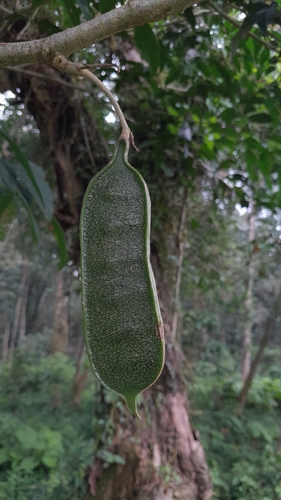
Fruit - raw. The flesh surrounding the seeds is sweet and very tasty. The somewhat curved seedpod is up to 28cm long and 4cm wide, containing about 20 seeds.
Where to Find It
A tropical plant. It grows in rainforest especially on slopes. It also grows in cloud forests. In Mexico it grows from sea level to 1,400 m above sea level.
Amazon, Belize, Bolivia, Brazil, Caribbean, Central America, Colombia, Costa Rica, Ecuador, El Salvador, French Guiana, Guatemala, Guianas, Guyana, Honduras, Mexico, Nicaragua, Panama, Peru, South America, Suriname, Venezuela,
How to Identify
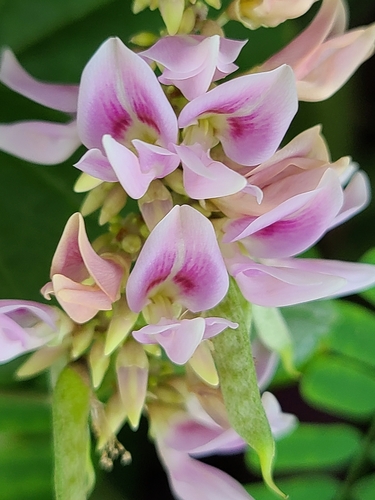
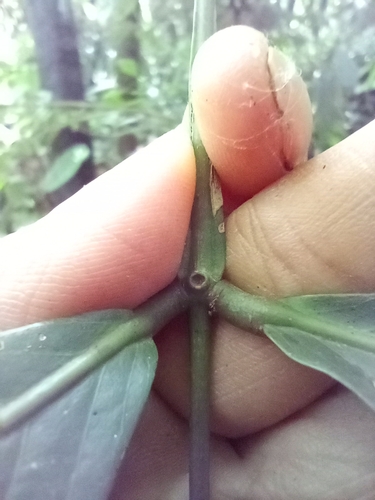
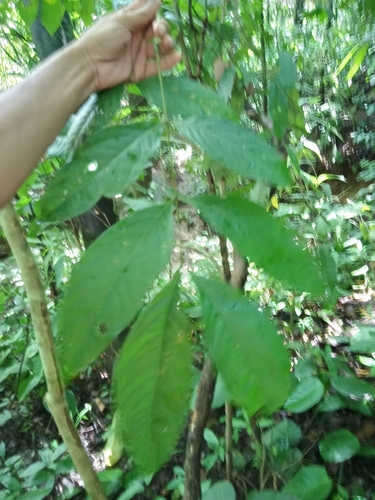
A tree. It grows 25 m high. The twigs have a few hairs. The leaves are compound. There are usually 4 stalks of leaflets. The leaflets are leathery. The flowers are in spikes in the axils of leaves or at the ends of branches. The fruit is a somewhat curved pod. It is woody and 28 cm long by 4 cm wide and 1 cm thick. They are green and have irregular ribs across them. They are a little swollen over the seeds. There are about 20 seeds. They are pale green. The pulp of the pods is sweet and edible.
How to Grow
Plants grow easily from seeds. Seeds germinate in 1-2 weeks given moisture and shade.
Other Uses
A blood-red resin exudes slowly from damage in the stems. It is used as a dye. The wood is of fine quality. It is used for construction. The wood of Inga species is generally attractive, but it has a coarse texture, is susceptible to attack by dry-wood termites and is not durable in the soil. When grown as a shade tree, the plant is pruned on a regular basis, and these prunings are often burned as a fuel. The tree is grown to provide shade in coffee plantations in Mexico. Inga species generally have a number of factors that make them popular for use as shade trees in coffee and cacao plantations:- they grow quickly and so soon make an effecte shade; they respond well to drastic pruning and so are easy to keep within the required size and shade levels; they promote and maintain soil fertility; they are effective soil stabilizers.
Notes
Also as Mimosaceae.
Names & Synonyms
Cata pene, Chalahuite, Doho, Guaba de lora chontadura, Guama, Guamilla, Guamo, Irrita, Kala-weko, Majamenekee, Swietiboontje, Temboga fino, Vaina, Warakosa, Witte Bast Switbonki, Ttembonga fino, Ttofi fino, Unjinga fino
References (11)
- Ferns, Useful Tropical plants
- Flora 26:759. 1843
- Gonzalez-Espinosa, M. et al, 2011, The Red List of Mexican Cloud Forest Trees. Flora and Fauna International, Cambridge. p 31
- Grandtner, M. M. & Chevrette, J., 2013, Dictionary of Trees, Volume 2: South America: Nomenclature, Taxonomy and Ecology. Academic Press p 318
- ILDIS Legumes of the World http:www;ildis.org/Legume/Web
- Lopez-Diago, D. & Garcia, N., 2021, Wild edible fruits of Colombia. Biota ColomBiana 22 (2) p 37
- Piedra-Malagón, E. M., et al, 2022, Edible native plants of the Gulf of Mexico Province. Biodiversity Data Journal 10: e80565 p 21 (Also as Inga brevipedicellata)
- Roa, J. A. G. & Boada, D. S. G., 2018, Fundación para el Fortalecimiento de la Fruticultura y Plantas Alimenticias no Convencionales en Colombia.
- Torre, de la, L., et al, 2008, Enciclopedia de las Plantas Útiles del Ecuador. Herbario QCA. Pontificia Universidad Católica del Ecuador. p 342
- van Andel, T., 2000, Useful plants of Guyana. Non-Timber Forest Products of the North-West District of Guyana Part 2. p 367
- van Roosmalen, M. G. M., 1985, Fruits of the Guianan Flora. Utrecht Univ. & Wageningen Univ. p 232