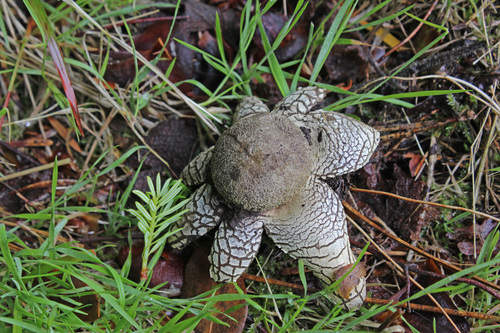
Calvatia caelata
(Bull.) Morgan
Pukurau, Mosaic puffball
LycoperdiaceaeMushrooms

iNaturalist · cc-by-nc
(c) Alexandru Pintilioaie, some rights reserved (CC BY-NC)
(c) Alexandru Pintilioaie, some rights reserved (CC BY-NC)

iNaturalist · cc-by-nc
(c) Alexandru Pintilioaie, some rights reserved (CC BY-NC)
(c) Alexandru Pintilioaie, some rights reserved (CC BY-NC)
iNaturalist · cc-by-nc
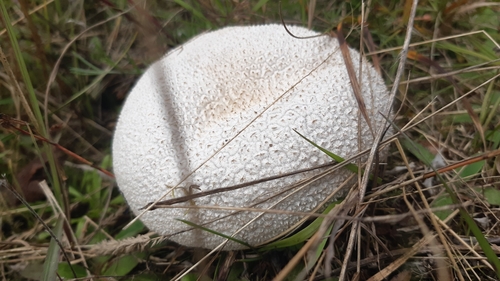
(c) Lina, some rights reserved (CC BY-NC)
(c) Lina, some rights reserved (CC BY-NC)
What to Eat
Edible parts: Mushroom, Fungus
The mushroom fungus is eaten.
Dangerous Lookalikes
This plant can be confused with the following toxic species. Always verify identification carefully before consuming any wild plant.
DEADLY

Death Cap (button stage)
Amanita phalloides
SAFE
Pukurau
Calvatia caelata


Death Cap (button stage): When cut in half reveals developing gills, stem, and cap outline inside the round exterior.
Pukurau: Uniform pure white flesh when cut in half, no internal structures visible, very large when mature.
Where to Find It
It is a temperate plant.
Asia, China, Himalayas, Kyrgyzstan, Nepal, New Zealand*,
Countries: United Arab Emirates, Afghanistan, Armenia, Azerbaijan, Bangladesh, Bahrain, Brunei, Bhutan, China, Georgia, Indonesia, Israel, India, Iraq, Iran, Jordan, Japan, Kyrgyzstan, Cambodia, North Korea, South Korea, Kuwait, Kazakhstan, Laos, Lebanon, Sri Lanka, Myanmar, Mongolia, Maldives, Malaysia, Nepal, Oman, Philippines, Pakistan, Qatar, Saudi Arabia, Singapore, Syria, Thailand, Tajikistan, Timor-Leste, Turkmenistan, Turkey, Taiwan, Uzbekistan, Vietnam, Yemen
How to Identify
A temperate puffball mushroom in the Lycoperdiaceae family, also known as the pukurau or mosaic puffball.
Notes
There are about 35 Calvatia species.
Names & Synonyms
Fudiao mabo
References (3)
- Boa, E. R., 2004, Wild edible fungi and their importance to people. FAO Non Wood Forest Products Booklet 17
- Crowe, A., 1997, A Field Guide to the Native Edible Plants of New Zealand. Penguin. p 136
- Dongol, et al, 1995, Edible Mushrooms in Nepal