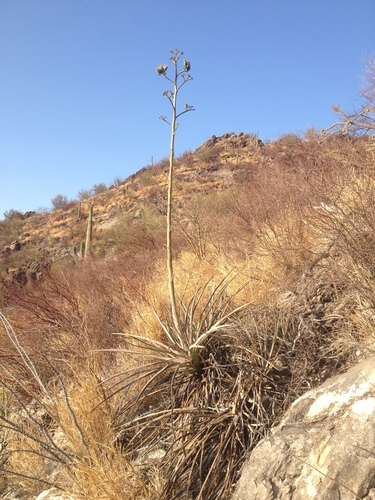
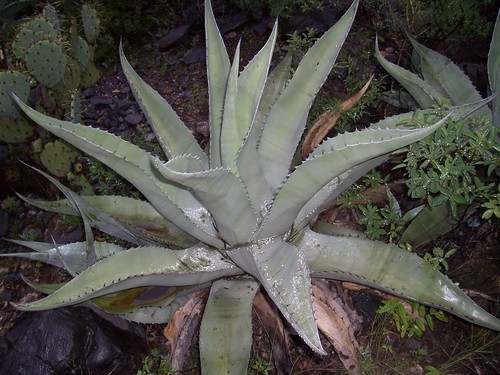
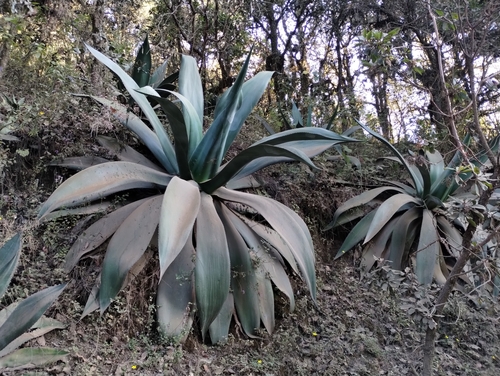
Dipcadi rigidifolium
Baker
iNaturalist · cc0
no rights reserved, uploaded by Jimmy Whatmore
no rights reserved, uploaded by Jimmy Whatmore
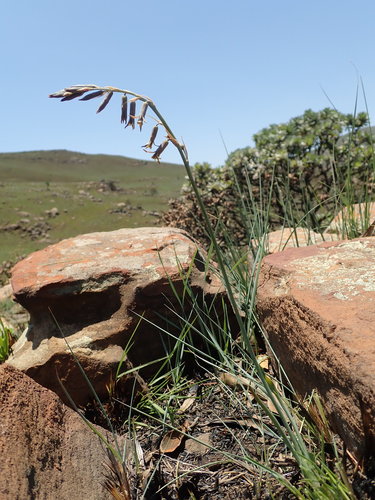
iNaturalist · cc0
no rights reserved
no rights reserved
What to Eat
Edible parts: Bulb, Leaves
The bulb and leaves are eaten.
Where to Find It
It is a subtropical plant. It grows up to 1,220 m above sea level.
Africa, Botswana, East Africa, Eswatini, South Africa, Southern Africa, Swaziland, Zimbabwe,
Countries: Angola, Burkina Faso, Burundi, Benin, Botswana, Congo (DRC), Central African Republic, Congo (Republic), Cote d'Ivoire, Cameroon, Cape Verde, Djibouti, Algeria, Egypt, Eritrea, Ethiopia, Gabon, Ghana, Gambia, Guinea, Equatorial Guinea, Guinea-Bissau, Kenya, Comoros, Liberia, Lesotho, Libya, Morocco, Madagascar, Mali, Mauritania, Mauritius, Malawi, Mozambique, Namibia, Niger, Nigeria, Rwanda, Seychelles, Sudan, Sierra Leone, Senegal, Somalia, South Sudan, Sao Tome & Principe, Eswatini, Chad, Togo, Tunisia, Tanzania, Uganda, South Africa, Zambia, Zimbabwe
How to Identify
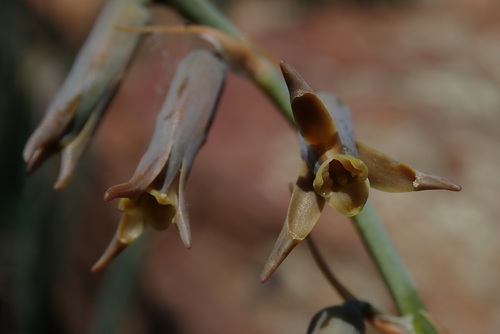
A bulb plant. It grows up to 45 cm high. The bulb is oval and 1.5 cm across. There are 2-3 leaves and erect and firm. They are 15-20 cm long and 8-12 mm wide. The edges are thickened. The flowering stalk is twice as long as the leaves. There are 5-6 flowers in a loose group.
Nutrition Score: 24/100
| Part | Moisture | kJ | kcal | Protein | Vit A | Vit C | Iron | Zinc |
|---|---|---|---|---|---|---|---|---|
| Bulb | 87.1 | 199 | 48 | 1.3 | — | 3.1 | 0.7 | 0.2 |
Notes
They have also been put in the families Hyacinthaceae and Liliaceae.
Names & Synonyms
Dipcadi rhodesicum Weim.Ornithigalum rigidifolium (Baker) J. C. Manning & Goldblatt
References (5)
- Lee, 1979,
- Long, C., 2005, Swaziland's Flora - siSwati names and Uses http://www.sntc.org.sz/flora/
- Peters, C. R., O'Brien, E. M., and Drummond, R.B., 1992, Edible Wild plants of Sub-saharan Africa. Kew. p 30
- Ruiters-Welcome, A. K., 2019, Food plants of southern Africa. Ph.D. thesis. Univ. of Johannesburg p 65
- Welcome, A. K. & Van Wyk, B.-E., 2019, An inventory and analysis of the food plants of southern Africa. South African Journal of Botany 122 (2019) 136–179