Lannea barteri
(Oliv.) Engl.
Butter-oil tree
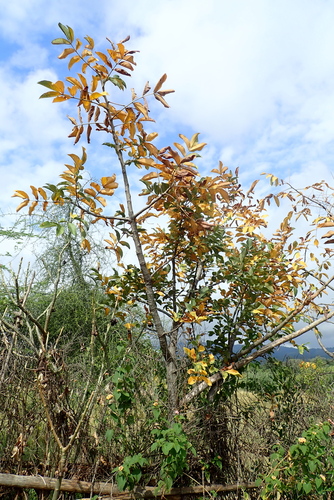
(c) Odile Weber, some rights reserved (CC BY-NC), uploaded by Odile Weber
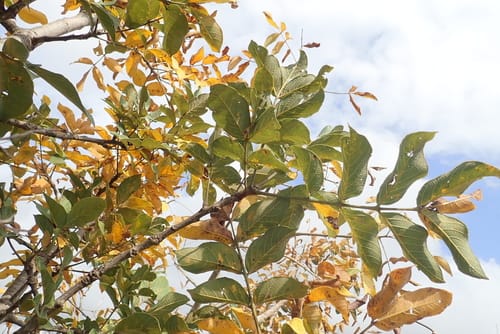
(c) Odile Weber, some rights reserved (CC BY-NC)
What to Eat
Edible parts: Fruit
The pulp of the fruit is eaten, though fruits are only occasionally harvested for food.
Where to Find It
It is a tropical plant. It grows in arid places. It grows in savannah grassland and on the edge of forests. It grows up to 1,600 m above sea level.
Africa, Benin, Burkina Faso, Cameroon, Central African Republic, Congo DR, Côte d'Ivoire, Ethiopia, Ghana, Guinea, Guinée, Ivory Coast, Liberia, Mali, Niger, Nigeria, Sahel, Sierra Leone, South Sudan, Togo, Uganda, West Africa,
How to Identify
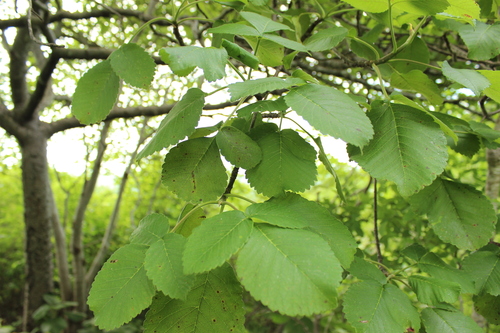
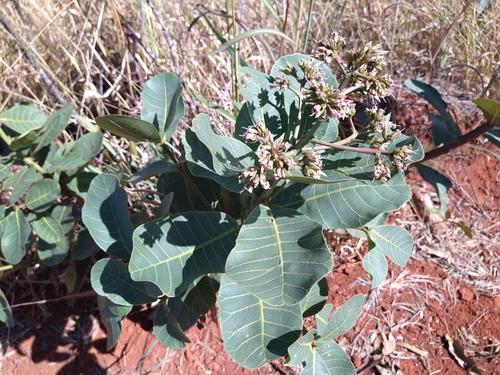
A tree. It loses its leaves during the year. It grows 5-18 m tall and has a spreading crown. The trunk can be 40 cm across. Plants are separately male and female. The fruit are purple to red. It is cylinder shaped and 10-13 mm long by 7-8 mm wide.
How to Grow
Plants can be grown from fresh seeds. It can also be grown from cutings. The tree can be cut back and pruned. It can be grown as a hedge.
Propagation: Seed - it should be sown within 2 months of collection. Cuttings strike easily, even when taken from large branches.
Medicinal Uses
The bark is stomachic. A decoction is drunk as a treatment for gastric pains, diarrhoea, oedema, paralysis, epilepsy and madness. When combined with the bark of ukuku (Yoruba, species) it is used as a vermifuge. The bark is used externally to treat ulcers, sores and leprosy. A root decoction is taken to cure hernia. The root is ground, wrapped in the leaves of an unknown species, and applied as a poultice on wounds. A leaf decoction is taken to cure haemorrhoids.
Other Uses
The bark is fibrous and is used to produce a cordage. The bark contains a gummy secretion which becomes white and friable in the air. No uses are mentioned. The bark yields a dye. Its red-orange-brown colour is associated with blood and war as well as mourning. In Ghana the dye, known in Akan as ‘kuntunkuni’ or ‘kobewu’, serves to give the symbolic dark red to red-brown colour of 'adinkra' clothes worn at the funerals of chiefs and afterwards by their mourning relatives. Adinkra is also the name of the technique by which these red mourning clothes and other types of fabrics are decorated with hand-stamped black designs. The bark is pounded or cut up into small pieces and then boiled in water for a long time. The cooled decoction is filtered and the fabric to be dyed is kept in the dye bath for at least 24 hours. Red, red-brown or orange-red colours are obtained without mordanting. The wood is soft, dirty white, coarse-grained and without worth. It is used to make small utensils such as mortars. The wood is used for firewood and charcoal. The plan coppices easily and is readily grown from cuttings, sot is sometimes cultivated as a live fence. The flowers attract bees and may be useful for producing honey.
Other Information
Fruit are only occasionally eaten.
Names & Synonyms
Bembe, Bumbe, Dinbe, Faruhi, Issian, Kanchimbelli, Kobewu, Kondro, Kuntunkuni, Kutchuichivi, Mon, Namisinfara, Nebbamhi, Nimbiligh, Paruhi, Peku, Sabagha, Sambituliga, Sinsabga, Sinsabye-tiliga, Sisibega, Sisibigolo, Soriyehi, Tiuko, Tudi, Yoda swan
References (8)
- Bonou, A., et al, 2013, Valeur economique des Produits Forestiers Non Ligneux (PFNL) au Benin. Editions Universitaires Europeennes p 95
- Dalziel, J. M., 1937, The Useful plants of west tropical Africa. Crown Agents for the Colonies London.
- Ferns, Useful Tropical Plants.
- Gilbert, T., et al, 2017, Diversity and local transformation of indigenous edible fruits in sahelian domain of Cameroon. Journal of Animal & Plant Sciences Vol. 26 (2): 5289-5300
- Peters, C. R., O'Brien, E. M., and Drummond, R.B., 1992, Edible Wild plants of Sub-saharan Africa. Kew. p 49
- PROTA
- Segnon, A. C. and Achigan-Dako, E. G., 2014, Comparative analysis of diversity and utilization of edible plants in arid and semi-arid areas in Benin. Journal of Ethnobiology and Ethnomedicine. 10:80
- World Checklist of Useful Plant Species 2020. Royal Botanic Gardens, Kew