Lannea triphylla
(A. Rich.) Engl.

Claire Burger-Skinner

Susan Brown

Susan Brown
What to Eat
Edible parts: Root, Fruit, Bark
The peeled root is eaten raw and chewed, especially in the dry season, with a sweet taste. The ripe fruit are edible. The bark is boiled for tea.
Known Hazards
Where to Find It
It is a tropical plant. In Ethiopia it grows in lowlands between 300-1,400 m altitude. It grows in sandy clay and rocky areas. It can grow in arid places.
Africa, Arabia, East Africa, Ethiopia, Kenya, Middle East, Oman, Somalia, Tanzania, Uganda,
How to Identify
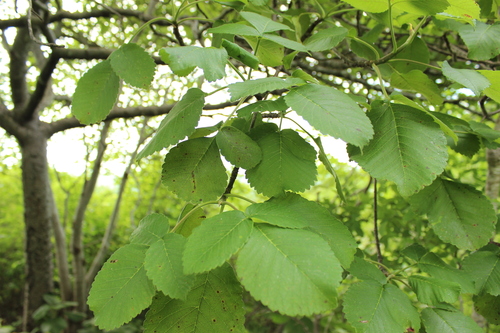
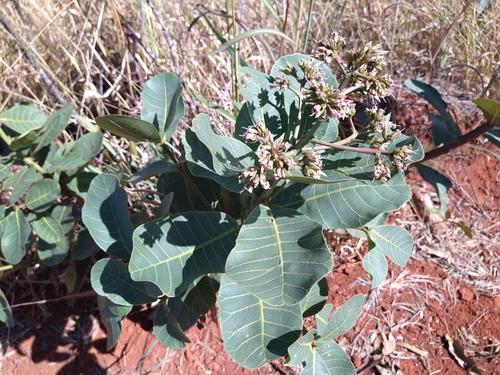
A shrub or small tree. It is spreading. It grows about 5 m high. The bark is smooth and dark grey. The branches are flexible. The leaves are divided into 3 leaflets. The flowers are in spikes and are cream coloured. The fruit are a dull green. They have soft hairs. The seeds are red.
How to Grow
It can be grown from stem cuttings or by seed.
Medicinal Uses
The bark is boiled for tea.
Production
The roots become succulent and white after rain.
Other Information
It is a famine food mainly eaten by children.
Names & Synonyms
Andarak, Anri, Anthri, Baaror, Fachoka, Jiidiwaa, Kithaala, Kithaalwa, Kuogo, Lanberori, Moino, Muthaalwa, Nzaala, Tapoyo, Tobayo, Waanri, Wacanri, Wankhri
References (13)
- Addis, G., Asfaw, Z & Woldu, Z., 2013, Ethnobotany of Wild and Semi-wild Edible Plants of Konso Ethnic Community, South Ethiopia. Ethnobotany Research and Applications. 11:121-141
- Addis, G., et al, 2013, The Role of Wild and Semi-wild Edible Plants in Household Food Sovereignty in Hamer and Konso Communities, South Ethiopia. Ethnobotany Research & Applications. 11:251-271
- Ethiopia: Famine Food Field Guide. http://www.africa.upenn.edu/faminefood/category1.htm
- Goode, P., 1989, Edible Plants of Uganda. FAO p 30
- Herb., E. A., 1981,
- Ichikawa, M., 1980, The Utilization of Wild Food Plants by the Suiei Dorobo in Northern Kenya. J. Anthrop. Soc. Nippon. 88(1): 25-48
- Lulekal, E., et al, 2011, Wild edible plants in Ethiopia: a review on their potential to combat food insecurity. Afrika Focus - Vol. 24, No 2. pp 71-121
- Maundu, P. et al, 1999, Traditional Food Plants of Kenya. National Museum of Kenya. 288p
- Mutie, F. G., 2020, Conservation of Wild Food Plants and Their Potential for Combatting Food Insecurity in Kenya as Exemplified by the Drylands of Kitui County. Plants 2020, 9, 1017
- Peters, C. R., O'Brien, E. M., and Drummond, R.B., 1992, Edible Wild plants of Sub-saharan Africa. Kew. p 49
- Royal Botanic Gardens, Kew (1999). Survey of Economic Plants for Arid and Semi-Arid Lands (SEPASAL) database. Published on the Internet; http://www.rbgkew.org.uk/ceb/sepasal/internet [Accessed 25th March 2011]
- Termote, C., et al, 2014, Assessing the potential of wild foods to reduce the cost of a nutritionally adequate diet: An example from eastern Baringo District, Kenya. Food and Nutrition Bulletin, vol. 35, no. 4
- World Checklist of Useful Plant Species 2020. Royal Botanic Gardens, Kew