Capparis cartilaginea
Decne

(c) Helena, some rights reserved (CC BY)

(c) Morten Ross, some rights reserved (CC BY-NC), uploaded by Morten Ross

(c) Helena, some rights reserved (CC BY)
What to Eat
Edible parts: Fruit, Flowers, Seeds, Gum
The fruit is eaten raw after removing the bitter skin. The flowers are cooked as a vegetable. The sweet seeds provide sugar.
Where to Find It
A Mediterranean plant. It grows near the coast. It grows from sea level to 1,800 m altitude. It can grow in alkaline soil. It can grow in salty soils. It can grow in arid places.
Africa, East Africa, Egypt - Sinai, Eritrea, Ethiopia, India, Iran, Iraq, Israel, Kenya, Mediterranean, Middle East, North Africa, Oman, Pakistan, Saudi Arabia, Seychelles, Sinai, Somalia, Sudan, Tanzania, Yemen,
How to Identify
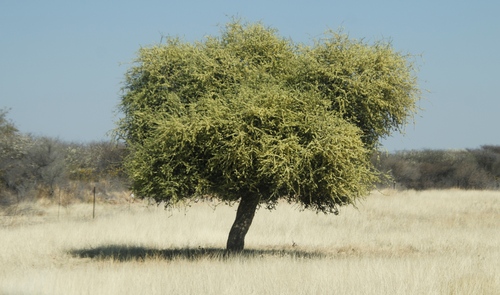
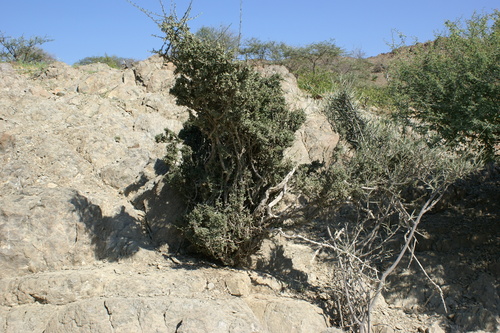
A scrambling shrub. It can hang from rocks. It is fleshy with short crooked branches. It can grow to 4 m high. The leaves are oval and 2-6 cm long by 2-6 cm wide. They are fleshy. The flowers occur singly in the axils of leaves. They are large and white and unequal. The flowers stalk is stout and 4-5 cm long. The fruit is oval and 3-5 cm long and 2-3 cm wide. It can be reddish and ribbed. It has many seeds in a pulp.
Notes
There are about 250 Capparis species. There are about 50 Capparis species in tropical America.
Names & Synonyms
Ankuyis, Delensisa, Gorra, Jarra, Lasaf, Lassaf, Lokapilak
References (9)
- Asfaw, Z. and Tadesse, M., 2001, Prospects for Sustainable Use and Development of Wild Food Plants in Ethiopia. Economic Botany, Vol. 55, No. 1, pp. 47-62
- Bahru, T., et al, 2013, Wild Edible Plants: Sustainable Use and Management by Indigenous Communities in and the Buffer Area of Awah National Park, Ethiopia. Ethiop. J. Sci., 36(2): 93-108
- Bailey, C. and Danin, A., 1981, Bedouin Plant Utilization in Sinai and the Negev. Economic Botany 35(2): 145-162
- East African Herbarium records, 1981,
- Miller, A. G., Morris, M. & Stuart-Smith, S., 1988, Plants of Dhofar. The Southern Region of Oman, Traditional, Economic and Medicinal Uses. Sultanate of Oman. p 92
- Peters, C. R., O'Brien, E. M., and Drummond, R.B., 1992, Edible Wild plants of Sub-saharan Africa. Kew. p 76
- Royal Botanic Gardens, Kew (1999). Survey of Economic Plants for Arid and Semi-Arid Lands (SEPASAL) database. Published on the Internet; http://www.rbgkew.org.uk/ceb/sepasal/internet [Accessed 7th April 2011]
- Seidemann J., 2005, World Spice Plants. Economic Usage, Botany, Taxonomy. Springer. p 79 (Synonyms confused)
- World Checklist of Useful Plant Species 2020. Royal Botanic Gardens, Kew