Salacia elegans
Welw. ex Oliv.

iNaturalist · cc-by-nc-sa
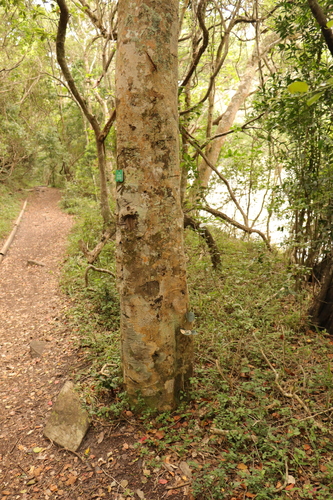
(c) TanzaniaPlantCollaboration, some rights reserved (CC BY-NC-SA)
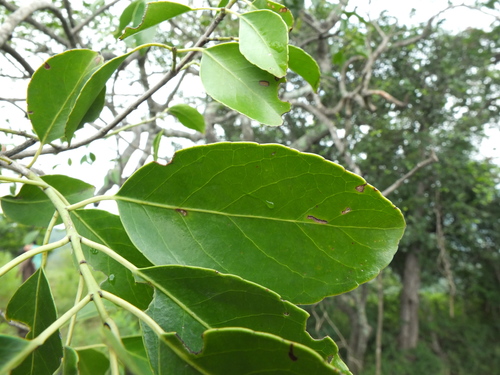
(c) TanzaniaPlantCollaboration, some rights reserved (CC BY-NC-SA)
What to Eat
Edible parts: Fruit, Seed
The fruit and seeds are eaten.
Where to Find It
It is a tropical plant. In Malawi it grows along the lake shore. It also grows in rainforest. It suits humid locations.
Africa, Angola, Central Africa, Congo, East Africa, Guinea, Guinée, Kenya, Malawi, Mozambique, Somalia, Southern Africa, Uganda, West Africa,
Countries: Angola, Burkina Faso, Burundi, Benin, Botswana, Congo (DRC), Central African Republic, Congo (Republic), Cote d'Ivoire, Cameroon, Cape Verde, Djibouti, Algeria, Egypt, Eritrea, Ethiopia, Gabon, Ghana, Gambia, Guinea, Equatorial Guinea, Guinea-Bissau, Kenya, Comoros, Liberia, Lesotho, Libya, Morocco, Madagascar, Mali, Mauritania, Mauritius, Malawi, Mozambique, Namibia, Niger, Nigeria, Rwanda, Seychelles, Sudan, Sierra Leone, Senegal, Somalia, South Sudan, Sao Tome & Principe, Eswatini, Chad, Togo, Tunisia, Tanzania, Uganda, South Africa, Zambia, Zimbabwe
How to Identify
A creeping shrub or creeper. It can grow 6 m tall. It can grow 40 m long. The stems are flattened and have raised lines. They become reddish-purple with white spots. The leaves are opposite and usually shiny above and more pale underneath. They are 4-20 cm long by 2-5 cm wide. There can be teeth along the edge. The fruit are orange to red and 1-2.5 cm across. There are 1-2 seeds.
Names & Synonyms
Miputuculue
Salacia cornifolia Tul.
References (6)
- East Arican Herbarium records, 1981,
- Eilu, G. & Bukenya-Ziraba, R., 2004, Local Use of Climbing Plants of Budongo Forest Reserve, Western Uganda. Journal of Ethnobiology 24(2): 307-327
- Mutie, F. M., et al, 2023, Important Medicinal and Food Taxa (Orders and Families) in Kenya, Based on Three Quantitative Approaches. Plants 2023, 12, 1145
- Peters, C. R., O'Brien, E. M., and Drummond, R.B., 1992, Edible Wild plants of Sub-saharan Africa. Kew. p 81
- White, F., Dowsett-Lemaire, F. and Chapman, J. D., 2001, Evergreen Forest Flora of Malawi. Kew. p 190
- World Checklist of Useful Plant Species 2020. Royal Botanic Gardens, Kew