Ipomoea turbinata
Lagasca
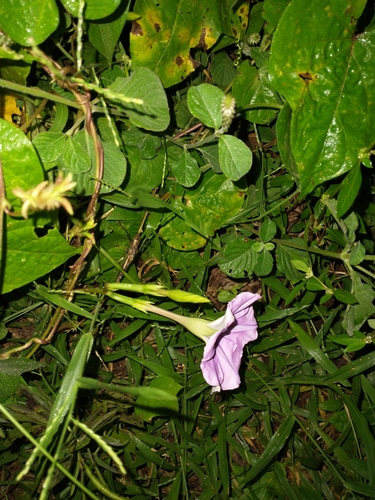
(c) Juan Cruzado Cortés, some rights reserved (CC BY-SA)
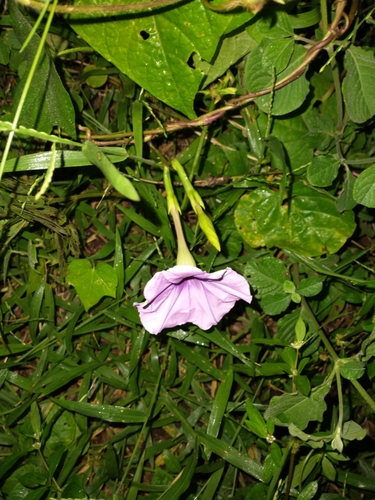
(c) Juan Cruzado Cortés, some rights reserved (CC BY-SA)
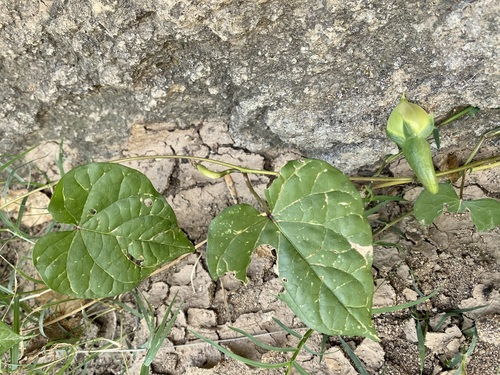
(c) Sue Carnahan, some rights reserved (CC BY)
What to Eat
Edible parts: Seeds, Fruit, Fruit stalks, Vegetable, Leaves
The young seeds, fruit, and thickened fruit stalks are cooked and eaten as vegetables. The leaves are also eaten as a vegetable.
Known Hazards
Where to Find It
It is a tropical plant. It grows in thickets and on flood plains between 600-1,200 m altitude. In Yunnan.
Africa, Angola, Argentina, Asia, Burkina Faso, Central Africa, China, East Africa, Gambia, Himalayas, India, Indochina, Indonesia, Japan, Kashmir, Malawi, Mozambique, Myanmar, Nepal, North America, Northeastern India, Pakistan, Philippines, SE Asia, Sierra Leone, South America, Sri Lanka, Sudan, Tanzania, Venezuela, Vietnam, West Africa, Zambia, Zimbabwe,
How to Identify
An annual herb. It is twining. It has milky sap. The stems are 2-10 m long. The leaf blade is heart shaped and 7-18 cm long by 7-15 cm wide. The flowers come out at night. The flower stalk is 3-6 cm long. The fruit is an oval capsule 2 cm across. The seeds are black and 3 sided.
Names & Synonyms
Ding xiang qie, Kantel phool, Nithya vazhuthana, Phang
References (10)
- Dalziel, J. M., 1937, The Useful plants of west tropical Africa. Crown Agents for the Colonies London.(As Calonyction muricatum)
- Datar, M. N. & Upadhye, A. S., 2016, Forest foods of northern region of Western Ghats. MACS - Agharkar Research Institute, Pune. Pp 1-160. ISBN: 978-93-85735-10-3 p 97
- Flora of China. Vol. 16 p 310
- Flora of China. www.eFloras.org
- Gunn, 1972, Brittonia 24:150-168
- Jadhav, R., et al, 2015, Forest Foods of Northern Western Ghats: Mode of Consumption, Nutrition and Availability. Asian Agri-History Vol. 19, No. 4: 293-317
- Joseph, M. A. & Antony, V. T., 2014, Wild edible Convolvulacean members used by the ULLADA tribes of ALEPPEY DISTRICT, KERALA. Journal of Science Vol. 4 No. 7 p 425-427
- Kuvar, S. D. & Shinde, R. D., 2019, Wild Edible Plants used by Kokni Tribe of Nasik District, Maharashtra. Journal of Global Biosciences. Volume 8, Number 2, 2019, pp. 5936-5945
- Peters, C. R., O'Brien, E. M., and Drummond, R.B., 1992, Edible Wild plants of Sub-saharan Africa. Kew. p 96
- Prabha, Y. P., et al, 2010, Documentation of Wild Edible Plants of Melghat Forest, Dist. Amravati, Maharashtra State, India. Ethnobotanical Leaflets 14: 751-58, 2010.


