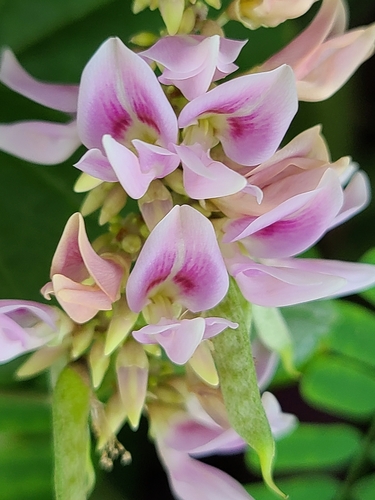
Eriosema ukingense
Harms

MBG

Royal Botanic Gardens, Kew

MBG
What to Eat
Edible parts: Root, Tuber
The root and tuber are eaten.
Where to Find It
It is a tropical plant.
Africa, East Africa, Tanzania,
How to Identify
An erect herb in the Fabaceae family growing 15-35 cm tall, found in tropical regions.
How to Grow
Propagation: Like many species within the family Fabaceae, once they have ripened and dried the seeds of this species may benefit from scarification before sowing in order to speed up and improve germination. This can usually be done by pouring a small amount of nearly boiling water on the seeds (being careful not to cook them!) and then soaking them for 12 - 24 hours in warm water. By this time they should have imbibed moisture and swollen - if they have not, then carefully make a nick in the seedcoat (being careful not to damage the embryo) and soak for a further 12 hours before sowing.
Names & Synonyms
Inzihuluumbi, Kibaazi-mzitu
References (3)
- East African Herbarium records, 1981,
- Peters, C. R., O'Brien, E. M., and Drummond, R.B., 1992, Edible Wild plants of Sub-saharan Africa. Kew. p 134
- Ruffo, C. K., Birnie, A. & Tengnas, B., 2002, Edible Wild Plants of Tanzania. RELMA p 308