Aspidium crenatus
(Cav.) Ching
Scrub fern
TectariaceaeLeaves

wikimedia · cc-by-sa
Wikimedia Commons - Krzysztof Ziarnek, Kenraiz
Wikimedia Commons - Krzysztof Ziarnek, Kenraiz

wikimedia · cc-by-sa
Wikimedia Commons - Krzysztof Ziarnek, Kenraiz
Wikimedia Commons - Krzysztof Ziarnek, Kenraiz
What to Eat
Edible parts: Leaves, Fronds
The fronds and leaves are eaten.
Where to Find It
It is a tropical plant. It is often along streams in moist to wet soils and shaded areas. It grows up to 1,500 m above sea level.
Asia, Indonesia, Malaysia, Pacific, Papua New Guinea, PNG, Philippines, SE Asia, Solomon Islands,
Countries: United Arab Emirates, Afghanistan, Armenia, Australia, Azerbaijan, Bangladesh, Bahrain, Brunei, Bhutan, China, Fiji, Micronesia, Georgia, Indonesia, Israel, India, Iraq, Iran, Jordan, Japan, Kyrgyzstan, Cambodia, Kiribati, North Korea, South Korea, Kuwait, Kazakhstan, Laos, Lebanon, Sri Lanka, Marshall Islands, Myanmar, Mongolia, Maldives, Malaysia, Nepal, Nauru, New Zealand, Oman, Papua New Guinea, Philippines, Pakistan, Palau, Qatar, Saudi Arabia, Solomon Islands, Singapore, Syria, Thailand, Tajikistan, Timor-Leste, Turkmenistan, Tonga, Turkey, Tuvalu, Taiwan, Uzbekistan, Vietnam, Vanuatu, Samoa, Yemen
How to Identify
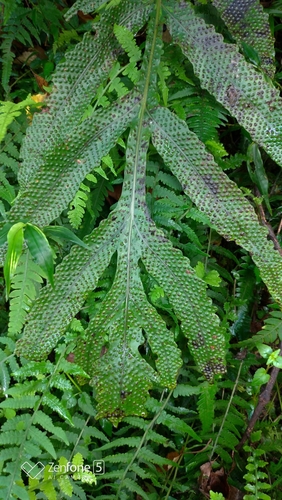
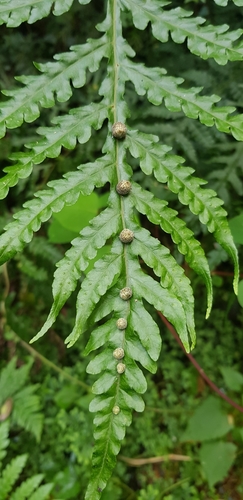
A fern. It grows in soil. The fronds are 70 cm long and have leaflets along the stalk. The lower leaflets have lobes towards the base.
How to Grow
Plants can be grown from spores.
Notes
Also put in the family Dryopteridaceae and Aspidiaceae.
Names & Synonyms
Paku parutan
Tectaria crenata Cav.
References (3)
- Flora of Solomon Islands (As Tectaria creanata)
- Piggott, A. G. 1988, Ferns of Malaysia in Colour. Tropical press, Malaysia. p 341 (As Tectaria creanata)
- Sukarya, D. G., (Ed.) 2013, 3,500 Plant Species of the Botanic Gardens of Indonesia. LIPI p 883 (As Tectaria creanata)