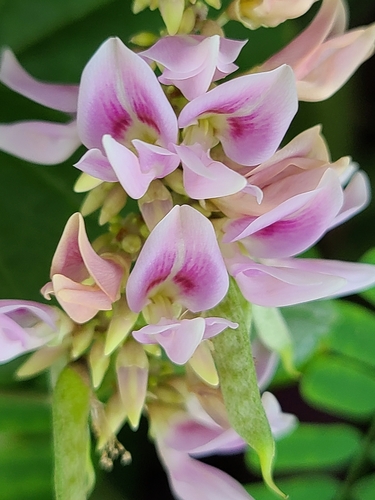
Cytisus scoparius
(L.) Link
Broom

(c) Ina Siebert, some rights reserved (CC BY-NC), uploaded by Ina Siebert
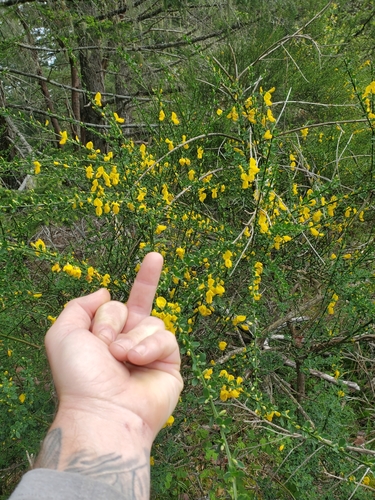
no rights reserved

(c) nina-houssais, some rights reserved (CC BY-NC)
What to Eat
Edible parts: Flower Buds
The flower buds can be pickled and used as a caper substitute, or added fresh to salads. The tender green shoot tips have been used similarly to hops, adding a bitter flavour to beer and increasing its intoxicating effect. The roasted seed serves as a coffee substitute. Some caution is advised due to the plant's toxicity.
Known Hazards
Where to Find It
A temperate plant. It is best in a light to medium slightly acidic soil. It needs an open sunny position. It is resistant to drought and frost.
Argentina, Asia, Australia, Britain*, Canada, Chile, Denmark, Europe, Falklands, France, Hawaii, Ireland, Korea, Luxembourg, Mediterranean, Portugal, South America, Spain, Tasmania,
How to Identify
A shrub. It grows 3 m high and spreads 2 m wide. The stem is slender and erect. The branches arch over. The leaves have 3 leaflets. The flowers are yellow and pea shaped. They can be single or in pairs.
How to Grow
Plants can be grown by seeds or cuttings.
Propagation: Sow seed as soon as ripe in autumn in a cold frame. Stored seed should be pre-soaked for 24 hours in warm water, cold stratified for 1 month, then sown in a cold frame. Seed usually germinates within 4 weeks at 20°C. Pot seedlings up as soon as possible, as plants quickly become intolerant of root disturbance. Plant out into permanent positions in late summer if sufficient growth has been made, otherwise in late spring the following year. Seed has long viability and can also be sown in situ as soon as ripe in late summer or autumn. Cuttings of half-ripe wood, 4–7cm with a heel, taken in August in a frame, root the following spring — pot up as soon as possible. Cuttings of mature wood can be taken in October or November in a frame. Layering is also possible.
Medicinal Uses
Broom is a bitter narcotic herb that depresses respiration and regulates heart action by slowing and regulating the electrical conductivity of the heart. The young herbaceous tips of flowering shoots are cardiotonic, cathartic, diuretic, emetic, and vasoconstrictive; the seeds share similar properties. It is used internally for heart complaints, particularly in combination with Convallaria majalis. The plant is also strongly diuretic, stimulating urine output to counter fluid retention. Because it causes uterine muscle contractions, it has been used to reduce blood loss after childbirth. Large doses are likely to upset the stomach. The composition of active ingredients is highly variable, making the plant medicinally unreliable, so it is rarely used in practice. It should not be prescribed to pregnant women or patients with high blood pressure, and any treatment must be carried out under expert supervision. The young shoot tips are harvested in spring, typically in May, and used fresh or dried. They should not be stored for more than 12 months as the active constituents break down over time.
Other Uses
An excellent fibre obtained from the bark is used to make paper, cloth, and nets, though it is not as strong as fibre from Spanish broom (Spartium junceum). Bark fibres measure 2–9mm in length. Branches are harvested in late summer or autumn, the leaves removed, and the stems steamed until fibres can be stripped. The fibres are then cooked for 3 hours in lye and put in a ball mill for a further 3 hours, producing a pale tan paper. The bark is also a good source of tannin. A yellow and a brown dye can be obtained from the bark, a yellow dye from the flowering stems, and a green dye from the leaves and young tops. The branches are used to make baskets, brushes, brooms, and besoms, and are sometimes used for thatching roofs or as substitutes for reeds in fences and screens. An essential oil extracted from the flowers is used in perfumery. The plant grows well on dry banks and steep slopes, making it an effective sand binder and soil stabiliser; it is among the first plants to colonise coastal sand dunes. It also attracts insects away from neighbouring plants. The prostrate variety (C. scoparius maritimus) makes a fast-growing groundcover to 30cm tall, though it requires weeding in its first year; the cultivar 'Andreanus Prostratus' can be used similarly. The wood is very hard and beautifully grained, and larger specimens are valued by cabinet makers and for veneer, though the plant rarely reaches sufficient size for its timber to be widely useful.
Wikipedia
Source ↗Cytisus scoparius (syn. Sarothamnus scoparius), the common broom or Scotch broom, is a deciduous leguminous shrub native to western and central Europe. In Great Britain and Ireland, the standard name is broom; this name is also used for other members of the Genisteae tribe, such as French broom or Spanish broom; and the term common broom is sometimes used for clarification. In other English-speaking countries, the most common name is "Scotch broom" (or Scots broom); however, it is known as English broom in Australia. Though this plant is native to Europe, it has spread to many other parts of the world with human introduction. Scotch broom is now common in certain areas of North America and South America, and is considered an invasive species. In North America, Scotch broom was frequently planted in gardens, and was later used for erosion control along highway cuts and fills. Scotch broom is slightly toxic and unpalatable to livestock, and its seeds are viable for up to ten years, allowing them to regrow many years later, after extermination of the plant.
Notes
Caution. Not Spanish broom Spartium junceum which is poisonous. Broom is a serious weed.
Names & Synonyms
Retama, Scotch broom
References (9)
- Bodkin, F., 1991, Encyclopedia Botanica. Cornstalk publishing, p 318
- Diaz-Betancourt, M., et al, 1999, Weeds as a future source for human consumption. Rev. Biol. Trop. 47(3):329-338
- Esperanca, M. J., 1988. Surviving in the wild. A glance at the wild plants and their uses. Vol. 1. p 139
- Irving, M., 2009, The Forager Handbook, A Guide to the Edible Plants of Britain. Ebury Press p 231
- Michael, P., 2007, Edible Wild Plants and Herbs. Grub Street. London. p 45
- Molares, S. & Ladio, A., 2012, The Usefulness of Edible and Medicinal Fabaceae in Argentine and Chilean Patagonia: Environmental Availability and Other Sources of Supply. Evidence-Based Complementary and Alternative Medicine. Volume 2012, Article ID 901918, 12 pages, Hindawi Publishing Corporation.
- Seidemann J., 2005, World Spice Plants. Economic Usage, Botany, Taxonomy. Springer. p 132
- Tasmanian Herbarium Vascular Plants list p 28
- World Checklist of Useful Plant Species 2020. Royal Botanic Gardens, Kew