Hypolepis repens
(L.) C. Presl.
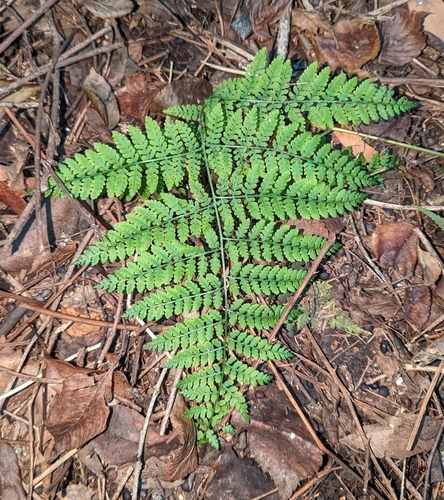
iNaturalist · cc0
no rights reserved, uploaded by natalie
no rights reserved, uploaded by natalie

iNaturalist · cc-by-nc
(c) Kyla Sankara, some rights reserved (CC BY-NC)
(c) Kyla Sankara, some rights reserved (CC BY-NC)
What to Eat
Edible parts: Leaves, Shoots, Fronds
The leaves are cooked in oil. The shoots and fronds are also consumed.
Where to Find It
It is a tropical plant.
Antilles, Central America, Costa Rica, Ecuador, Puerto Rico, St. Kitts and Nevis, West Indies,
Countries: Antigua & Barbuda, Barbados, Bahamas, Belize, Costa Rica, Cuba, Dominica, Dominican Republic, Ecuador, Grenada, Guatemala, Honduras, Haiti, Jamaica, St Kitts & Nevis, St Lucia, Nicaragua, Panama, Puerto Rico, El Salvador, Trinidad & Tobago, St Vincent
How to Identify
A climbing fern. The rhizome is covered with brown hairs. The fronds are 2-4 m long and divided 3 times. The blades are up to 1.5 m wide. The leaflets are 20-50 cm long
Names & Synonyms
Helecho de espina, Ka ugwo
Chelianthes repens (L.) Kaulf.Hypolepis mexicana Liebm.Lonchitis repens L.
References (5)
- Acevedo-Rodriguez, P., 2005, Vine and Climbing Plants of Puerto Rico and the Virgin islands. Contributions to the United States National Herbarium. Volume 51:1-483 p 25
- Castaneda, H., & Stepp, J. R., 2007, Ecosystems as Sources of Useful Plants for the Guaymi People of Costa Rica. Ethnobotany Journal. 5:249-257
- D'Ambrosio, U., & Puri, R. K., 2016, Foodways in transition: food plants, diet and local perceptions of change in a Costa Rican Ngäbe community. Journal of Ethnobiology and Ethnomedicine (2016) 12:3 p 27
- Langlois, H. C., 2004, Ethnobotanical analysis of different successional stages as sources of wild edible plants for the Guaymi people in Costa Rica. M. Sc. thesis University of Florida.
- Torre, de la L., et al, 2008, Enciclopedia de las Plantas Útiles del Ecuador. Herbario QCA. Pontificia Universidad Católica del Ecuador. p 126


