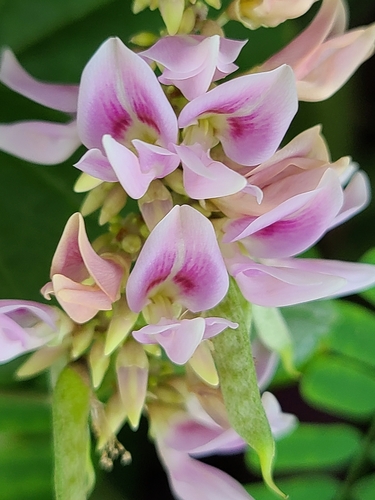
Desmodium sequax
Wall.
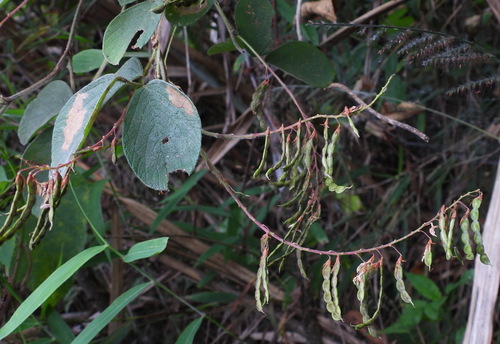
(c) Chen Shu, some rights reserved (CC BY-NC)
no rights reserved
no rights reserved
Where to Find It
It is a tropical plant. It grows on grassy slopes and the edges of forests between 1,000-2,800 m above sea level in southern China. in Yunnan.
Asia, Bhutan, China, Himalayas, India, Indochina, Indonesia, Laos, Malaysia, Mauritius, Myanmar, Nepal, Papua New Guinea, PNG, Philippines, SE Asia, Taiwan, Thailand, Vietnam,
How to Identify
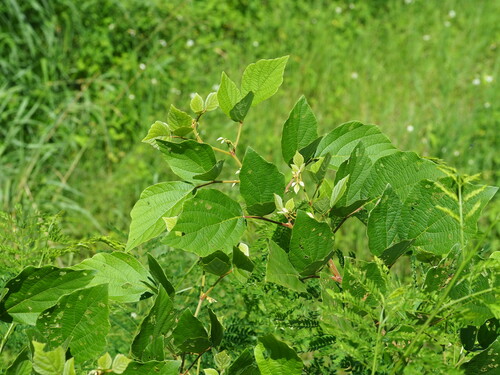
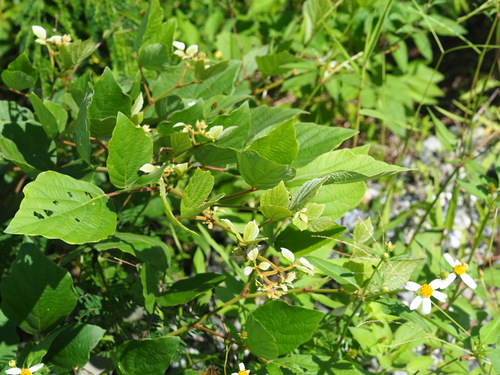
A shrub. It grows 1-2 m tall. The young branches have rust coloured hairs. The leaves have 3 leaflets. The end leaflet is oval and 4-10 cm long by 4-6 cm wide. They are hairy underneath. The flowers are in groups 12 cm long at the ends of branches. The flowers are purple. The pod is 3-5 cm long by 3 mm wide. It has rust coloured hairs.
How to Grow
It can be grown from fresh seed. Stored seed develops a hard seed coat.
Medicinal Uses
Used as an antioxidant in traditional medicine.
Notes
It is an antioxidant as medicine.
Names & Synonyms
Trangqua deo
References (2)
- ILDIS Legumes of the World http:www:ildis.org/Legume/Web
- Kuo, W. H. J., (Ed.) Taiwan's Ethnobotanical Database (1900-2000), http://tk.agron.ntu.edu.tw/ethnobot/DB1.htm