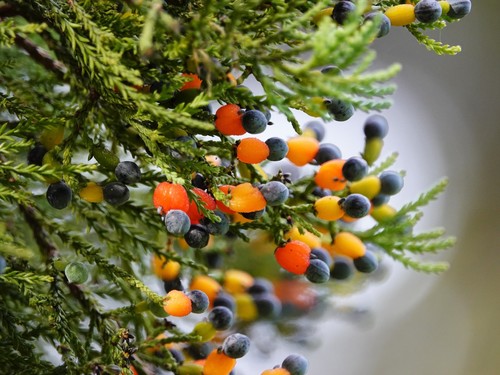
Podocarpus costalis
C. Presl.
no rights reserved, uploaded by 葉子

(c) zxchang, some rights reserved (CC BY-NC)

(c) zxchang, some rights reserved (CC BY-NC)
Where to Find It
It is a tropical plant. In Taiwan it grows along the coast among rocks.
Asia, Philippines, SE Asia, Taiwan*,
How to Identify
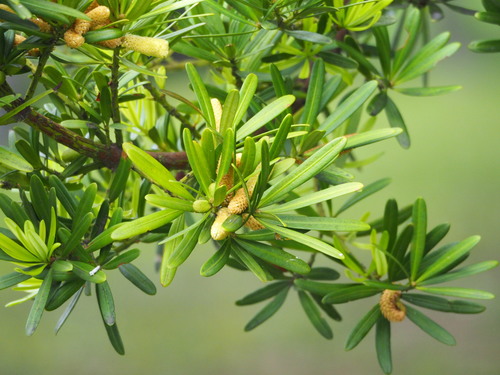
A small shrub. The leaves are clustered near the ends of the small branches. They are leathery and narrowly sword shaped. They are 5-7 cm long by 7-12 mm wide. They are rounded at the tip and taper at the base. The edges curve over. The male cones occur singly, without stalks and are 2.5-3 cm lon by 8-10 mm wide. The female cones are long and fleshy. They are 10-13 mm long.
Wikipedia
Source ↗Podocarpus costalis, locally known as arius, is a species of conifer in the family Podocarpaceae. It is native to the Philippines and Taiwan. This plant grows in island scrub, low forest, or in a limestone bluff or sea stack habitat, growing at elevations from sea level to nearly 300 meters. It is also widely cultivated as a garden plant. It is used in bonsai. The fruit is edible. One threat to the survival of wild populations is overcollecting for horticulture; this practice is illegal throughout its native range.
Other Information
It is widely cultivated in Taiwan.
References (2)
- Flora of Taiwan Vol. 1:561
- Kuo, W. H. J., (Ed.) Taiwan's Ethnobotanical Database (1900-2000), http://tk.agron.ntu.edu.tw/ethnobot/DB1.htm
More from Podocarpaceae