Vachellia cornigera
(L.) Siegler & Ebinger.
Bullhorn acacia
(c) Gumercindo Pimentel, some rights reserved (CC BY-NC), uploaded by Gumercindo Pimentel
(c) Laura, some rights reserved (CC BY-NC-ND), uploaded by Laura
(c) William Ramon Cruz Canto, some rights reserved (CC BY-NC), uploaded by William Ramon Cruz Canto
What to Eat
Edible parts: Stems, Fruit, Pods, Vegetable
The stems are eaten as a vegetable, and the pulp of the pods is eaten. The fruit pods are particularly popular with children and are sold in local markets.
Known Hazards
Where to Find It
It is a tropical plant. It can grow in arid places. It grows between 100-900 m above sea level.
Africa, Asia, Belize, Caribbean, Central America, Colombia, Costa Rica, Egypt, El Salvador, Guatemala, Honduras, Indonesia, Iraq, Jamaica, Mauritius, Mexico*, Middle East, Nicaragua, North America, Pakistan, SE Asia, South America, Taiwan, USA, West Indies,
How to Identify
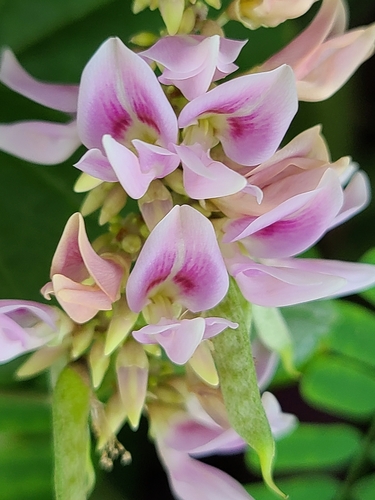
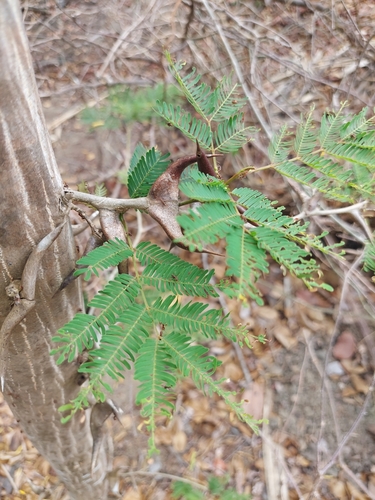
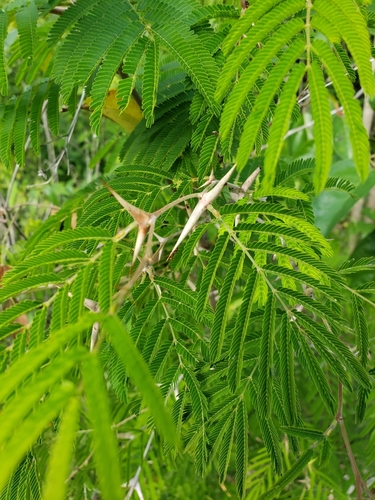
A shrub or small tree. It grows 5 m tall. There are prickles along the stem. The leaves are 5-15 cm long. The leaves are twice divided and there are 8-18 pairs of pinnae. There are up to 50 pairs of pinnules on each pinnae. The flowers are yellow. They are in large clusters at the ends of branches. The pods are 6-10 cm long by 1-2 cm wide. The pods are flattened.
How to Grow
Plants are grown from seed.
Propagation: Seed - the hard coat needs to be scarified in order to allow water to enter. It should then be pre-soaked for 24 hours in warm water prior to sowing. Seed germinates best at a temperature around 21°c. Germination rates, even of scarified seed, tends to be quite low, with the seeds sprouting within 30 - 50 days. Plants make a deep taproot and resent root disturbance, they should be planted out into their permanent positions as soon as possible. Semi-ripe cuttings of lateral shoots.
Medicinal Uses
The thorns of V. cornigera are also used in traditional Maya acupuncture.
Other Uses
The hollow thorns are used to add patterns to bead necklaces.
Wikipedia
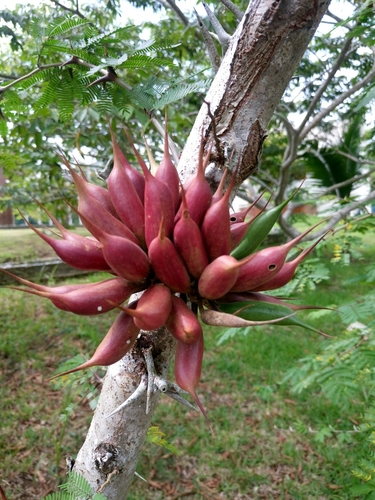
Source ↗Vachellia cornigera, commonly known as bullhorn acacia (family Fabaceae), is a swollen-thorn tree and myrmecophyte native to Mexico and Central America. The common name of "bullhorn" refers to the enlarged, hollowed-out, swollen thorns (technically called stipular spines) that occur in pairs at the base of leaves, and resemble the horns of a steer. In Yucatán (one region where the bullhorn acacia thrives) it is called "subín", in Panama the locals call them "cachito" (little horn). The trees are commonly found in wet lowlands.
Other Information
The fruit pods are eaten by children. Pods are sold in local markets.
Notes
There are about 1,350 Acacia species. Over 1,000 occur in Australia. Also as Mimosaceae.
Names & Synonyms
Cornixuela, Cornizuelo, Ixcanal, Pico de Gorrion, Pohon akasia tanduk kerbau
References (12)
- Ferns, Useful Tropical Plants
- Flora of Pakistan. www.eFloras.org (As Acacia cornigera)
- Grandtner, M. M., 2005, Elsevier's Dictionary of Trees. Volume 1. North America, Elsevier. p 11 (As Acacia cornigera)
- Grandtner, M. M., 2008, World Dictionary of Trees. Wood and Forest Science Department. Laval University, Quebec, Qc Canada. (Internet database http://www.WDT.QC.ca) (As Acacia cornigera)
- ILDIS Legumes of the World http:www;ildis.org/Legume/Web (As Acacia cornigera)
- Janzen, D. H., 1974, Swollen-Thorn Acacias of Central America. Smithsonian Contributions to Botany. Number 13 p 6 (As Acacia cornigera)
- Piedra-Malagón, E. M., et al, 2022, Edible native plants of the Gulf of Mexico Province. Biodiversity Data Journal 10: e80565 p 21 (As Acaciella cornigera)
- Reis, S. V. and Lipp, F. L., 1982, New Plant Sources for Drugs and Foods from the New York Botanical Garden herbarium. Harvard. p 111 (As Acacia cornigera)
- Roa, J. A. G. & Boada, D. S. G., 2018, Fundación para el Fortalecimiento de la Fruticultura y Plantas Alimenticias no Convencionales en Colombia.
- Royal Botanic Gardens, Kew (1999). Survey of Economic Plants for Arid and Semi-Arid Lands (SEPASAL) database. Published on the Internet; http://www.rbgkew.org.uk/ceb/sepasal/internet [Accessed 26th April 2011] (As Acacia cornigera)
- Sukarya, D. G., (Ed.) 2013, 3,500 Plant Species of the Botanic Gardens of Indonesia. LIPI p 99 (As Acacia cornigera)
- World Checklist of Useful Plant Species 2020. Royal Botanic Gardens, Kew