Acoelorrhaphe wrightii
(Griseb. & H. Wendl.) H. Wendl. ex Becc.
Silver saw palmetto
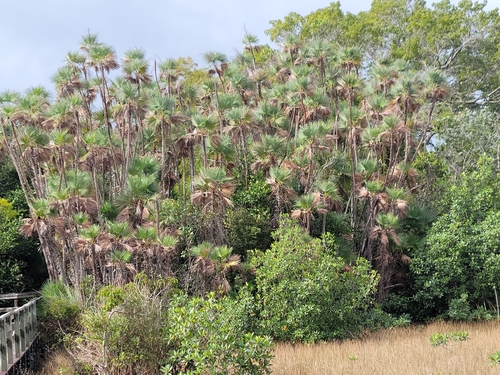
(c) Jay Horn, some rights reserved (CC BY)
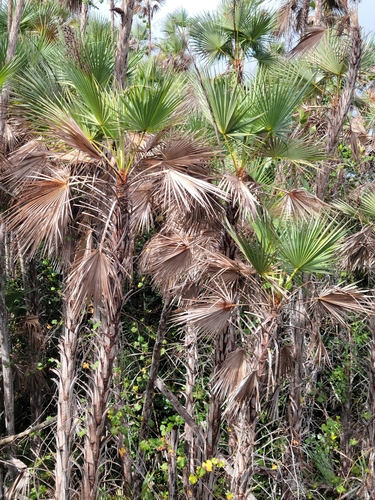
(c) Jay Horn, some rights reserved (CC BY)
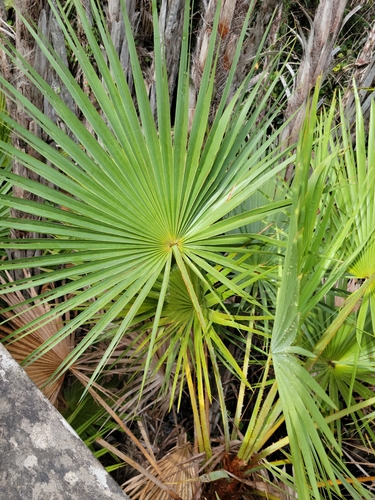
(c) Jay Horn, some rights reserved (CC BY)
What to Eat
Edible parts: Fruit, Seeds
The fruit and seeds are edible.
Where to Find It
It is a tropical plant. It grows in low-lying areas occasionally flooded by fresh or brackish water. It grows at low elevations. It can grow in sun or shade. It can tolerate drought. It can tolerate salt. In Brisbane Botanical Gardens. In Townsville palmetum.
Asia, Australia, Bahamas, Belize, Caribbean, Central America*, Colombia, Cuba, El Salvador, Guatemala, Honduras, Indonesia, Mexico, North America, Panama, SE Asia, South America, West Indies,
How to Identify
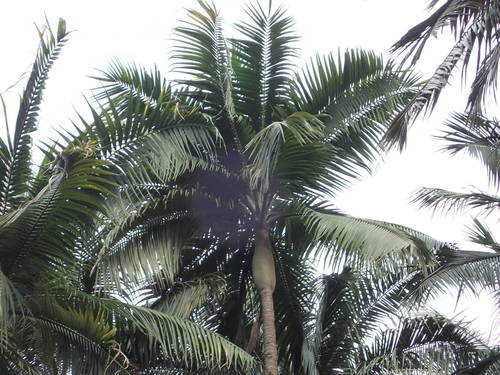
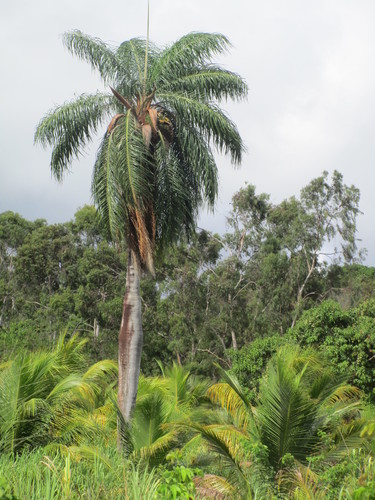
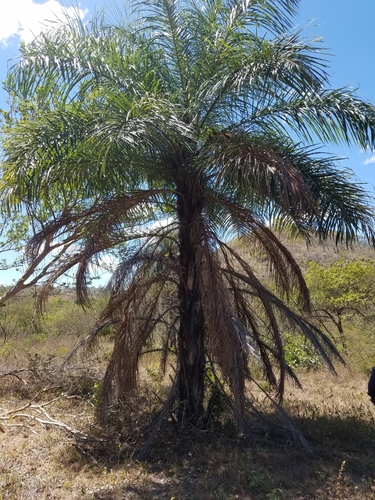
A shrub or small tree. It grows 5 m tall. There are prickles along the stem. The leaves are twice divided and there are 8-18 pairs of pinnae. There are up to 50 pairs of pinnules on each pinnae. The flowers are yellow. They are in large clusters at the ends of branches. The pods are flattened.
How to Grow
Plants are grown from seed. The seeds need to be sown fresh. The plant can be grown by dividing the clump.
Names & Synonyms
Botan palm, Chi-it, Everglades palm, Guano prieto, Hairy tom, Honduras pimenta, Palem geraji perak, Palma de pantano, Papta, Paurotis palm, Pimento palm, Prementa, Saw-cabbage-palm, Saw paurotis, Spanish top palm, Taciste, Tasiste
References (6)
- Bodkin, F., 1991, Encyclopedia Botanica. Cornstalk publishing, p 45
- Grandtner, M. M., 2008, World Dictionary of Trees. Wood and Forest Science Department. Laval University, Quebec, Qc Canada. (Internet database http://www.WDT.QC.ca)
- Grandtner, M. M. & Chevrette, J.,2013, Dictionary of Trees, Volume 2: South America: Nomenclature, Taxonomy and Ecology. Academic Press p 10
- Roa, J. A. G. & Boada, D. S. G., 2018, Fundación para el Fortalecimiento de la Fruticultura y Plantas Alimenticias no Convencionales en Colombia.
- Standley, P. & Steyermark, J., 1958, Flora of Guatemala. Fieldiana: Botany, Volume 24 part 1 p 277
- Sukarya, D. G., (Ed.) 2013, 3,500 Plant Species of the Botanic Gardens of Indonesia. LIPI p 748