Chrysophyllum lucentifolium
Cronquist
Shining leaf starapple

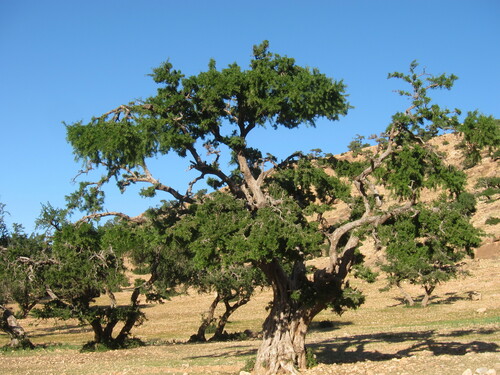
(c) Nils Servientis - Bivouac Naturaliste, some rights reserved (CC BY-NC), uploaded by Nils Servientis - Bivouac Naturaliste

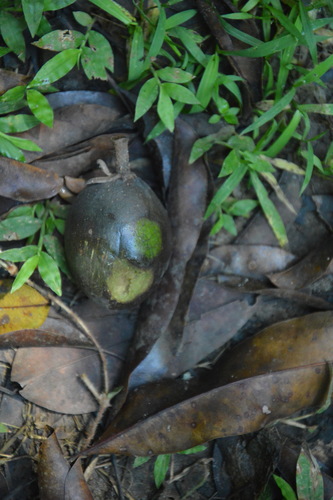
(c) Nils Servientis - Bivouac Naturaliste, some rights reserved (CC BY-NC), uploaded by Nils Servientis - Bivouac Naturaliste

(c) Nils Servientis - Bivouac Naturaliste, some rights reserved (CC BY-NC), uploaded by Nils Servientis - Bivouac Naturaliste
What to Eat
Edible parts: Fruit
The fruit is eaten raw.
Where to Find It
It is a tropical plant. It grows in the rainforest.
Bolivia, Brazil, Central America, Colombia, Costa Rica, Ecuador, Guiana, Guyana, Panama, Peru, South America, Venezuela,
How to Identify
A tropical tree native to rainforests, belonging to the sapodilla family.
Other Uses
The heartwood is light yellow; it is not demarcated from the sapwood. The texture is fine; the grain straight or interlocked. The wood is heavy, hard, elastic; it is not very durable, having a small resistance to fungi and being susceptible to dry wood borers and termites. The wood seasons normally with a slight risk of checking and a high risk of distortion; once dry it is moderately to poorly stable in service. It has a fairly high blunting effect upon tools, stellite-tipped and tungsten carbide are recommended; nailing and screwing are good, but pre-boring is recommended; gluing is correct. The wood is used for heavy carpentry, cabinet work, high class furniture, turnery, interior panelling and joinery, tool handles, sliced veneer etc.
Wikipedia
Source ↗Chrysophyllum lucentifolium is a plant in the family Sapotaceae, native to Central and South America.
Names & Synonyms
Cauje
References (5)
- Grandtner, M. M., 2008, World Dictionary of Trees. Wood and Forest Science Department. Laval University, Quebec, Qc Canada. (Internet database http://www.WDT.QC.ca)
- Grandtner, M. M. & Chevrette, J., 2013, Dictionary of Trees, Volume 2: South America: Nomenclature, Taxonomy and Ecology. Academic Press p 130
- Roa, J. A. G. & Boada, D. S. G., 2018, Fundación para el Fortalecimiento de la Fruticultura y Plantas Alimenticias no Convencionales en Colombia.
- Torre, de la, L., et al, 2008, Enciclopedia de las Plantas Útiles del Ecuador. Herbario QCA. Pontificia Universidad Católica del Ecuador. p 569
- Van den Eynden, V., et al, 2003, Wild Foods from South Ecuador. Economic Botany 57(4): 576-603