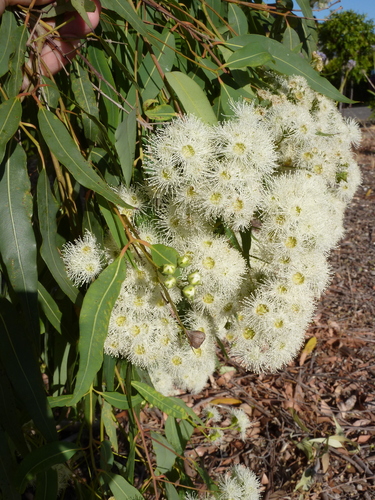
Eugenia biflora
(L.) DC.
Escobon, Murta
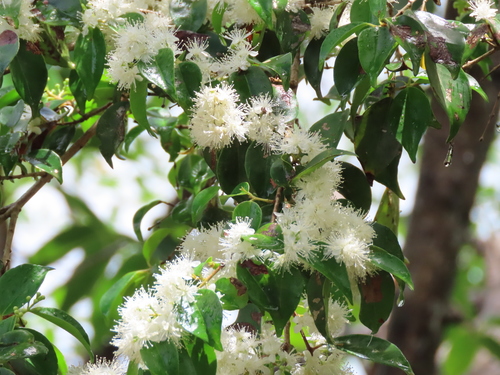
(c) Ricardo J. Colón-Rivera, some rights reserved (CC BY-NC), uploaded by Ricardo J. Colón-Rivera
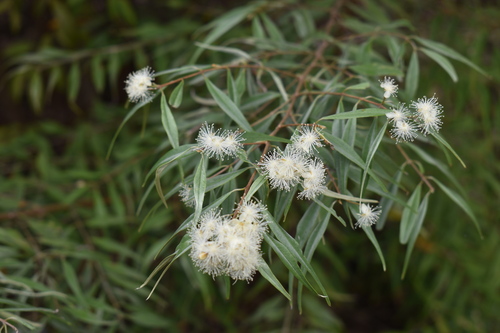
(c) Semillero de Investigación Baobab, some rights reserved (CC BY-NC)

(c) meteorologistsam, some rights reserved (CC BY-NC)
What to Eat
Edible parts: Fruit
Fruit - raw. The sweet-tasting fruits are eaten throughout the plant's range. The pinkish/red to dark purplish or bluish-black, oblong to subglobose fruits are around 6mm long and nearly as thick, containing a single large seed.
Where to Find It
It is a tropical plant. In Puerto Rico it grows it grows up to 700 m above sea level.
Andes, Belize, Bolivia, Brazil, Caribbean, Central America, Colombia, Costa Rica, Dominican Republic, Ecuador, El Salvador, Guatemala, Guiana, Guianas, Guyana, Haiti, Honduras, Jamaica, Mexico, Nicaragua, North America, Panama, Peru, Puerto Rico, South America, Suriname, USA, Venezuela, West Indies,
How to Identify
A shrub or small tree. It grows 3-4 m high. The twigs have a brown coating amongst white hairs. The leaves are sword shaped. They are 7 cm long and 1-3 cm wide. There are 3-7 flowers in a group. The flowers are white. The fruit is a slightly flattened round berries. They are 7 mm long. They can be slightly ribbed.
How to Grow
Grows best in a sunny position. Succeeds in calcareous soils.
Other Uses
The sapwood is light brown and hard.
Names & Synonyms
Arrayan, Coralillo, Hoja menuda, Murtinha, Pitanguera
References (10)
- Grandtner, M. M., 2008, World Dictionary of Trees. Wood and Forest Science Department. Laval University, Quebec, Qc Canada. (Internet database http://www.wdt.qc.ca)
- Grandtner, M. M. & Chevrette, J., 2013, Dictionary of Trees, Volume 2: South America: Nomenclature, Taxonomy and Ecology. Academic Press p 235
- Kermath, B. M., et al, 2014, Food Plants in the Americas: A survey of the domesticated, cultivated and wild plants used for Human food in North, Central and South America and the Caribbean. On line draft. p 350
- Little, E. L., et al, 1974, Trees of Puerto Rico and the Virgin Islands. USDA Handbook 449. Forestry Service. p 644
- Lopez-Diago, D. & Garcia, N., 2021, Wild edible fruits of Colombia. Biota ColomBiana 22 (2) p 44
- Martin, F.W., C.W. Campbell and R.M. Ruberté, 1987, Perennial edible fruits of the tropics - An inventory. United States Department of Agriculture, Agricultural Research Service, Agriculture Handbook No. 642. Washington, D.C., USA
- NYBG herbarium "edible"
- Plants of Haiti Smithsonian Institute http://botany.si.edu/antilles/West Indies
- Roa, J. A. G. & Boada, D. S. G., 2018, Fundación para el Fortalecimiento de la Fruticultura y Plantas Alimenticias no Convencionales en Colombia.
- Segura, S., et al, 2018, The edible fruit species in Mexico. Genet Resour Crop Evol (2018) 65:1767–1793