Pouteria torta subsp. tuberculata
(Sleumer) T. D. Penn.
Tuberculate twisted pouteria
SapotaceaeFruit

gbif · cc-by-nc
Pedro Blanco
Pedro Blanco

gbif · cc-by-nc
Pedro Blanco
Pedro Blanco

gbif · cc-by-nc
Pedro Blanco
Pedro Blanco
What to Eat
Edible parts: Fruit
The fruit are eaten.
Where to Find It
It is a tropical plant. It is usually on non flooded land.
Amazon, Belize, Brazil, Central America, Colombia, Costa Rica, Ecuador, El Salvador, Guatemala, Guiana, Honduras, Mexico, Nicaragua, Panama, Peru, South America,
How to Identify
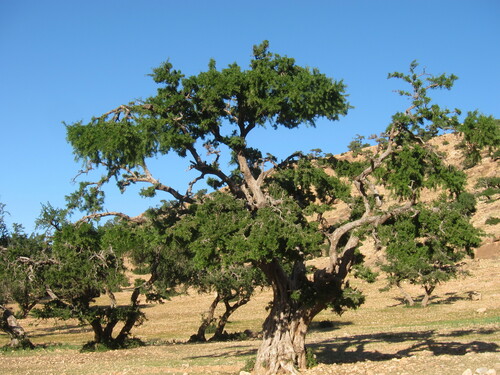
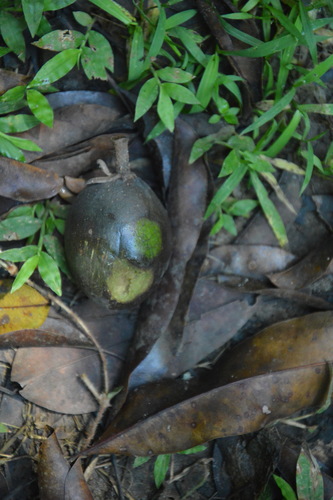
A tree. It grows 35 m tall. The trunk is 60 cm across. The bark is dark brown and scaling. The leaves are 15-45 cm long. There are 17-37 secondary veins. The fruit are 5-7 cm long. They are covered with hairy projections.
Wikipedia
Source ↗Pouteria torta is a species of tree native to Central and South America. It is found largely in the Brazilian cerrado and is commonly called guapeva and grão-de-galo.
Names & Synonyms
Abiurana-de-goma, Dupi, Quinilla
Calocarpum cooperi (Cronquist) LundellLucuma tuberculata SleumerPouteria cooperii CronquistPouteria echinocarps W. A. RodriguesPouteria neglecta CronquistPouteria wurdackii Aubrev.Xantolis tuberculata (Sleumer) Baehni
References (5)
- Grandtner, M. M., 2008, World Dictionary of Trees. Wood and Forest Science Department. Laval University, Quebec, Qc Canada. (Internet database http://www.wdt.qc.ca)
- Grandtner, M. M. & Chevrette, J., 2013, Dictionary of Trees, Volume 2: South America: Nomenclature, Taxonomy and Ecology. Academic Press p 530
- Kermath, B. M., et al, 2014, Food Plants in the Americas: A survey of the domesticated, cultivated and wild plants used for Human food in North, Central and South America and the Caribbean. On line draft. p 699
- Torre, de la, L., et al, 2008, Enciclopedia de las Plantas Útiles del Ecuador. Herbario QCA. Pontificia Universidad Católica del Ecuador. p 573
- Van Roosmalen, M.G.M., & Garcia, O. M., 2000, Fruits of the Amazonian Forest. Part 2: Sapotaceae. Acta Amazonica 30(2): 187-290