Prunus myrtifolia
(L.) Urb.
Myrtle cherry

(c) Alan R. Franck, some rights reserved (CC BY-NC), uploaded by Alan R. Franck
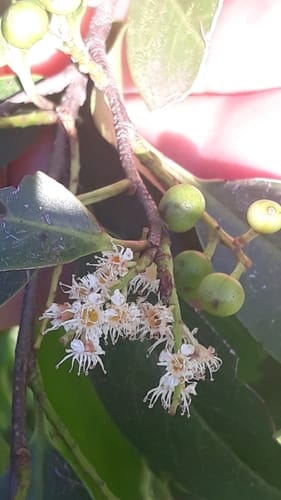
(c) Edson Luis Fabro Gasperin, some rights reserved (CC BY-SA)
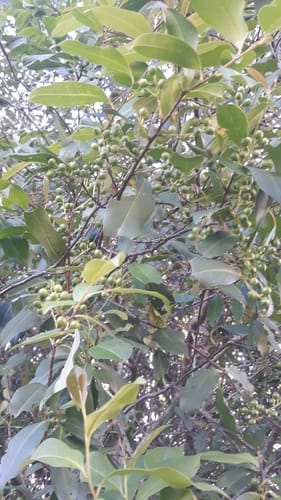
(c) Edson Luis Fabro Gasperin, some rights reserved (CC BY-SA)
What to Eat
Edible parts: Seeds - flavour
The seeds are used to flavour wine.
Known Hazards
Where to Find It
It is a tropical plant.
Bahamas, Belize, Brazil, Central America, Costa Rica, Cuba, Dominican Republic, El Salvador, Guadeloupe, Guatemala, Haiti*, Honduras, Jamaica*, Martinique, Mexico, Nicaragua, North America, Panama, Puerto Rico, South America, USA, Venezuela, West Indies,
How to Identify
A tree. It grows 10-20 m tall. The trunk is twisted. The fruit are round and purple-black They are 8-12 mm across.
How to Grow
Succeeds in full sun and in dappled shade. Tolerant of a wide range of soils. Plants have a moderate rate of growth.
Propagation: Seed - best sown as soon as it is ripe in a partially shaded position in a nursery seedbed or in individual containers. A low germination rate can usually be expected, with the seed sprouting within 30 - 50 days. Seeds have a viability of at least 12 months if kept in cold storage.
Medicinal Uses
A decoction of the grated bark is used as a pectoral remedy for colds.
Other Uses
The heartwood is a light, clear red; the thick band of sapwood is paler in colour. The wood is fine-textured, straight and close-grained, heavy, hard to cut, with moderate resistance to wood-eating organisms. It is used for internal purposes in construction, for making furniture, sports articles, tool handles, lathe work, plywood etc.
Wikipedia
Source ↗Prunus myrtifolia, called the West Indies cherry or myrtle laurel cherry, is a New World species of shrubs in the family Rosaceae.
Names & Synonyms
Almendrillo, Amandra-oedoe, Coracao-de-negro, Cuajani hembra, Cuajanincillo, Duraznero-de-monte, Ivaro, Membrillito, Membrillo, Palo de hacha, Palo rojo, Persiguero bravo, Pessegueiro-bravo, Virari, West Indian laurel-cherry
References (6)
- Grandtner, M. M., 2008, World Dictionary of Trees. Wood and Forest Science Department. Laval University, Quebec, Qc Canada. (Internet database http://www.wdt.qc.ca)
- Grandtner, M. M. & Chevrette, J., 2013, Dictionary of Trees, Volume 2: South America: Nomenclature, Taxonomy and Ecology. Academic Press p 538
- Hedrick, U.P., 1919, (Ed.), Sturtevant's edible plants of the world. p 529 (As Prunus sphaerocarpa)
- Kermath, B. M., et al, 2014, Food Plants in the Americas: A survey of the domesticated, cultivated and wild plants used for Human food in North, Central and South America and the Caribbean. On line draft. p 713
- Plants of Haiti Smithsonian Institute http://botany.si.edu/antilles/West Indies
- Prodr. 80. 1788 (As Prunus sphaerocarpa)
More from Rosaceae


