Robinia hispida
L.
Bristly locust, Rose acacia

(c) A. R., some rights reserved (CC BY-NC-SA)

(c) A. R., some rights reserved (CC BY-NC-SA)
(c) Tom Norton, some rights reserved (CC BY)
What to Eat
Edible parts: Honey
None known
Known Hazards
Where to Find It
It is a temperate plant. It suits hardiness zones 6-11.
Africa, Asia, China, East Africa, Europe, Korea, North America*, USA, Zimbabwe,
How to Identify
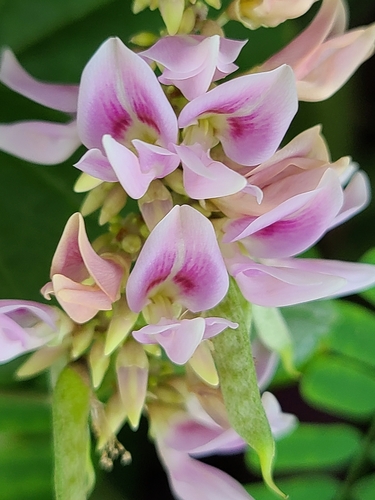
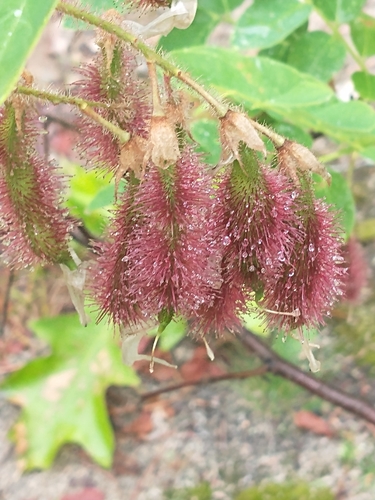
A shrub or small tree. It grows 2-4 m tall. The stems are bristly and sticky to touch. The leaves are 12-23 cm long and have 7-15 leaflets along the stalk. The leaflets are 2-5 cm long. The flowers are pink. They are in groups of 3-12 together.
How to Grow
A shrub or small tree which grows in dry woods and slopes. It has been reported to have occasionally escaped from cultivation. Grow in average, dry to medium moisture, well-drained soil in full sun. Prefers organically rich soils, but tolerates poor, dry soils. Flower: Showy. Bloom: Rosy pink to purplish-red. Bloom Time: May. Fruit: Showy. Tolerate: Deer, Drought, Erosion, Dry Soil, Shallow-Rocky Soil. As robinias have brittle branches that can be easily damaged by strong winds, it may be necessary to plant them in a protected spot. Otherwise, these are hardy, easily cultivated trees that will thrive in any bright position with moist well-drained soil. They can be pruned when young to establish a strongly branched structure. A clumping plant, forming a colony from shoots away from the crown but with a limited spread.
Propagation: Species are raised from seed. Cuttings will strike, but cultivars are typically grafted onto seedling rootstocks to ensure superior root systems.
Medicinal Uses
The Cherokee used this plant in several ways: the root bark was chewed as an emetic, beaten root was held against a tooth to relieve toothache, and an infusion was given to cows as a tonic.
Other Uses
Useful as a nitrogen fixer and for stabilizing embankments and slopes, and well suited to poor, dry soils. Can be grown as an informal hedge or screen, and its excellent flowers and foliage make it a good specimen plant. Provides food and shelter for beneficial insects including lacewings and parasitoid wasps, attracts hummingbirds as a nectar source, and offers shelter for birds.
Wikipedia
Source ↗Robinia hispida, known as the bristly locust, rose-acacia, or moss locust, is a shrub in the subfamily Faboideae of the pea family Fabaceae. It is native to the southeastern United States, and it is present in other areas, including other regions of North America, as an introduced species. It is grown as an ornamental and can escape cultivation and grow in the wild.
Names & Synonyms
Bristly locust, rose-acacia, moss locust
References (2)
- Grandtner, M. M., 2008, World Dictionary of Trees. Wood and Forest Science Department. Laval University, Quebec, Qc Canada. (Internet database http://www.wdt.qc.ca)
- Jackes, D. A., 2007, Edible Forest Gardens