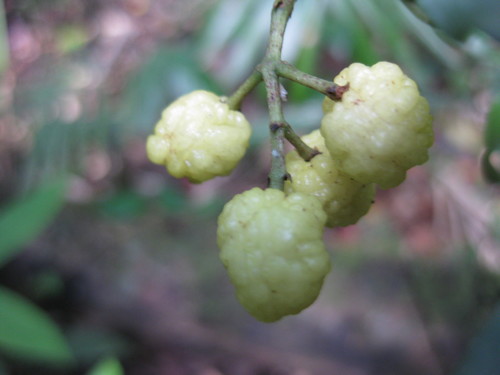
Zanthoxylum flavum
Vahl
Yellow heart prickly ash

(c) Alan R. Franck, some rights reserved (CC BY-NC), uploaded by Alan R. Franck
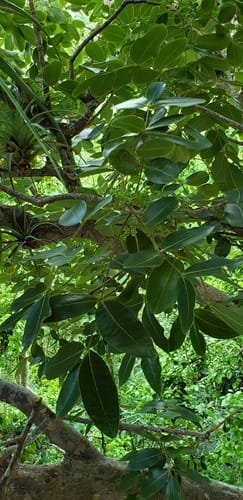
(c) Heather Mazzaccaro, some rights reserved (CC BY)
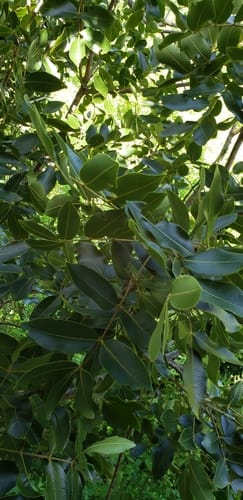
(c) Heather Mazzaccaro, some rights reserved (CC BY)
Known Hazards
Where to Find It
It is a tropical plant.
Bahamas, Bermuda, Central America, Cuba, Curacao, Dominican Republic, Guadeloupe, Guiana, Haiti, Jamaica, Lesser Antilles, Mexico, North America, Puerto Rico, USA, West Indies*,
How to Identify
A tree. It grows 10 m tall. The bark is smooth and grey. The branches are spreading. The leaves are compound with 3 or 4 pairs of oval leaflets along the stalk. They are softly hairy underneath when young. The flowers are small and white or green. The flowers are in clusters and have 5 petals. The fruit are round and the seeds are black.
How to Grow
Grows best in full sun or light shade. Prefers a fertile, well-drained soil. Established plants are very drought tolerant. A dioecious species - both male and female forms need to be grown if seed is required.
Medicinal Uses
The bark is chewed into a fine pulp and then inserted into a tooth cavity to relieve the pain. The wood contains the coumarins psoralene and suberosine. Psoralene is a chemical defense against fungus and insect attack of the tree, and also an agent used in photochemotherapy against vitiligo, psoriasis and mycoses.
Other Uses
The heartwood is a creamy or golden yellow darkening with exposure; not clearly differentiated from the whitish to light yellow sapwood. The lustre is high; texture fine and even; grain interlocked or irregular often with roey mottle figure; when freshly worked has a characteristic scent of coconut. The wood is brittle, very hard, heavy, not strong, reported as nondurable, but is resistant to dry-wood termites. It has a moderate blunting effect on cutting edges; the wood tends to ride on cutters in planing; an excellent turnery wood; takes a fine polish. It is used for cabinetmaking, fine furniture, inlays, turnery, fancy veneers, specialty item (hand mirrors and hairbrushes).
Wikipedia
Source ↗Zanthoxylum flavum is a medium-sized tree in the family Rutaceae. Common names include noyer, West Indian satinwood, yellow sanders, tembetaria, and yellow sandalwood. It is native to Anguilla, Antigua and Barbuda, the Bahamas, Bermuda, Cuba, the Dominican Republic, Guadeloupe, Haiti, Jamaica, Puerto Rico, and the Florida Keys, exclusive of Key West where it has been extirpated. It is threatened by habitat loss and harvesting for its dense, durable wood used in fine woodworking.
Names & Synonyms
Kalabari
References (2)
- Grandtner, M. M., 2008, World Dictionary of Trees. Wood and Forest Science Department. Laval University, Quebec, Qc Canada. (Internet database http://www.wdt.qc.ca)
- Plants of Haiti Smithsonian Institute http://botany.si.edu/antilles/West Indies