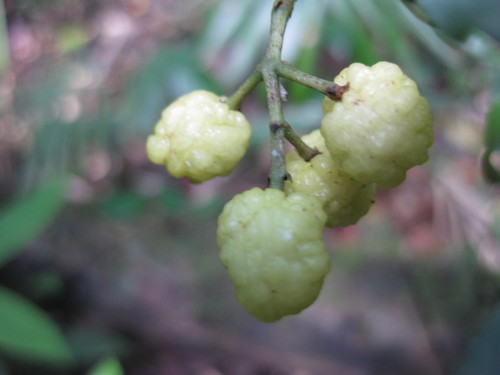
Zanthoxylum rhoifolium
Lam.
Dark prickly ash

(c) Eric Fischer Rempe, some rights reserved (CC BY-NC), uploaded by Eric Fischer Rempe
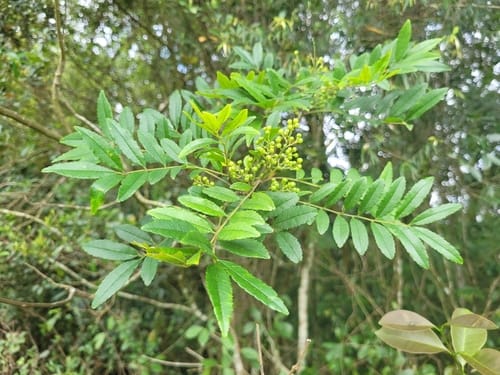
(c) Micael De Bona, some rights reserved (CC BY-NC)
Where to Find It
It is a tropical plant. In Argentina it grows from sea level to 1,000 m above sea level. It needs to be a sunny areas.
Argentina, Belize, Bolivia, Brazil, Central America, Colombia, Costa Rica, El Salvador, Guatemala, Guiana, Guianas, Guyana, Honduras, Mexico, Nicaragua, North America, Panama, Paraguay, Peru, South America*, Suriname, Trinidad, Uruguay, Venezuela,
How to Identify
A tropical deciduous small tree in the Rutaceae family growing to 12 m tall that requires sunny locations.
How to Grow
Grows best in a sunny position. Grows well on nutrient-depleted soils. Established plants are drought tolerant. The plant responds well to coppicing and can survive forest fires by resprouting from the roots. A dioecious species, both male and female forms need to be grown if seed is required.
Propagation: Seed - best sown as soon as it is ripe in a lightly shaded position in a nursery seedbed or individual containers. Germination rates are usually low with the seeds sprouting after about 30 - 60 days.
Medicinal Uses
This is a medicinal plant. The bark is used to treat toothache and earache. It is used as an anti-inflammatory. It is used to treat malaria. Parts of the plant also have antibacterial and fungicidal action.
Other Uses
The pale greenish-yellow wood is lustrous; odourless, but with a slightly bitter taste; straight-grained; medium-textured; of medium weight. It is light in weight, hard, flexible, not durable when exposed to the weather or wet soils. It is inclined to be splintery and saws woolly, easy to work, takes a smooth finish. It is used in construction, cabinet making, general carpentry, making tool handles, cart bodies, oars etc. Zanthoxylum rhoifolium is a natural pioneer species. It is a common shrub that invades open ground in Amazonia, often being found in abandoned pasture where it grows quickly and provides suitable conditions for the establishment of other rainforest trees and shrubs.
Wikipedia
Source ↗Zanthoxylum rhoifolium is a species of tree in the family Rutaceae. It is known by the common names mamica de cadela, tambataru, and prickly ash. It is native to Central and South America. It is a common tree on the Cerrado.
Notes
It is used in medicine.
Names & Synonyms
Mamica de cadela, Tamtataru
References (1)
- Grandtner, M. M., 2008, World Dictionary of Trees. Wood and Forest Science Department. Laval University, Quebec, Qc Canada. (Internet database http://www.wdt.qc.ca)