Brodiaea coronaria
(Salisb.) Jeps.
Californian hyacinth, Harvest Brodiaea, Violet ookow
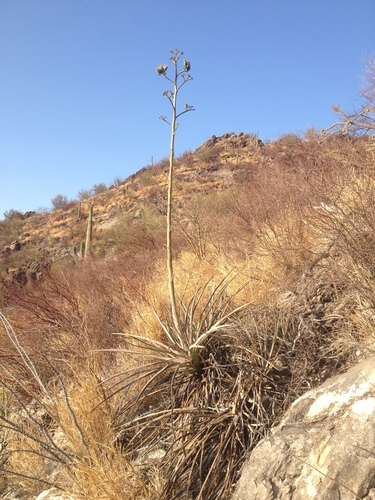
no rights reserved, uploaded by Shane Johnson
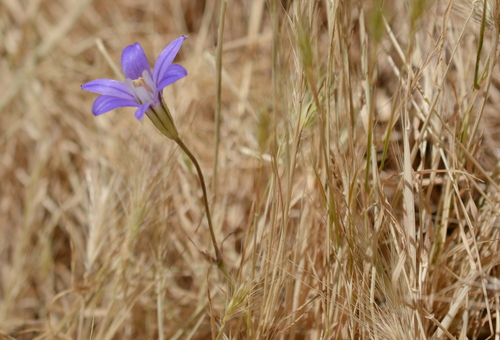
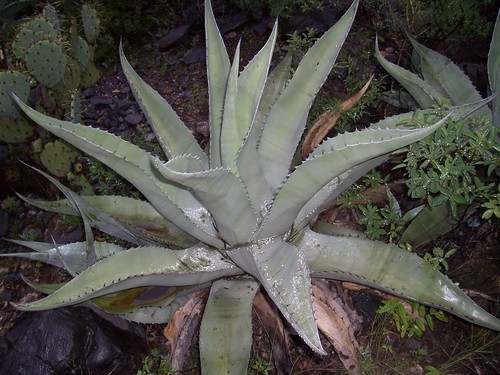
(c) Alison Northup, some rights reserved (CC BY), uploaded by Alison Northup
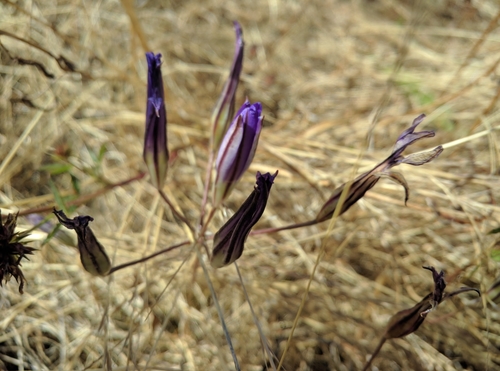
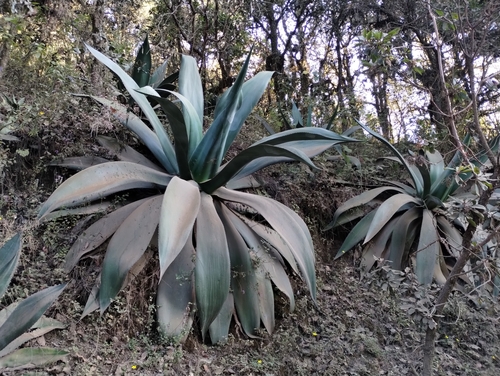
(c) Max Miner, some rights reserved (CC BY-NC), uploaded by Max Miner
What to Eat
Edible parts: Fruit, Root, Bulbs, Corm
Edible Parts: Fruit Root Edible Uses: Corm - raw or cooked. Baked or boiled and eaten like potatoes. When slowly roasted, it becomes very sweet. Edible fruit. This report is rather dubious and possibly refers to the seedpod since the seed is encased in a small dry capsule.
Where to Find It
It is a temperate plant. It needs light to medium well-drained soils. It needs a sunny position. It is resistant to drought and frost. It suits hardiness zones 8-10.
Australia, Canada, Europe, France, North America, USA,
How to Identify
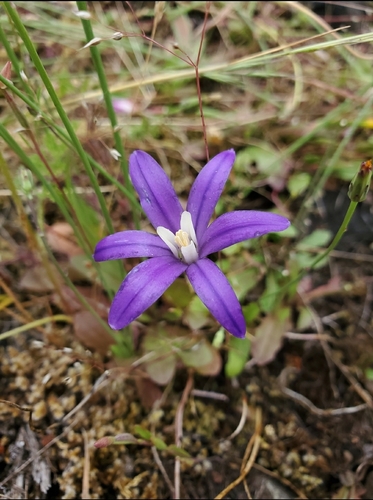
An onion like plant. It grows 30 cm tall and spreads 10 cm wide. The leaves are slender. The flowers are blue and star like. They are in loose groups of up to 12.
How to Grow
Plants can be grown from small bulbs.
Propagation: Seed - best sown as soon as it is ripe in a cold frame. The seed can also be sown in spring in a cold frame. Germination usually takes place within 1 - 3 months at 15°c. Sow the seed thinly so that it will not require thinning and grow the seedlings on undisturbed in the pot for their first year. Pot up the small bulbs when they are dormant in early autumn and grow them on for at least another year before planting them out when dormant in the autumn. Seedlings are prone to damping off, they should be watered with care and given plenty of ventilation. Division in autumn. Dig up the clumps of corms when they are dormant, divide them and replant the larger corms into their permanent positions. It is best to pot up the smaller corms and grow them on for a year in a cold frame, planting them out in late summer or the autumn.
Medicinal Uses
None known
Other Uses
None known Special Uses
Wikipedia
Source ↗Brodiaea coronaria is the type species of Brodiaea and also known by the common names harvest brodiaea and crown brodiaea. It is native to western North America from British Columbia to northern California, where it grows in mountains and grasslands.
Notes
There are about 15 Brodiaea species. They are mostly in North America. They are also put in the families Alliaceae and Themidaceae.
Names & Synonyms
Largeflower tripletlily
References (12)
- Beckstrom-Sternberg, Stephen M., and James A. Duke. "The Foodplant Database." http://probe.nalusda.gov:8300/cgi-bin/browse/foodplantdb.(ACEDB version 4.0 - data version July 1994) (As Hookera coronaria)
- Bircher, A. G. & Bircher, W. H., 2000, Encyclopedia of Fruit Trees and Edible Flowering Plants in Egypt and the Subtropics. AUC Press. p 66
- Bodkin, F., 1991, Encyclopedia Botanica. Cornstalk publishing, p 170
- Cundall, P., (ed.), 2004, Gardening Australia: flora: the gardener's bible. ABC Books. p 259
- Hedrick, U.P., 1919, (Ed.), Sturtevant's edible plants of the world. p 136
- Hibbert, M., 2002, The Aussie Plant Finder 2002, Florilegium. p 46
- Lim, T. K., 2015, Edible Medicinal and Non Medicinal Plants. Volume 9, Modified Stems, Roots, Bulbs. Springer p 18
- Notizbl. Kounigl. Bot. Gart. Berlin 2:317. 1899
- Plants for a Future database, The Field, Penpol, Lostwithiel, Cornwall, PL22 0NG, UK. http://www.scs.leeds.ac.uk/pfaf/
- Saunders, C.F., 1948, Edible and Useful Wild Plants. Dover. New York. p 21
- Stromberg, M. R. et al, California Grasslands: Ecology and Management. p 63
- Tozer, F., 2007, The Uses of Wild Plants. Green Man Publishing. p 49