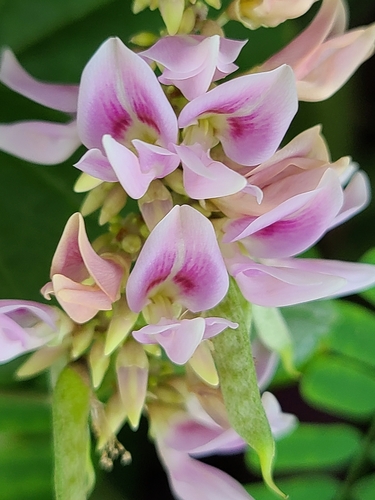
Canavalia lineata
(Thunb.) DC.
Beach bean
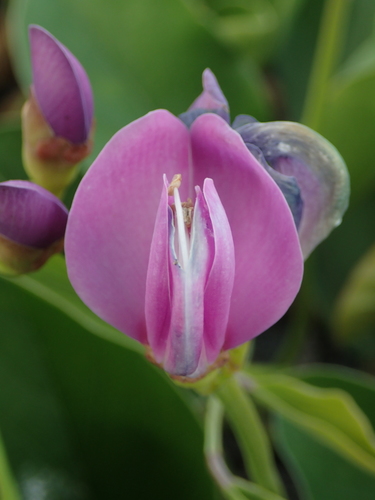
iNaturalist · cc0
no rights reserved, uploaded by 葉子
no rights reserved, uploaded by 葉子
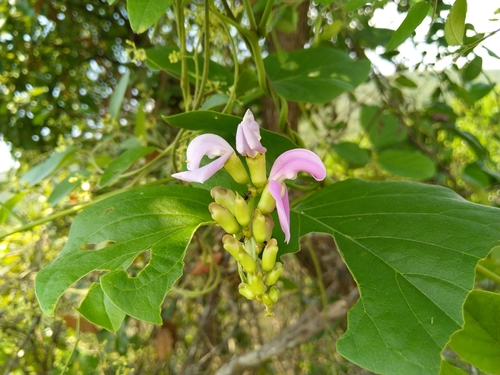
iNaturalist · cc-by-nc
(c) Pan Lau, some rights reserved (CC BY-NC)
(c) Pan Lau, some rights reserved (CC BY-NC)

iNaturalist · cc-by-nc
(c) Richard Johnstone, some rights reserved (CC BY-NC), uploaded by Richard Johnstone
(c) Richard Johnstone, some rights reserved (CC BY-NC), uploaded by Richard Johnstone
Where to Find It
It is a tropical plant. It grows on sandy beaches.
Asia, Bangladesh, Cambodia, China, Indochina, Indonesia, Japan, Korea, Laos, Malaysia, Maldives, Philippines, SE Asia, Taiwan, Thailand, Vietnam,
Countries: United Arab Emirates, Afghanistan, Armenia, Azerbaijan, Bangladesh, Bahrain, Brunei, Bhutan, China, Georgia, Indonesia, Israel, India, Iraq, Iran, Jordan, Japan, Kyrgyzstan, Cambodia, North Korea, South Korea, Kuwait, Kazakhstan, Laos, Lebanon, Sri Lanka, Myanmar, Mongolia, Maldives, Malaysia, Nepal, Oman, Philippines, Pakistan, Qatar, Saudi Arabia, Singapore, Syria, Thailand, Tajikistan, Timor-Leste, Turkmenistan, Turkey, Taiwan, Uzbekistan, Vietnam, Yemen
How to Identify
A twining vine. It can be 5 m long. It keeps growing from year to year. The leaves are oval and 6-14 cm long by 4-10 cm wide. They are softly hairy. The base is wedge shaped and it is rounded at the tip. The flowers are on the axils of leaves. They are purplish red. The fruit is an oblong pod 6-10 cm long by 3 cm wide. The seeds are brown. There are 2 to 3 oval seeds.
Notes
There are about 50 Canavalia species.
Names & Synonyms
Dau-co
Dolichos lineatus Thunb.Dolichos lineatus Murray
References (4)
- ILDIS Legumes of the World http:www:ildis.org/Legume/Web
- Kew Plants of the World On line
- Wiersema, J. H. & Leon, B., 2013, World Economic Plants. A Standard Reference CRC Press. 2nd Ed. p 138
- World Checklist of Useful Plant Species 2020. Royal Botanic Gardens, Kew