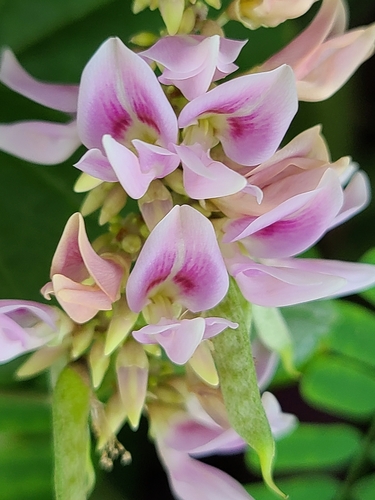
Lathyrus annuus
L.
Annual yellow vetchling, Fodder pea
(c) Thomas Koffel, some rights reserved (CC BY), uploaded by Thomas Koffel

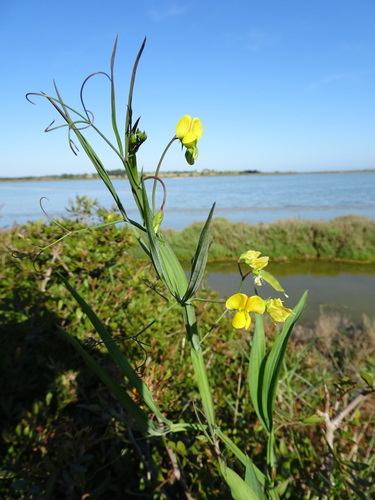
(c) Sarah Gregg, some rights reserved (CC BY-NC-SA)

(c) Sarah Sells, some rights reserved (CC BY-NC), uploaded by Sarah Sells
What to Eat
Edible parts: Fruit, Shoots
The young shoots are eaten cooked. The fruit and shoots are edible portions.
Where to Find It
It is a Mediterranean climate plant. It grows below 1,200 m above sea level. It can grow in arid places.
Afghanistan, Albania, Algeria, Armenia, Azerbaijan, Azores, Balkans, Britain, Bulgaria, Canary Islands, Caucasus, Central Asia, Crete, Cyprus, Egypt, Europe, France, Georgia, Greece, Iran, Iraq, Israel, Italy, Jordan, Lebanon, Libya, Mediterranean, Middle East, Morocco, New Zealand, North Africa, Portugal, Russia, Sicily, Slovenia, Spain, Syria, Tajikistan, Tunisia, Turkey, Türkiye, Turkmenistan, Yugoslavia,
How to Identify
An annual herb in the pea family with yellow flowers, native to Mediterranean climates. It grows below 1,200 m elevation and is cultivated in arid regions.
Wikipedia
Source ↗Lathyrus annuus, the annual vetchling, is a species of annual herb in the family Fabaceae. They are climbers and are associated with freshwater habitat. They have broad leaves. Individuals can grow to 37 cm tall. The species is diploid and has 14 chromosomes (2n=14).
Other Information
It is cultivated.
Names & Synonyms
Dağdırılcası, Enoletni grahor, Fasuolu sarvaggiu
References (9)
- Ertug, F, Yenen Bitkiler. Resimli Türkiye Florası -I- Flora of Turkey - Ethnobotany supplement
- Geraci, A., et al, 2018, The wild taxa utilized as vegetables in Sicily (Italy): a traditional component of the Mediterranean diet. Journal of Ethnobiology and Ethnomedicine (2018) 14:14
- http://www.botanic-gardens-ljubljana.com/en/plants
- ILDIS Legumes of the World http:www:ildis.org/Legume/Web
- Pasta, S., et al, 2020, An Updated Checklist of the Sicilian Native Edible Plants: Preserving the Traditional Ecological Knowledge of Century-Old Agro-Pastoral Landscapes. Frontiers in Plant Science. Volume 11|Article 388
- Pastor-Cavada, E., ey al, 2010, Protein isolates from two Mediterranean legumes:Lathyrus clymenum and Lathyrus annuus. Chemical composition, functional properties and protein characterisation. Food Chemistry 122: 533-538
- Royal Botanic Gardens, Kew (1999). Survey of Economic Plants for Arid and Semi-Arid Lands (SEPASAL) database. Published on the Internet; http://www.rbgkew.org.uk/ceb/sepasal/internet [Accessed 29th April 2011]
- World Checklist of Useful Plant Species 2020. Royal Botanic Gardens, Kew
- Zeven, A. C. & de West, J. M. J., 1982, Dictionary of cultivated plants and their regions of diversity. Wageningen. p 113