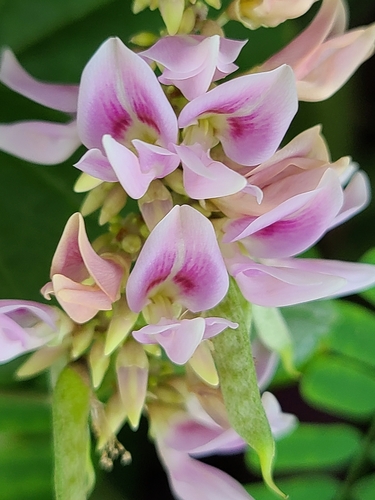
Parkia multijuga
Bentham
Guarango nitta tree
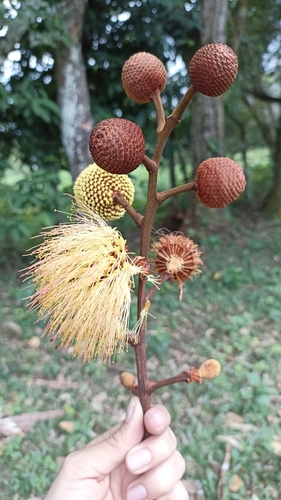
(c) Candida Caicedo Moreno, some rights reserved (CC BY-NC), uploaded by Candida Caicedo Moreno
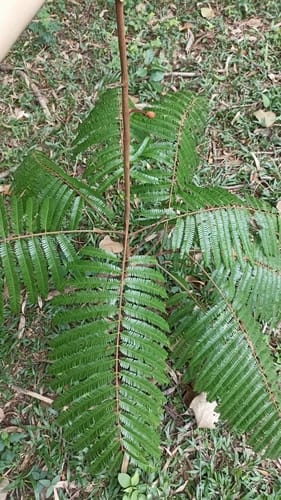
(c) Candida Caicedo Moreno, some rights reserved (CC BY-NC)
What to Eat
Edible parts: Fruit
The seeds are ground and mixed with flour.
Where to Find It
It is a tropical plant. It grows in the lowlands and up to 450 m above sea level. It grows in areas with a rainfall of 2,200 mm. per year. The temperature is 25-27°C.
Amazon, Bolivia, Brazil, Colombia, Ecuador, Mexico, Peru, South America, Venezuela,
How to Identify
A tree. It grows 20-40 m tall. The trunk is 50-100 cm across. The leaves are compound and alternate. They are 12-20 cm long and twice divided. There are 20-40 pairs of leaflets. The flowers are in yellow heads. The fruit is a curved bean pod 20-25 cm long and 7-9 cm wide. It has about 14 seeds.
How to Grow
Plants are grown from seeds. Seeds need to be scratched to break the hard seed coat. They should then be soaked in water fro 24 hours before planting.
Propagation: Seed - it has a hard seedcoat and needs scarification before sowing to speed up germination. This can usually be done by pouring a small amount of nearly boiling water on the seeds (being careful not to cook them!) and then soaking them for 12 - 24 hours in warm water. By this time they should have imbibed moisture and swollen - if they have not, then carefully make a nick in the seedcoat (being careful not to damage the embryo) and soak for a further 12 hours. Sow the seed in a semi-shaded position in a nursery seedbed or individual containers. Germination rates are usually high, with the seed sprouting within 20 - 40 days. Seedlings grow quickly and can be ready for planting out into their permanent positions within 4 - 5 months.
Other Uses
The heartwood is creamy white, sometimes with very large light brown veins; it os not demarcated from the sapwood. The texture is medium; the grain straight or interlocked. The wood is very light to light in weight, soft; not very durable, being susceptible to fungi, dry wood borers and termites. It seasons fairly quickly, with a high risk of checking and distortion; once seasoned it is poorly stable in service. It can be worked with ordinary tools, though there is a risk of fuzzy surfaces; nailing and screwing are poor; gluing is correct. A low quality wood, it is used for purposes such as interior panelling and joinery, furniture components, boxes and crates, moulding, blockboard and veneer. A fast-growing plant that can regenerate naturally in open areas, it can be used as a pioneer species for re-establishing woodland.
Production
Plants grow quickly. In the Amazon it flowers August to October and fruit ripen November to December.
Notes
Also as Mimosaceae.
Names & Synonyms
Arapary-branco, Arara-tucupi, Bajao, Bengue macaw, Ca'jeto'o, Cutunga, Dormilon, Faveira, Faveira-arara-tucupi, Faveira-bengue, Faveira-parkia, Gatota, Guarango, Kotanga, Pachaco, parica, Pashaco curtidor, Pinho-cuibano, Talar, Tambury, Tangama, Tankam, Tucupi, Varjao
References (6)
- Grandtner, M. M. & Chevrette, J., 2013, Dictionary of Trees, Volume 2: South America: Nomenclature, Taxonomy and Ecology. Academic Press p 482
- Kermath, B. M., et al, 2014, Food Plants in the Americas: A survey of the domesticated, cultivated and wild plants used for Human food in North, Central and South America and the Caribbean. On line draft. p 607
- ILDIS Legumes of the World http:www:ildis.org/Legume/Web
- Lopez-Diago, D. & Garcia, N., 2021, Wild edible fruits of Colombia. Biota ColomBiana 22 (2) p 39
- Roa, J. A. G. & Boada, D. S. G., 2018, Fundación para el Fortalecimiento de la Fruticultura y Plantas Alimenticias no Convencionales en Colombia.
- Torre, de la, L., et al, 2008, Enciclopedia de las Plantas Útiles del Ecuador. Herbario QCA. Pontificia Universidad Católica del Ecuador. p 355