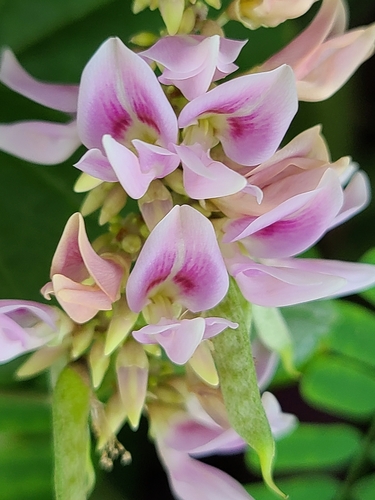
Pentaclethra macroloba
(Willd.) Kuntze
Oil bean tree

(c) R.E.Llanos, some rights reserved (CC BY-NC-SA)

(c) R.E.Llanos, some rights reserved (CC BY-NC-SA)
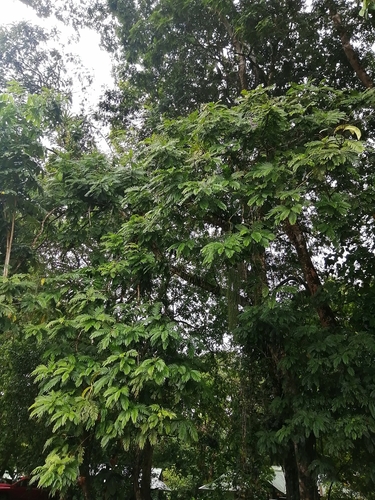
(c) sergiovillegas, some rights reserved (CC BY-NC)
What to Eat
Edible parts: Seeds
Seed. The seed contains 45 - 48% lipids, 27 - 28% protein and 12 - 14% carbohydrates. Some caution is advised because the seed is known to contain toxic substances, see the notes above on known hazards. An oil obtained from the seeds can be used in cooking.
Known Hazards
Where to Find It
It is a tropical plant. It grows from sea level to 600 m above sea level. It needs an average annual temperature of 20-35°C. It needs a rainfall above 2,500 mm.
Africa, Brazil, Caribbean, Central America, Colombia, Congo, Costa Rica, Cuba, French Guiana, Guatemala, Guianas, Guyana, Honduras, Jamaica, Mexico, Nicaragua, North America, Panama, Peru, South America*, Suriname, Trinidad & Tobago, Venezuela, West Indies,
How to Identify
A tree. It grows 40 m tall. The trunk can be 1.3 m across. The bark is smooth and grey-brown. The leaves are twice divided. They are 30 cm long. There are many small leaflets along the stalk. The flowers are small and crowded in groups 15-20 cm long. The fruit is a pod that splits open. It is 20-50 cm long by 4-6 cm wide. There are 3-8 seeds in each pod.
How to Grow
A plant of the lowland, moist tropics, where it is found at elevations from near sea level to 600 metres. It prefers areas in which the mean annual temperature is within the range 24 - 30°c. It grows in areas where the mean annual rainfall is in excess of 2,500mm. Succeeds in full sun or light shade. Succeeds in light to heavy, acidic soils. Plants are tolerant of waterlogged soils. Young plants usually establish well and grow away quickly. When grown in a sunny position they can start flowering when only two years old. The flowers are a good source of nectar. This species has a symbiotic relationship with certain soil bacteria, these bacteria form nodules on the roots and fix atmospheric nitrogen. Some of this nitrogen is utilized by the growing plant but some can also be used by other plants growing nearby.
Propagation: Seed - of very short viability, even when handled carefully and kept moist most seeds will not germinate after one week. They are best sown as soon as ripe in individual containers in a position in light shade. It is preferable to sow the seeds with the pointed end down. Cover seeds with 10mm of soil and do not allow to dry out. The germination rate is usually high, with up to 90% of seeds sprouting in 30 - 40 days. Seedlings can be planted into their permanent positions after 4 - 5 months when 25 - 40cm tall.
Medicinal Uses
The sap is used to cleanse sores. The bark is antiseptic, emetic and styptic. A decoction is used to promote vomiting, and to remedy diarrhoea, stomach ulcers, stomach aches and biliousness. Applied externally, the bark is used as a wash on snakebites, sores, sprains, ulcers, cuts, bruises etc, in order to cleanse the area and stop bleeding. It is given to babies as a treatment for thrush. A decoction of the inner bark is used as a treatment for jaundice. The leaves are used to treat chickenpox and measles. The seed is used to make plasters for treating itches. Extracts of the plant contain alkaloids such as caffeoylputrescine.
Other Uses
The seeds have a high content of oil that may be used industrially in lubricants and soaps. The seeds contain 45 - 48% oil, 27 - 28% protein, 12 - 14% carbohydrates and lack endosperm. The bark is a source of tannins. The heartwood is a reddish-brown to dark red; it is clearly demarcated from the whitish sapwood, which becomes pinkish upon exposure to the air. Texture is medium: the grain is straight; taste is astringent; there is no discernible aroma once dried. The wood is heavy, very hard, tough, strong. It is moderately durable, easy to work, and with moderate mechanical properties. The wood is of high quality and often used as a substitute for mahogany. It is used for many purposes including boat construction, furniture, floor beams and house frames. The wood is sometimes used for fuel. The tree is a pioneer species and is suitable for reforestation projects within its native range. As a fast-growing, nitrogen-fixing pioneer species it has great potential in forest regeneration and reclamation of degraded lands.
Wikipedia
Source ↗Pentaclethra macroloba is a large and common leguminous tree in the genus Pentaclethra native to the wet tropical areas of the northern Neotropics, which can form monocultural stands in some seasonally flooded habitats. It has giant, bipinnate leaves shaped like feathers. It uses seed dispersal by water to establish itself in new areas, having floating seeds that are left behind after the waters recede after floods or tides. It has hard timber which is not very resistant to rot in the tropics, but it can be treated, has a pretty pink-red colour when dry, and has a number of uses. Oil used in cosmetics is extracted from the large seeds. In the northern Amazon region the bark is used in herbal medicine as an antivenom, and in the Guianas the bark has been used as a fish poison. Despite their toxicity, the seeds are eaten by variegated squirrels, parrots and macaws, and serve as the nurseries of the larvae of the moth Carmenta surinamensis.
Production
Trees in good locations can start to flower at 2 years old.
Notes
Also as Mimosaceae.
Names & Synonyms
Gavilan, Koeroebaharo, Koloballi, Pracaxi, Trysil
References (3)
- ILDIS Legumes of the World http:www:ildis.org/Legume/Web
- Maas, P.J. M., Non-Timber Forest Products of the North-West District of Guyana Part 2. The 85 most important NTFP species. p 178
- www.worldagroforestrycentre.org/treedb/