Rubus macvaughianus
Rzedowski & Calderon
RosaceaeFruit
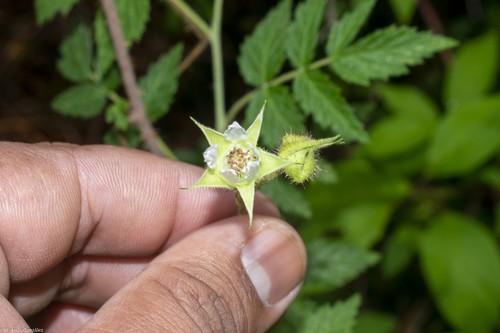
iNaturalist · cc-by-nc
(c) Heriberto Ávila-González, some rights reserved (CC BY-NC)
(c) Heriberto Ávila-González, some rights reserved (CC BY-NC)
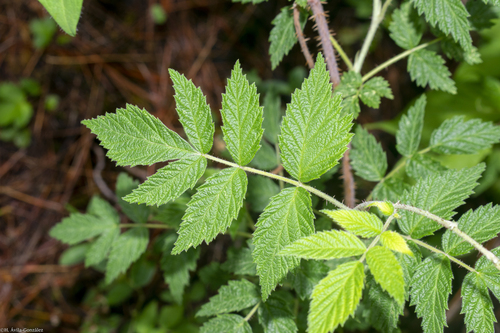
iNaturalist · cc-by-nc
(c) Heriberto Ávila-González, some rights reserved (CC BY-NC)
(c) Heriberto Ávila-González, some rights reserved (CC BY-NC)
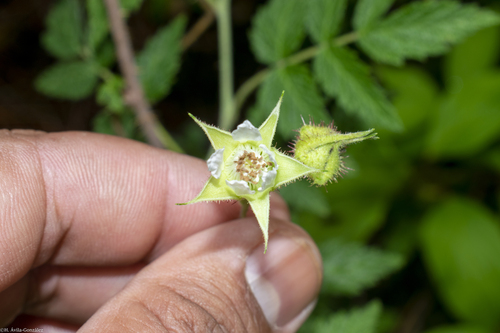
iNaturalist · cc-by-nc
(c) Heriberto Ávila-González, some rights reserved (CC BY-NC)
(c) Heriberto Ávila-González, some rights reserved (CC BY-NC)
What to Eat
Edible parts: Fruit
The fruit is eaten.
Dangerous Lookalikes
This plant can be confused with the following toxic species. Always verify identification carefully before consuming any wild plant.
DEADLY

Red Baneberry
Actaea rubra
SAFE
Rubus macvaughianus
Rubus macvaughianus


Red Baneberry: Short herbaceous plant (no thorns), berries on thick red stems, each berry has a single seed, compound sharply-toothed leaves.
Rubus macvaughianus: Thorny woody canes (brambles), aggregate berry made of many drupelets, berries pull easily from receptacle.
Where to Find It
In Mexico is grows at about 3,250 m altitude.
Mexico, North America,
Countries: Antigua & Barbuda, Barbados, Bahamas, Belize, Canada, Costa Rica, Cuba, Dominica, Dominican Republic, Grenada, Guatemala, Honduras, Haiti, Jamaica, St Kitts & Nevis, St Lucia, Mexico, Nicaragua, Panama, Puerto Rico, El Salvador, Trinidad & Tobago, United States, St Vincent
How to Identify
A herb. It grows 80 cm high. It has an erect stem. The leaves have five leaflets with a larger one at the end.
Names & Synonyms
Zarza
References (2)
- Rzedowski, J., et al, 1989, Acta Botanica Mexicana 5:1-4
- Segura, S., et al, 2018, The edible fruit species in Mexico. Genet Resour Crop Evol (2018) 65:1767–1793
More from Rosaceae

Acaena anserinifolia
Bidgee widgee, Buzzy, New Zealand Bur
No photo
Acaenia anserinifolia - (J.R.Forst.&G.Forst.)Druce.
Pirri-Pirri Bur

Adenostoma sparsifolium
Red shanks, Ribbonwood

Agrimonia eupatoria
Agrimony, Salt and Pepper

Agrimonia odorata
Adour agrimony, Liver-wort

Agrimonia pilosa
Indian chestnut, Agrimony