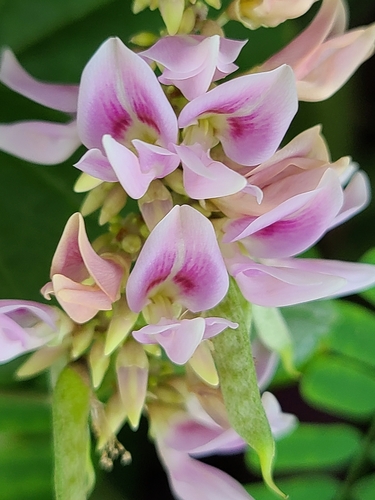
Psophocarpus lecomtei
Tisser.

gbif · cc-by-nc-sa
MBG
MBG

gbif · cc-by-nc-sa
MBG
MBG

gbif · cc-by
Royal Botanic Gardens, Kew
Royal Botanic Gardens, Kew
Where to Find It
It is a tropical plant.
Africa, Central Africa, Congo,
Countries: Angola, Burkina Faso, Burundi, Benin, Botswana, Congo (DRC), Central African Republic, Congo (Republic), Cote d'Ivoire, Cameroon, Cape Verde, Djibouti, Algeria, Egypt, Eritrea, Ethiopia, Gabon, Ghana, Gambia, Guinea, Equatorial Guinea, Guinea-Bissau, Kenya, Comoros, Liberia, Lesotho, Libya, Morocco, Madagascar, Mali, Mauritania, Mauritius, Malawi, Mozambique, Namibia, Niger, Nigeria, Rwanda, Seychelles, Sudan, Sierra Leone, Senegal, Somalia, South Sudan, Sao Tome & Principe, Eswatini, Chad, Togo, Tunisia, Tanzania, Uganda, South Africa, Zambia, Zimbabwe
How to Identify
A bean. The plant lies along the ground and the leaves are flat to the ground. The vine is slender and not climbing. Plants can cover an area 2-3 m across. The pods are small and winged. The pods are about 3 cm long. The pods open after fire.
Notes
It is probably not used as human food.
References (1)
- Harder, D., Lolema, O. P. M. & Tshisand, M., 1990, Use, Nutritional Composition and Ecogeography of Four Species of Psophocarpus (Fabaceae, Phaseoleae) in Zaire. Economic Botany, Vol. 44, No. 3 pp. 391-409