Begonia mannii
Hook. f.
BegoniaceaeLeaves

iNaturalist · cc-by-nc
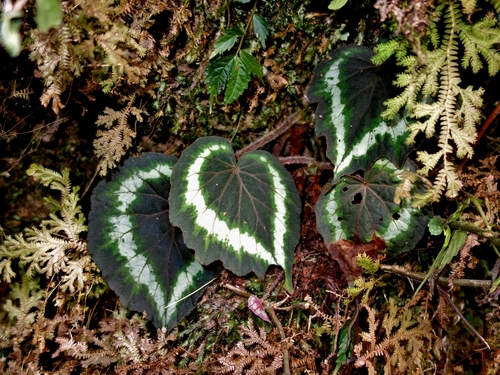
(c) Carel Jongkind, some rights reserved (CC BY-NC), uploaded by Carel Jongkind
(c) Carel Jongkind, some rights reserved (CC BY-NC), uploaded by Carel Jongkind

iNaturalist · cc-by-nc
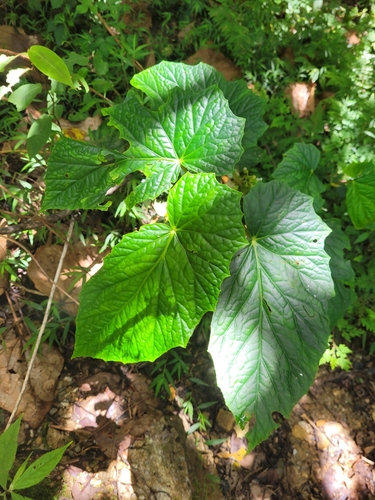
(c) Carel Jongkind, some rights reserved (CC BY-NC), uploaded by Carel Jongkind
(c) Carel Jongkind, some rights reserved (CC BY-NC), uploaded by Carel Jongkind

iNaturalist · cc-by-nc
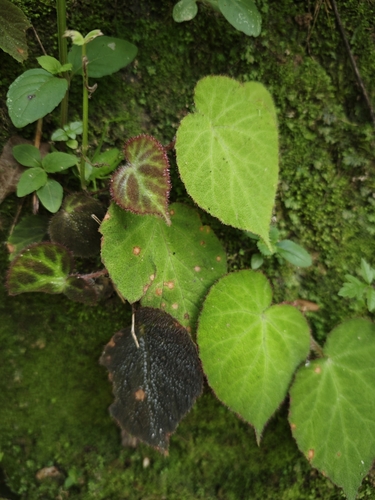
(c) Carel Jongkind, some rights reserved (CC BY-NC), uploaded by Carel Jongkind
(c) Carel Jongkind, some rights reserved (CC BY-NC), uploaded by Carel Jongkind
What to Eat
Edible parts: Leaves, Leaf stalk
Leaves - cooked and eaten as a vegetable. An acid flavour, they can be used like sorrel leaves (Rumex spp.).
Where to Find It
It is a tropical plant. It grows in forests from the lowland to mountains in West Africa.
Africa, Cameroon, Central Africa, Congo, Gabon, Nigeria, Sierra Leone, West Africa,
Countries: Angola, Burkina Faso, Burundi, Benin, Botswana, Congo (DRC), Central African Republic, Congo (Republic), Cote d'Ivoire, Cameroon, Cape Verde, Djibouti, Algeria, Egypt, Eritrea, Ethiopia, Gabon, Ghana, Gambia, Guinea, Equatorial Guinea, Guinea-Bissau, Kenya, Comoros, Liberia, Lesotho, Libya, Morocco, Madagascar, Mali, Mauritania, Mauritius, Malawi, Mozambique, Namibia, Niger, Nigeria, Rwanda, Seychelles, Sudan, Sierra Leone, Senegal, Somalia, South Sudan, Sao Tome & Principe, Eswatini, Chad, Togo, Tunisia, Tanzania, Uganda, South Africa, Zambia, Zimbabwe
How to Identify
A scrambling herb in the Begoniaceae family that grows on trees in West African forests, from lowland to mountain elevations.
Medicinal Uses
The leaves are eaten as a vegetable, and also used as a douche and hip bath, in order to treat inflammation of the vagina and of the uterus. The douche and hi baths are usually in combination with the bark of Cyclodiscus gabonensis.
References (3)
- Burkill, H. M., 1985, The useful plants of west tropical Africa, Vol. 3. Kew.
- Laferriere, J. E., 1992, Begonias as Food and Medicine. Economic Botany, Vol. 46, No. 1, pp. 114-116
- World Checklist of Useful Plant Species 2020. Royal Botanic Gardens, Kew