Sideroxylon tenax
L.
Ironwood, Tough bumelia, Narrowleaf bumelia, Tough buckthorn, Silver buckthorn

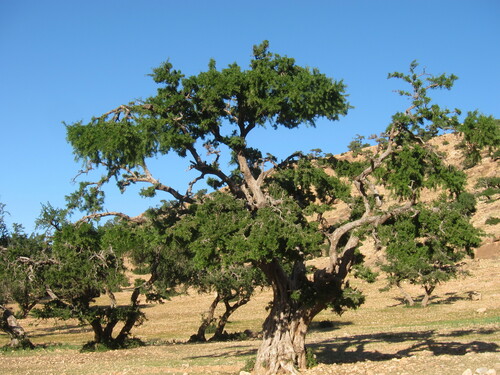
(c) Kim and Peter Connolly, some rights reserved (CC BY-NC), uploaded by Kim and Peter Connolly
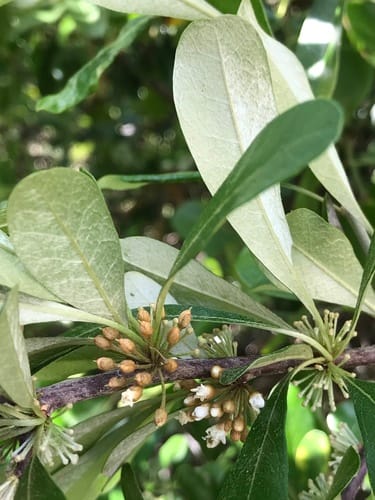
(c) Alan R. Franck, some rights reserved (CC BY-NC)

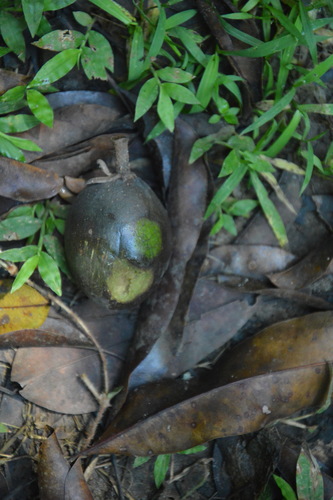
(c) ThePrairiePreacher, some rights reserved (CC BY-NC), uploaded by ThePrairiePreacher
What to Eat
Edible parts: Fruit
The black berries are eaten; they have thin sweet pulp.
Where to Find It
It grows in dry sandy soil usually near the coast. It the SE of the USA they grow to 30 m altitude.
North America, USA,
How to Identify
A shrub or small tree. The crown is spreading. The branches are tough and flexible. They often have straight stout spines. It grows 6 m tall. The trunk is 10 cm across. The leaves are evergreen except in cooler places. They are alternate or clustered in short side twigs. The leaves are 2.5-6 cm long and 1-3 cm wide. They are sword shaped with rounded tips and tapering to the base. The are widest above the middle. They are dark green above and yellowish or pale underneath. The flowers are 3 mm wide. They are bell shaped and green. The fruit are 10-12 mm long and a black berry. They have a thin sweet pulp and one seed.
Wikipedia
Source ↗Sideroxylon tenax, called the tough bully, is a plant species native to Florida, Georgia, South Carolina and the southernmost part of North Carolina. It grows on dry, sandy soil in pine forests, pine-oak woodlands, and hummocks at elevations less than 100 m. Sideroxylon tenax is a shrub or tree up to 8 m (almost 27 feet) tall. Stems are armed with thorns. Leaves are up to 7 cm (2.8 inches) long, upper side green and sometimes shiny, underside covered with a layer of brown hairs. Flowers are white, up to 5 mm (0.2 inches) across, borne in groups of up to 40 flowers. Berries are very dark purple, almost black, spherical to egg-shaped, about 10 mm (0.4 inches) across.
Notes
There are about 25 Bumelia species. The Bumelia may be merged with the Sideroxylon.
Names & Synonyms
References (4)
- Kermath, B. M., et al, 2014, Food Plants in the Americas: A survey of the domesticated, cultivated and wild plants used for Human food in North, Central and South America and the Caribbean. On line draft. p 805
- Little, E.L., 1980, National Audubon Society Field Guide to North American Trees. Alfred A. Knopf. p 632 (As Bumelia tenax)
- Plants for a Future database, The Field, Penpol, Lostwithiel, Cornwall, PL22 0NG, UK. http://www.scs.leeds.ac.uk/pfaf/ (As Bumelia tenax)
- Sp. pl. 2(2):1085. 1799 (As Bumelia tenax)