Cotoneaster nummularius
Fisch. & Mey.
Kiz elmasi, Cornwort cotoneaster
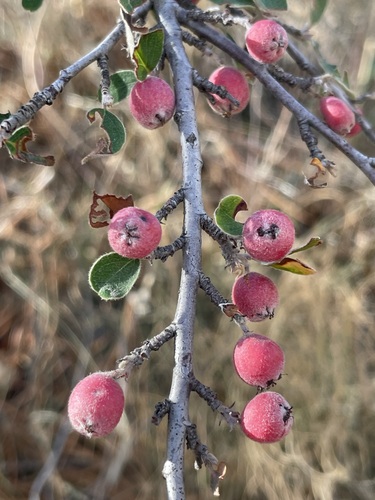
(c) Arya Aras, some rights reserved (CC BY-NC), uploaded by Arya Aras
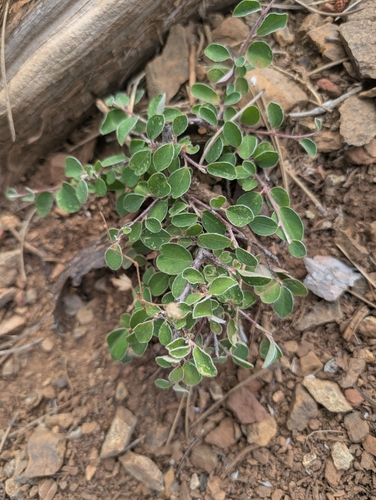
(c) Marios Thoma, some rights reserved (CC BY)
What to Eat
Edible parts: Fruit
Cotoneaster nummularius is cultivated as an ornamental shrub, widely grown in landscape architecture due to diversity of their forms, glossy green leaves, abundant flowers, and attractive pomes. Cotoneaster nummularius has a history of traditional medicinal use, particularly in Asian medicine. Modern research has also investigated its phytochemical composition and various biological activities, often in the context of the broader Cotoneaster genus.
Known Hazards
Where to Find It
It is a Mediterranean climate plant.
Asia, Central Asia, Europe, Mediterranean, Pakistan, Tajikistan, Turkey, Türkiye,
How to Identify
A shrub.
Medicinal Uses
Modern pharmacological investigations have explored the biological activities of Cotoneaster species, demonstrating antioxidant, anti-inflammatory, antimalarial, and anti-jaundice properties. Extracts from various Cotoneaster species, including C. nummularius, have shown significant antioxidant effects in vitro, often attributed to their polyphenol content (flavonoids, procyanidins, and caffeoylquinic acids). Several Cotoneaster species exhibit anti-inflammatory activity by inhibiting enzymes like lipoxygenase (LOX) and hyaluronidase (HYAL). The methanolic extract of C. nummularius fruit twigs has shown moderate anti-malarial activity in mice infected with Plasmodium berghei. Leaf extracts of C. nummularius have been evaluated for their ability to inhibit acetylcholinesterase and butyrylcholinesterase, enzymes relevant to Alzheimer's disease treatment. Cotoneaster manna, including that from C. nummularius, has been traditionally used and researched for its anti-jaundice activity, particularly in neonates. It is believed to regulate bile excretion and reduce serum bilirubin levels, with mannitol potentially being the main active compound.
Wikipedia
Source ↗Cotoneaster nummularius, the nummular or coinwort cotoneaster, is a deciduous shrub in the rose family. It is native to a wide geographical range spanning from Morocco and Greece eastward through the Middle East, Central Asia, and into parts of China and India. It typically grows at altitudes between 800 and 2,400 meters in semi-arid montane climates, forming dense, rounded thickets. Characterized by its small, alternate leaves with dark green upper surfaces and densely grey undersides, C. nummularius produces white to pinkish-white hermaphroditic flowers from April to June. These are followed by round or oval pomes that ripen from red to bluish-black or black-violet between August and October. The fruits contain cyanogenic glycosides, which contribute to their toxicity and aid in seed dispersal by birds. Beyond its ornamental value in landscaping, C. nummularius has a history of traditional medicinal use in various Asian cultures, where its fruits and other parts have been employed as an appetite stimulant, expectorant, and for treating conditions like malarial fever and rheumatic ailments. Modern pharmacological investigations have identified a complex phytochemical composition, including flavonoids and procyanidins, and have demonstrated antioxidant, anti-inflammatory, antimalarial, and anti-jaundice properties.
Names & Synonyms
Dagmusmulasi, Kharawa, Masloor, Sherawa, Udhundor
References (9)
- Ari, S., et al, 2015, Ethnobotanical survey of plants used in Afyonkarahisar-Turkey. Journal of Ethnobiology and Ethnomedicine 11:84
- Ertug, F., 2000, An Ethnobotanical Study in Central Anatolia (Turkey). Economic Botany Vol. 54. No. 2. pp. 155-182
- Ertug, F, Yenen Bitkiler. Resimli Türkiye Florası -I- Flora of Turkey - Ethnobotany supplement
- Haj, F., et al, 2012, Species Diversity and Ethno Botanical Classes of the Flora of Allai Valley District Battagram Pakistan. International Journal of Plant Research 2012, 2(4): 111-123
- Kargioglu, M., et al, 2008, An Ethnobotanical Survey of Inner-West Anatolia, Turkey. Human Ecology 36:763-777
- Khalid, N., et al, 2023, Wild food plants gathered by four cultural groups in North Waziristan, Pakistan. Genet Resour Crop Evol. 70:1243–1276
- Khan, A. H., et al, 2023, Traditional foraging for ecological transition? Wild food ethnobotany among three ethnic groups in the highlands of the eastern Hindukush, North Pakistan. Journal of Ethnobiology and Ethnomedicine 19:9
- Polat, R., et al, 2015, Survey of wild food plants for human consumption in Elazig (Turkey). Indian Journal of Traditional Knowledge. Vol. 1(1): 69-75
- Rivera, D. et al, 2006, Gathered Mediterranean Food Plants - Ethnobotanical Investigations and Historical Development, in Heinrich M, Müller WE, Galli C (eds): Local Mediterranean Food Plants and Nutraceuticals. Forum Nutr. Basel, Karger, 2006, vol 59, pp 18–74
More from Rosaceae


