Prunus divaricata
Ledeb
Erik, Alycha
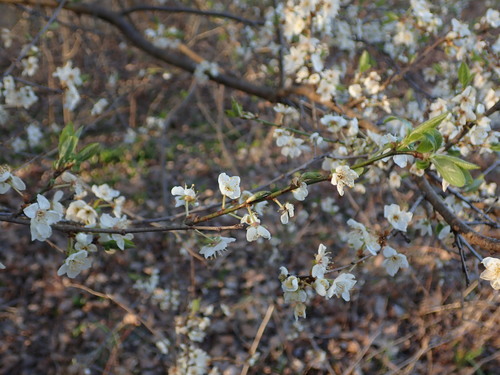
(c) Daniel Cahen, some rights reserved (CC BY)
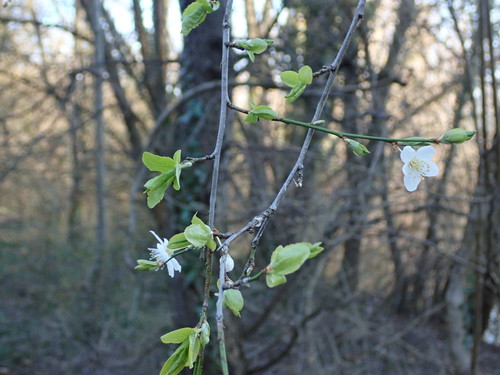
(c) Daniel Cahen, some rights reserved (CC BY)
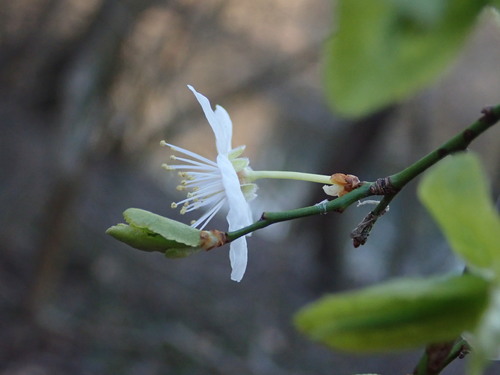
(c) Daniel Cahen, some rights reserved (CC BY)
What to Eat
Edible parts: Fruit, Flowers
The fruits are edible. Some varieties have sweet fruits that can be eaten fresh, while others are sour and better for making jam. Cherry plums are a key ingredient in Georgian cuisine where they are used to produce tkemali sauce, as well as a number of popular dishes, such as kharcho soup and chakapuli stew. It is a popular tree in Romania where its fruits are used for souring soups when immature, for eating raw when ripened, and for making moonshine when overripe because of their high sugar content.
Where to Find It
It is a Mediterranean plant.
Armenia, Caucasus, Central Asia, Georgia, Iran, Kazakhstan, Kyrgyzstan, Mediterranean, Middle East, Tajikistan, Turkey, Türkiye, Uzbekistan,
How to Identify
A Mediterranean tree in the Rosaceae family (possibly Prunus cerasifera) that produces ripe fruit valued in local markets.
Other Information
It is sold in local markets.
Names & Synonyms
Dag erigi, Erik, Saloreni, Shloreni, T'q'emali, Yabani erik, Yunus erigi
References (13)
- Bussman, R. W. et al, 2017, Ethnobotany of Samtskhe-Javakheti, Sakartvelo (Republic of Georgia), Caucasus. Indian Journal of Traditional Knowledge Vol. 16(1) pp 7-24
- Bussman, R. W., et al, 2021, Unity in diversity—food plants and fungi of Sakartvelo (Republic of Georgia), Caucasus. Journal of Ethnobiology and Ethnomedicine (2021) 17:72 p 14
- Dogan, A. & Tuzlaci, E., 2015, Wild Edible Plants of Pertek (Tunceli-Turkey). Marmara Pharmaceutical Journal 19: 126-135
- Ertug, F., 2000, An Ethnobotanical Study in Central Anatolia (Turkey). Economic Botany Vol. 54. No. 2. pp. 155-182
- Ertug, F, Yenen Bitkiler. Resimli Türkiye Florası -I- Flora of Turkey - Ethnobotany supplement
- Kargioglu, M., et al, 2008, An Ethnobotanical Survey of Inner-West Anatolia, Turkey. Human Ecology 36:763-777
- Kargioglu, M. et al, 2010, Traditional Uses of Wild Plants in the Middle Aegean Region. Human Ecology 38:429-450
- Motamed, S. M., et al, 2010, Antioxidant activity of some edible plants of the Turkmen Sahra region in northern Iran. Food Chemistry 119: 1637-1642
- Nanagulyan, S., et al, 2020, Wild plants and fungi sold in the markets of Yerevan (Armenia). Journal of Ethnobiology and Ethnomedicine 16:26
- Özdemir, E. and Kültür, S., 2017, Wild Edible Plants of Savaştepe District (Balıkesir, Turkey), Marmara Pharm J 21/3: 578-589
- Rivera, D. et al, 2006, Gathered Mediterranean Food Plants - Ethnobotanical Investigations and Historical Development, in Heinrich M, Müller WE, Galli C (eds): Local Mediterranean Food Plants and Nutraceuticals. Forum Nutr. Basel, Karger, 2006, vol 59, pp 18–74
- Ryabushkina, N., et al, 2008, Brief Review of Kazakhstan Flora and Use of its Wild Species. The Asian and Australasian Journal of Plant Science and Biotechnology
- Senkardes, I & Tuzlaci, E., 2016, Wild Edible Plants of Southern Part of Nevsehir inTurkey. Marmara Pharmaceutical Journal 20:34-43
More from Rosaceae


