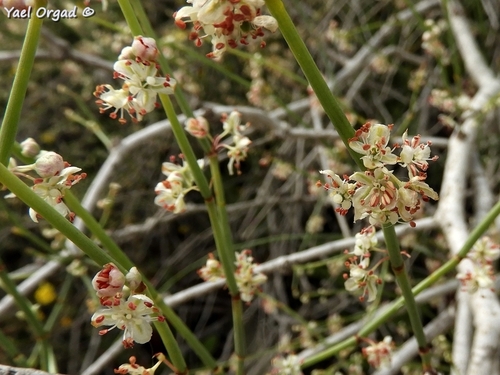
Atraphaxis manshurica
Kitagawa
Bodurgan chai

gbif · cc-by-nc-sa
GBIF
GBIF

gbif · cc-by-nc-sa
GBIF
GBIF
What to Eat
Edible parts: Roots, Stems, Leaves - tea
The roots, stems, and leaves together are used to make a tea drink.
Where to Find It
It grows on sand dunes and stony slopes and in deserts. It grows in north China.
Asia, China, Mongolia,
Countries: United Arab Emirates, Afghanistan, Armenia, Azerbaijan, Bangladesh, Bahrain, Brunei, Bhutan, China, Georgia, Indonesia, Israel, India, Iraq, Iran, Jordan, Japan, Kyrgyzstan, Cambodia, North Korea, South Korea, Kuwait, Kazakhstan, Laos, Lebanon, Sri Lanka, Myanmar, Mongolia, Maldives, Malaysia, Nepal, Oman, Philippines, Pakistan, Qatar, Saudi Arabia, Singapore, Syria, Thailand, Tajikistan, Timor-Leste, Turkmenistan, Turkey, Taiwan, Uzbekistan, Vietnam, Yemen
How to Identify
A shrub. It grows about 1 m tall. The stems are stout and branched in the upper part. The bark is grey-brown. The leaves are sword shaped or narrow. They are 2-4 cm long by 1 cm wide. They are leathery.
Names & Synonyms
Dong bei mu liao
References (2)
- Flora of China @ efloras.org Volume 5
- Khasbagan, Hu-Yin Huai, and Sheng-Ji pei, 2000, Wild Plants in the Diet of Athorchin Mongol Herdsmen in Inner Mongolia. Economic Botany 54(4): 528-536