Inga capitata
Desvaux

(c) Geovane Siqueira, some rights reserved (CC BY-NC), uploaded by Geovane Siqueira
(c) Tarciso Leão, some rights reserved (CC BY-NC), uploaded by Tarciso Leão
(c) Riley Fortier, some rights reserved (CC BY-NC), uploaded by Riley Fortier
What to Eat
Edible parts: Fruit - aril, Pod pulp
The aril (layer around the seeds) is eaten raw, and the pod pulp is also edible. The trees are occasionally cultivated around houses, though the fruit are only occasionally eaten.
Where to Find It
It is a tropical plant. It grows in humid forests in the Amazon.
Amazon, Bolivia, Brazil, Central America, Colombia, Costa Rica, Ecuador, French Guiana, Guianas, Guyana, Peru, South America, Suriname, Venezuela,
How to Identify
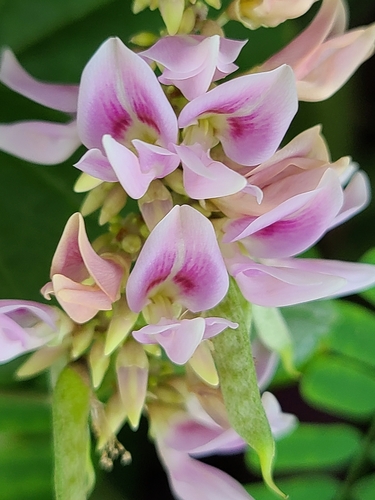
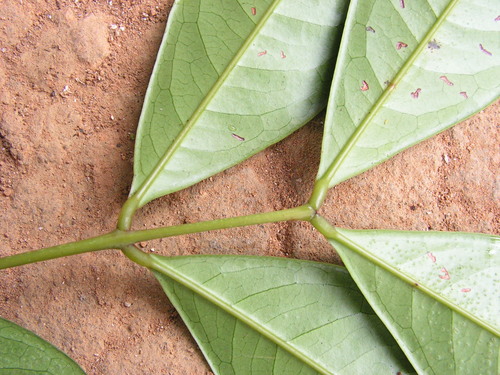
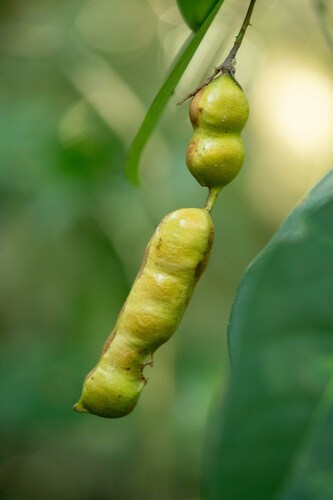
A tree. It grows 4-14 m high. The crown in dense and rounded. The trunk is crooked and 20-30 cm across. The leaves are compound. They have 2 or 3 pairs of opposite leaflets. The leaflets are 6-13 cm long by 3-5 cm wide. The flowers are in the axils of leaves on stalks 6-10 cm long. The fruit are flattened pods.
How to Grow
The plants are grown from seeds. Seeds are collected from ripe pods. They are planted fresh. Seedlings emerge in 30-40 days.
Propagation: Seed - best sown as soon as it is ripe. Sow in a lightly shaded position in a nursery seedbed. A germination rate in excess of 50% can be expected, with the seeds sprouting within 30 - 40 days. Transplant the seedlings to individual containers when they have 4 - 6 leaves and they should be ready for planting out 4 - 5 months later.
Medicinal Uses
A decoction of the leaves is used to restore fertility to sterile women. Fertile women abstain from eating the fruit.
Other Uses
The wood is coarse-textured, irregular-grained, light in weight, with a low resistance to wood eating organisms. Although easy to work, it has poor mechanical properties and is only suitable for low value items such as packing boxes. The wood is used for fuel and to make charcoal. A fast-growing, natural pioneer species in its native habitat, where it yields an edible fruit that is also attractive to local wildlife and fixes atmospheric nitrogen. It has good potential for use as a pioneer species in re-establishing woodland.
Production
Plants grow rapidly.
Other Information
The trees are occasionally cultivated around houses. It is only occasionally eaten.
Notes
Also as Mimosaceae.
Names & Synonyms
Aague, Aawe, Aguatahue, Ampoukou oueko, Aonabo, Awatawe, Biriquihue, Cosi pene, Guaba de lluvia, Guamo negro, Inga-acu, Inga-chichica, Inga-costela, Inga-dura, Inga-ferradura, Inga-xixica, Jadakua, Kina pakay, Mimonton, Mololo pi'tsan, Monde ag, Purutu kaspi, Quini'cco fino, Quiuna pacay, Rumi pakay, Sampi, Shimbillo, Toika aon, Unjinga fino, Warakosa, Wegowetenpou, Wewetenpoyo, Yakum sampi, Yngatawa'y
References (14)
- Cavalcante, P.B. 1991. Frutas comestíveis da Amazônia. Edições CEJUP.
- Fouqué, A. 1972. Espèces fruitières d'Amérique tropicale. Institut français de recherches fruitierès outre-mer (ifac)
- Grandtner, M. M. & Chevrette, J., 2013, Dictionary of Trees, Volume 2: South America: Nomenclature, Taxonomy and Ecology. Academic Press p 319
- Kermath, B. M., et al, 2014, Food Plants in the Americas: A survey of the domesticated, cultivated and wild plants used for Human food in North, Central and South America and the Caribbean. On line draft. p 437
- Kew Plants of the World Online
- Lopez-Diago, D. & Garcia, N., 2021, Wild edible fruits of Colombia. Biota ColomBiana 22 (2) p 37
- Lorenzi, H., 2009, Brazilian Trees. A Guide to the Identification and Cultivation of Brazilian Native Trees. Instituto Plantarum de Estuados da Flora Ltda. Vol. 3 p 157
- Martin, F. W., et al, 1987, Perennial Edible Fruits of the Tropics. USDA Handbook 642 p 98 (As Inga falcistipula)
- Paz, F. S., et al, 2021, Edible Fruit Plant Species in the Amazon Forest Rely Mostly on Bees and Beetles as Pollinators. Journal of Economic Entomology, XX(XX), 2021, 1–13
- Philips, O., 1992, The potential for harvesting fruits in tropical rainforests: new data from Amazonian Peru. Biodiversity and Conservation 2, 18-38
- Roa, J. A. G. & Boada, D. S. G., 2018, Fundación para el Fortalecimiento de la Fruticultura y Plantas Alimenticias no Convencionales en Colombia.
- Torre, de la, L., et al, 2008, Enciclopedia de las Plantas Útiles del Ecuador. Herbario QCA. Pontificia Universidad Católica del Ecuador. p 343
- Villachica, H. 1996. Frutales y hortalizas promisorios de la Amazonía. Tratado de Cooperación Amazónica.
- Van den Eynden, V., et al, 2003, Wild Foods from South Ecuador. Economic Botany 57(4): 576-603