Ficus vasculosa
Wall. ex Miq.
Sweet mountain greens, Vasculosa fig tree
MoraceaeLeaves
iNaturalist · cc-by-nc
(c) SunGW, some rights reserved (CC BY-NC), uploaded by SunGW
(c) SunGW, some rights reserved (CC BY-NC), uploaded by SunGW
iNaturalist · cc-by-nc
(c) Cheongweei Gan, some rights reserved (CC BY-NC)
(c) Cheongweei Gan, some rights reserved (CC BY-NC)
What to Eat
Edible parts: Leaves, Vegetable
The leaves are cooked and eaten as a vegetable, prepared by boiling or frying and also used in soups.
Where to Find It
It is a tropical plant. It grows in rain forest up to 1,400 m above sea level. It grows on sandy soils. In XTBG Yunnan.
Asia, China, Indochina, Indonesia, Laos, Malaysia, Myanmar, SE Asia, Singapore, Thailand, Vietnam,
Countries: United Arab Emirates, Afghanistan, Armenia, Azerbaijan, Bangladesh, Bahrain, Brunei, Bhutan, China, Georgia, Indonesia, Israel, India, Iraq, Iran, Jordan, Japan, Kyrgyzstan, Cambodia, North Korea, South Korea, Kuwait, Kazakhstan, Laos, Lebanon, Sri Lanka, Myanmar, Mongolia, Maldives, Malaysia, Nepal, Oman, Philippines, Pakistan, Qatar, Saudi Arabia, Singapore, Syria, Thailand, Tajikistan, Timor-Leste, Turkmenistan, Turkey, Taiwan, Uzbekistan, Vietnam, Yemen
How to Identify
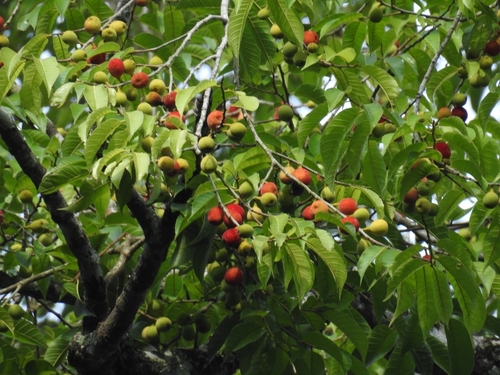
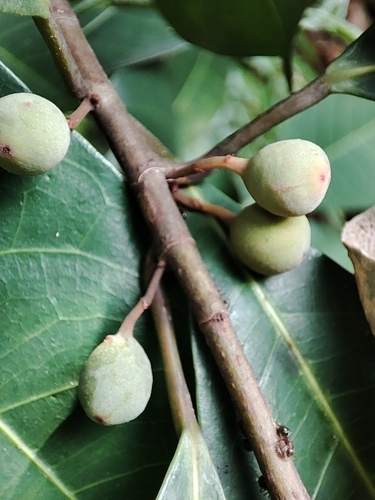
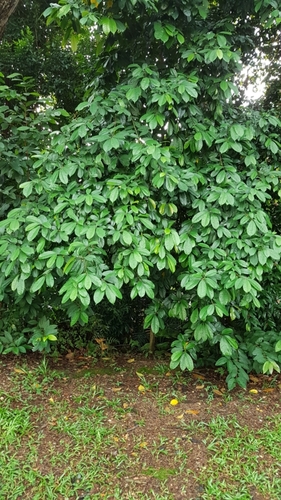
A fig. It is a tree. It grows 15-44 m tall. The stem has white sap. The leaves are alternate and simple. The fruit are 8 mm across. They are round and on the twigs.
How to Grow
Plants can be grown by seeds, root cuttings or air-layering.
Names & Synonyms
Pahugai, Pak de gai, Pohon ara vaskula, Shan tian cai, Tu mai rong
Ficus championii Benth.Ficus renitens Miq.Ficus variabilis Miq.Ficus variabilis var. integrifolia Miq.Ficus vasculosa var. acuminata Miq.
References (7)
- Flora of China @ efloras.org Volume 5
- Fu, Yongneng, et al, 2003, Relocating Plants from Swidden Fallows to Gardens in Southwestern China. Economic Botany, 57(3): 389-402
- Hui, Y. H., Handbook of Food Science, Technology, and Engineering. Volume 2. Table 98:5
- Shi, Y. et al, 2014, An ethnobotanical study of the less known wild edible figs (genus Ficus) native to Xishuangbanna Southwest China. Journal of Ethnobiology and Ethnomedicine. 10:68
- Slik, F., www.asianplant.net
- Sukarya, D. G., (Ed.) 2013, 3,500 Plant Species of the Botanic Gardens of Indonesia. LIPI p 292
- Xu, You-Kai, et al, 2004, Wild Vegetable Resources and Market Survey in Xishuangbanna, Southwest China. Economic Botany. 58(4): 647-667.