Platanus racemosa
Nutt.
California sycamore

(c) Chris Cameron, some rights reserved (CC BY-NC), uploaded by Chris Cameron
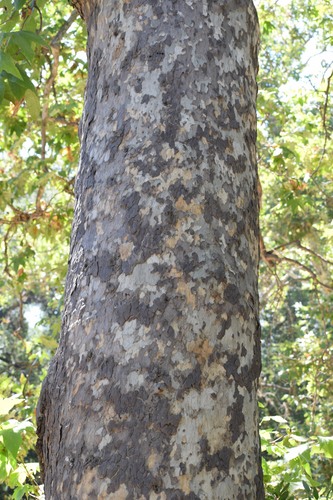
(c) Anne Parsons, some rights reserved (CC BY-NC), uploaded by Anne Parsons
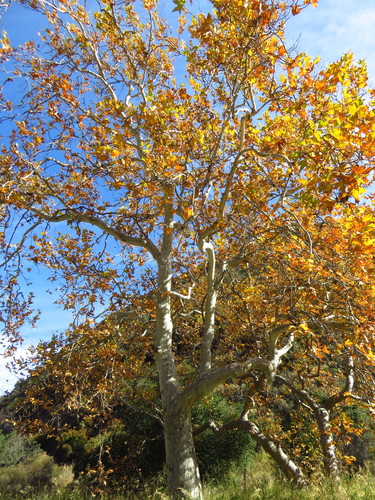
(c) Ari Boehm, some rights reserved (CC BY-NC), uploaded by Ari Boehm
What to Eat
Edible parts: Bark
The inner bark is eaten.
Where to Find It
It is a temperate plant. In the Melbourne Botanical garden.
Australia, North America, USA,
How to Identify
A temperate sycamore tree in the plane tree family (Platanaceae).
Medicinal Uses
California sycamore wood is extremely hard and difficult to work, but can still be employed to create a variety of items such as buttons, tobacco boxes, furniture, wooden utensils, and barrels. The form and wide canopy of the species make it an effective shade tree. This western sycamore's shade cools the surrounding bodies of water while simultaneously offering a home for some animals in the humid environment in which it flourishes. The Native Tongva people call the tree Shavar, and teas prepared from its bark were traditionally used as a blood tonic, a remedy for asthma, and an aid during childbirth.
Wikipedia
Source ↗Platanus racemosa is a species of plane tree known by several common names, including California sycamore, western sycamore, California plane tree, and in North American Spanish aliso. Platanus racemosa is native to California and Baja California, where it grows in riparian areas, canyons, floodplains, at springs and seeps, and along streams and rivers in several types of habitats. It can be found as far north as Tehama and Humboldt counties.
Names & Synonyms
Aliso, Maar
References (2)
- Bocek, B. R., 1984, Ethnobotany of Costanoan Indians, California, Based on Collections by John P. Harrington. Economic Botany 38(2): 240-255
- Moerman, D. F., 2010, Native American Ethnobotany. Timber Press. p 419
