Mimusops balata
(G. Don) Engler
Ausubo, Balata
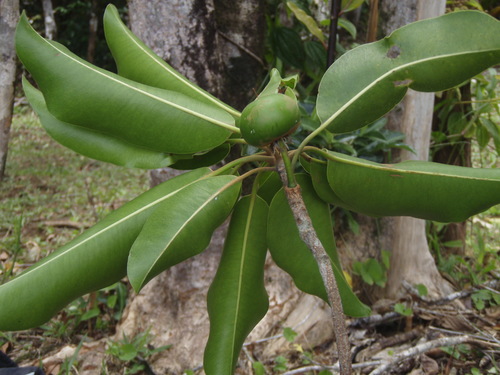
(c) Ulf Swenson, some rights reserved (CC BY-NC), uploaded by Ulf Swenson

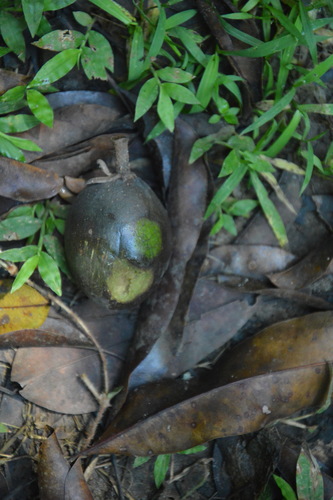
(c) Flavien Saboureau, some rights reserved (CC BY), uploaded by Flavien Saboureau
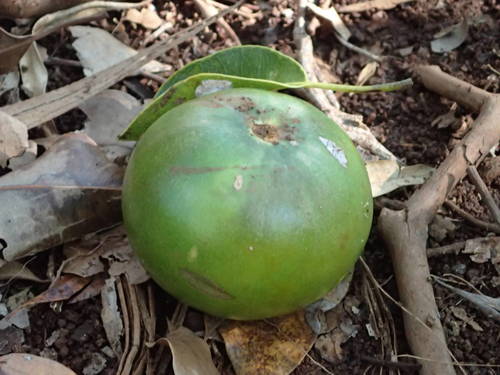
(c) Sylvain Piry, some rights reserved (CC BY-NC), uploaded by Sylvain Piry
What to Eat
Edible parts: Fruit
Fruit - raw. A sweet pulp with an agreeable flavour. The fruit is a bright green, globose to pear-shaped berry 5 - 7 cm in diameter, containing 1 - 7 seeds.
Known Hazards
Where to Find It
It is a tropical plant.
Africa, Brazil, Central America, Comores, East Africa, Guianas, Madagascar, Panama, Peru, Puerto Rico, South America, Venezuela, West Indies,
How to Identify
A tree. It grows 20-45 m high. The leaves are 10-13 cm long by 6-8 cm wide. The flowers are in groups of 1-3 in the axils of leaves. The fruit are round and 3-5 cm across. There are 2-8 seeds.
How to Grow
Plants can be grown from seed. Seeds are very slow to germinate. It is a very long lived tree.
Propagation: Seed - sow in a nursery seedbeds or individual containers, pressing the pointed ends of the seeds 2 - 3cm into the soil. Germination starts after 8 weeks, with the seeds sprouting over the next 4 weeks. It is possible tp speed up the process by mechanical scarification of the seed at its rounded end. Seedlings quickly develop a long taproot, so pot-sown seedlings need to be planted out whilst still small. Seedbed plants can be transplanted, so can be kept in the nursery for 8 - 9 months before planting out. The seeds can be stored for 6 months at ambient temperature in air-tight containers.
Medicinal Uses
A leaf decoction is astringent and used to treat diarrhoea, dysentery and haemorrhage.
Other Uses
The tree contains latex. No uses are mentioned. The heartwood is reddish brown. The wood is close-grained, heavy, hard and durable, even for exterior use. It is used for construction, shingles, joinery, furniture and wooden toys.
Wikipedia
Source ↗Mimusops balata is a species of flowering plant in the family Sapotaceae. It is native to Mauritius and Réunion.
Names & Synonyms
Assapookoo
References (4)
- e-jardim.com (As Mimusops commersonii)
- Leal, M. L. et al, 2018, Knowledge, use, and disuse of unconventional food plants. Journal of Ethnobiology and Ethnomedicine (2018) 14:6 (As Mimusops commersonii)
- Pilz, G. E., 1981, Sapotaceae of Panama. Annals of Missouri Botanical Garden. Vol. 68. No. 1 p 183 (As Mimusops commersonii)
- World Checklist of Useful Plant Species 2020. Royal Botanic Gardens, Kew