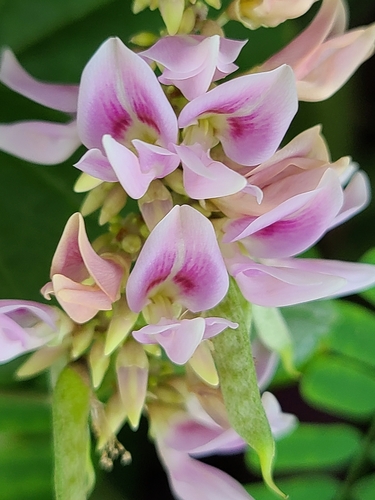
Inga affinis
DC.
Guama tree, Related inga

(c) Arthur Chapman, some rights reserved (CC BY-NC-SA)

(c) Andrey Bazylenko, some rights reserved (CC BY-NC)
What to Eat
Edible parts: Fruit
The fruit pods are eaten.
Where to Find It
It is a tropical plant. It grows in tropical rainforests along the edges of rivers. It can be in wooded swamps. In Argentina it grows below 500 m above sea level.
How to Identify
A tree. It grows 20 m tall. The trunk can be 60 cm across. The leaves are twice divided with 4-6 pairs of large oval leaflets. The flowers do not have a stalk but have a scent. They are in crowded heads at the tips of the branches. The fruit is a long pod. It is 90 cm long. It has black seeds.
Names & Synonyms
Bribri, Guaba, Guabilla, Guamo, Guamo chivo, Guamo rebalsero, Guavillo, Inga arroyo, Inga guasa, Inga-rana, Ingazeiro, Karoto, Pacae, Pohon eskrim kacang, Pohon inga afinis, Shimbillo, Sweetie boonthie, Waikey, Wajunuma, Y'aka
References (6)
- Brack, P., et al, 2020, Frutas nativas do Rio Grande do Sul, Brasil: riqueza e potencial alimentício. Native fruits of Rio Grande do Sul, Brazil: richness and potential as food. Rodriguésia 71: e03102018.
- Grandtner, M. M. & Chevrette, J., 2013, Dictionary of Trees, Volume 2: South America: Nomenclature, Taxonomy and Ecology. Academic Press p 318
- Kermath, B. M., et al, 2014, Food Plants in the Americas: A survey of the domesticated, cultivated and wild plants used for Human food in North, Central and South America and the Caribbean. On line draft. p 435
- Leon, J., 1966, Central American and West Indian Species of Inga (Leguminosae). Annals of the Missouri Botanical Garden. Vol. 53. No. 3, p. 274
- Kujawska, M. & Luczaj, L., 2015, Wild Edible Plants Used by the Polish Community in Misiones, Argentina. Human Ecology 43:855-869
- Sukarya, D. G., (Ed.) 2013, 3,500 Plant Species of the Botanic Gardens of Indonesia. LIPI p 336